
By EIV Diagnostics · July 27, 2026
Molecular Diagnostic Testing: What Patients and Clinicians Need to Know
Discover what molecular diagnostic testing is and how it helps identify diseases, guide treatments, and monitor patient responses effectively.

Molecular diagnostic testing analyzes DNA, RNA, or proteins in a tissue or fluid sample to identify disease, guide treatment decisions, or monitor a patient’s response — and it’s the science behind tests you already know, from PCR-based COVID-19 swabs to next-generation sequencing (NGS) tumor panels to pharmacogenomic screens that predict how a patient metabolizes a drug. Labs performing these tests in the U.S. operate under CLIA certification and, at the highest tier, CAP accreditation. Eivdiagnostics, based in Fresno and serving the Central Valley including Hanford, offers this full range of molecular pathology services with board-certified pathologists and mobile phlebotomy.
Table of Contents
- What is molecular diagnostic testing and how does it work?
- What sample types are used and how are they collected?
- Where molecular tests are used in clinical medicine
- How to read molecular test results and what their limits are
- How long does molecular testing take from collection to report?
- How to evaluate a molecular pathology lab for quality
- Cost, insurance, and how to order molecular tests in the U.S.
- How Eivdiagnostics delivers molecular diagnostic testing
- Where molecular diagnostics is headed
- Key Takeaways
- Why molecular accuracy is the part most labs underestimate
- Molecular diagnostic testing from Eivdiagnostics, made accessible in Hanford
- Useful sources
- FAQ
What is molecular diagnostic testing and how does it work?
Every molecular test follows the same basic path: collect a sample, extract the nucleic acids (or proteins), amplify or sequence the target, analyze the signal, and release a report. What varies is the technique used at the amplification or sequencing step.
Core techniques at a glance:
- PCR (polymerase chain reaction): Copies a specific DNA sequence millions of times so even trace amounts become detectable. Used for pathogen ID, BRCA mutation screening, and more.
- RT-PCR / qPCR: Reverse-transcribes RNA into DNA first (RT), then quantifies it in real time (q). Standard for viral load testing and SARS-CoV-2 detection.
- NAATs (nucleic acid amplification tests): The broader category that includes PCR; highly sensitive because they amplify tiny amounts of genetic material, making panel selection critical.
- NGS (next-generation sequencing): Sequences millions of DNA fragments simultaneously. Used for tumor mutation profiling, inherited disease panels, and metagenomic pathogen discovery.
- FISH (fluorescence in situ hybridization): Labels specific chromosomal regions with fluorescent probes to detect structural rearrangements.
- Hybrid capture: Pulls target DNA sequences out of a complex sample before sequencing — common in liquid biopsy assays.
Amplification-based tests win on speed and sensitivity when you know exactly what you’re looking for. Sequencing wins when you need to discover unknown mutations or characterize a complex genome. Ordering the wrong panel is one of the most common, and most avoidable, sources of false negatives.
Pro Tip: If a clinician suspects a specific pathogen or mutation, a targeted PCR panel is faster and cheaper. If the diagnosis is unclear or a broad mutation landscape is needed (e.g., tumor profiling), NGS is the right call.
What sample types are used and how are they collected?
| Sample Type | Typical Test Uses | Collection Notes |
|---|---|---|
| Nasal / throat swab | Respiratory pathogen NAATs (flu, COVID-19, RSV) | Self-collected or clinician-collected; no fasting |
| Whole blood / plasma | Viral load, cell-free DNA, pharmacogenomics | Standard venipuncture; EDTA tube for most assays |
| Tissue biopsy | Tumor mutation profiling, FISH, IHC | Surgical or needle biopsy; formalin-fixed paraffin-embedded (FFPE) |
| Saliva | Some genetic panels, microbiome testing | Avoid mouthwash or food 30 minutes before collection |
| Urine | STI NAATs (chlamydia, gonorrhea) | First-catch urine; no prior urination for hours |
| Bone marrow | Hematologic malignancy panels | Aspirate collected by specialist |
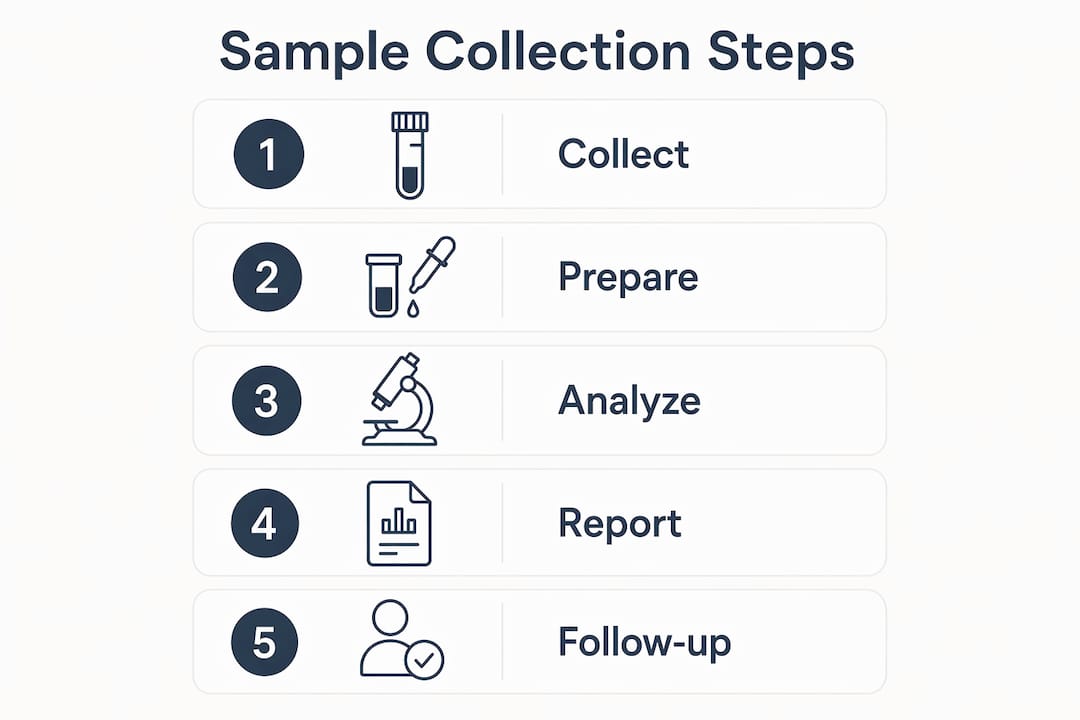
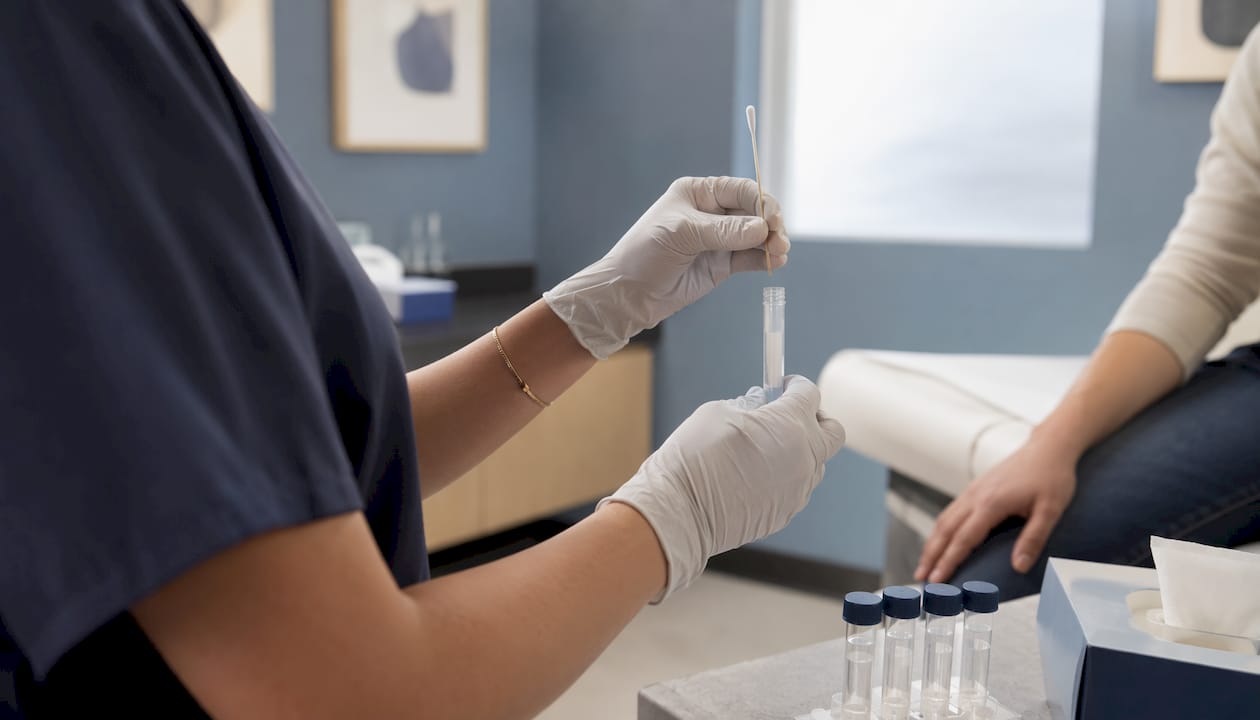
Specimen quality matters more than most patients realize. Degraded RNA, hemolyzed blood, or a poorly labeled tube can invalidate a result entirely. Labs that provide clear collection instructions and defined transport windows reject far fewer samples. For patients using mobile phlebotomy, the draw happens at home or the office, which removes the transport variable almost entirely.
Where molecular tests are used in clinical medicine
Molecular diagnostics now touches nearly every specialty. The COVID-19 pandemic accelerated adoption dramatically, moving many platforms from specialized research labs into routine clinical care.
Key application areas:
- Infectious disease: Pathogen identification, strain typing, and antiviral resistance detection. A positive NAAT for MRSA directly from a tissue specimen can guide antibiotic selection before culture results are available.
- Oncology: Tumor mutation profiling (KRAS, EGFR, BRAF, MSI status) determines eligibility for targeted therapies. Liquid biopsy detects circulating tumor DNA without a surgical biopsy.
- Pharmacogenomics: CYP2D6 and CYP2C19 genotyping predicts whether a patient will metabolize a drug normally, too slowly, or too rapidly — directly affecting dosing decisions for antidepressants, anticoagulants, and more.
- Prenatal and genetic screening: Cell-free fetal DNA in maternal plasma screens for chromosomal aneuploidies. Carrier screening panels cover hundreds of recessive conditions from a single saliva or blood draw.
- Transplant monitoring: Donor-derived cell-free DNA in recipient plasma detects early organ rejection before clinical symptoms appear.
Molecular diagnostics supports precision medicine by linking a patient’s specific genetic profile to the treatments most likely to work — or cause harm. That’s a fundamentally different value proposition than a standard blood chemistry panel.
How to read molecular test results and what their limits are
A positive molecular result means the target nucleic acid sequence was detected in the sample. It does not automatically mean active disease. A positive genetic test can indicate carrier status, past resolved infection, or predisposition — not necessarily current illness. Negative results carry their own caveats: if the wrong panel was ordered, the target was never in scope.
Common interpretation pitfalls:
- Variants of uncertain significance (VUS): A detected variant with insufficient evidence to classify as pathogenic or benign. Requires genetic counseling, not a clinical decision.
- Panel coverage gaps: A respiratory panel that doesn’t include a specific organism will return negative even if that organism is present.
- Sample quality failures: Degraded RNA or low cellularity in a biopsy can produce a false negative.
- Contamination: Amplification-based tests are so sensitive that trace environmental DNA can trigger a false positive in a poorly controlled lab.
Pro Tip: For any result involving a VUS, inherited condition, or unexpected positive, request a genetic counselor consult before making clinical decisions. For ambiguous infectious disease results, ask the lab whether a confirmatory or reflex assay is available.
How long does molecular testing take from collection to report?
The workflow runs: order placed → sample collected → transport to lab → extraction → amplification or library prep → analysis → pathologist review → report released. Each step adds time, and turnaround varies from minutes to weeks depending on method and complexity.
Turnaround ranges by method: Point-of-care PCR can return results in 15–45 minutes. Standard lab PCR panels typically report within hours to a few days. NGS tumor profiling commonly takes several days to more than a week, depending on panel depth and batching schedules.
Factors that lengthen turnaround include high-complexity panels, batching (labs often run NGS in batches rather than individually), confirmatory testing triggered by an ambiguous result, and specimen transport delays. Patients in Hanford ordering through a mobile phlebotomy service skip the clinic-visit step entirely, which can shave a day off the front end of the workflow. For more on what to expect from fast-result workflows, see Eivdiagnostics’ fast testing results guide.
How to evaluate a molecular pathology lab for quality
CLIA (Clinical Laboratory Improvement Amendments) certification is the federal baseline — any lab performing high-complexity molecular testing in the U.S. must hold it. CAP (College of American Pathologists) accreditation goes further: it requires on-site inspections, proficiency testing, and peer review of laboratory processes. CAP accreditation is the gold standard patients and providers should look for.
Questions to ask before ordering:
- Is the lab CLIA-certified for high-complexity testing?
- Is it CAP-accredited?
- Are the pathologists interpreting results board-certified in molecular pathology or a relevant subspecialty?
- What is the stated turnaround time for this specific test?
- Is confirmatory or reflex testing available if the initial result is ambiguous?
- Does the lab offer genetic counseling referrals for complex findings?
What if a lab isn’t CLIA or CAP accredited? CLIA certification is legally required for any lab reporting patient results in the U.S. A lab without it cannot legally issue clinical reports. CAP accreditation is voluntary but signals a meaningfully higher quality standard — its absence doesn’t disqualify a lab, but its presence is a strong positive signal.
Cost, insurance, and how to order molecular tests in the U.S.
Molecular tests are ordered three ways: through a clinician (most common), directly through a lab that accepts provider orders, or via direct-to-consumer purchase. Eivdiagnostics supports all three pathways — providers can submit orders directly, and patients can self-pay without a physician referral.
Practical cost and coverage guidance:
- Most molecular tests have assigned CPT codes; insurers use these to determine coverage and reimbursement.
- Prior authorization is common for NGS tumor panels and pharmacogenomic testing — confirm with the payer before ordering.
- Medicare and Medicaid cover many molecular tests when medically necessary and ordered by a clinician; coverage for direct-to-consumer orders varies.
- For genome sequencing and insurance access, privately insured patients are gaining more options, though coverage policies differ by plan.
Pro Tip: Ask the lab for the CPT code and an itemized cost estimate before scheduling. This lets you check your plan’s coverage and request a prior authorization if needed — avoiding a surprise bill after the fact.
Genetic data privacy is worth a direct question to any lab: ask whether your data is stored, for how long, and whether it’s shared with third parties. Most CLIA-certified labs operate under HIPAA, but data-sharing policies for research purposes vary.
How Eivdiagnostics delivers molecular diagnostic testing
Eivdiagnostics offers a full molecular pathology service line from its independent laboratory, supported by board-certified pathologists and built for both patient-direct and provider-ordered workflows.
Services and trust signals:
- Molecular pathology, clinical pathology, digital pathology, dermatopathology, histopathology, and cytology
- PCR-based and advanced sequencing platforms for infectious disease, oncology, and pharmacogenomics
- Mobile phlebotomy: a trained phlebotomist comes to your home or office in Hanford and the surrounding Central Valley
- Direct-to-consumer ordering: no physician referral required for self-pay patients
- Provider portal for clinician-submitted orders with rapid reporting workflows
- Board-certified pathologists reviewing and signing every report
- Clear turnaround time disclosures and sample collection instructions provided at order
For patients who want to understand the broader clinical pathology lab process before ordering, Eivdiagnostics publishes patient-facing resources on its site.
Where molecular diagnostics is headed
Three trends are reshaping the field right now. First, post-COVID infrastructure investments pushed molecular platforms into community labs and urgent care settings, making tests that once required a major academic center available locally. Second, point-of-care molecular devices are getting faster and smaller — some platforms now return actionable results in under 30 minutes at the clinic bedside. Third, deeper integration with electronic health records and therapeutic selection algorithms is turning a molecular pathology report into a direct input for treatment decisions, not just a diagnostic data point.
The practical takeaway: if you or your patient has a condition where the right treatment depends on a specific genetic or microbial profile, a molecular test is no longer a specialty referral — it’s a standard next step. Talk to your clinician, or contact Eivdiagnostics directly to discuss which panel fits the clinical question.
Key Takeaways
Molecular diagnostic testing analyzes DNA, RNA, or proteins to identify disease, guide treatment, and monitor outcomes — and the right test depends entirely on matching the method to the clinical question.
| Point | Details |
|---|---|
| Match method to question | Use targeted PCR for known pathogens or mutations; use NGS when broad mutation discovery or tumor profiling is needed. |
| Turnaround varies widely | Point-of-care PCR returns results in minutes; NGS tumor panels typically take days to weeks. |
| Results need clinical context | A positive result can mean carrier status, past exposure, or active disease — always correlate with clinical findings. |
| Check lab credentials | Confirm CLIA certification and CAP accreditation; ask whether pathologists are board-certified before ordering. |
| Eivdiagnostics serves Hanford | Eivdiagnostics offers molecular pathology, mobile phlebotomy, and direct-to-consumer ordering for patients and providers in the Central Valley. |
Why molecular accuracy is the part most labs underestimate
The conversation around molecular diagnostics tends to focus on the technology — which sequencer, which panel, which turnaround time. What gets less attention is the interpretive layer: the board-certified pathologist who reads the result in the context of the patient’s clinical picture, flags a VUS for counseling, or catches a sample quality issue before a report goes out.
A fast result from a poorly interpreted report isn’t precision medicine. It’s noise with a timestamp. The labs that actually move patient care forward are the ones that treat the pathologist’s review as the product, not the printout. For complex findings — inherited variants, ambiguous oncology results, unexpected pharmacogenomic flags — always request a clinician consult or genetic counseling referral before acting on the result alone.
Molecular diagnostic testing from Eivdiagnostics, made accessible in Hanford
Skip the referral maze. Eivdiagnostics gives patients in Hanford and the Central Valley a direct path to molecular diagnostic testing: order online as a self-pay patient, have a phlebotomist come to your home or office, and receive a report reviewed by a board-certified pathologist.
Providers can submit orders through the provider portal and receive results with clear turnaround disclosures. Self-pay patients can browse the full molecular pathology services menu and place an order without a physician referral. Have your CPT codes and any existing clinician order ready to speed up intake. To schedule mobile phlebotomy or ask a question about which panel fits your situation, visit eivdiagnostics.com or call the lab directly.
Useful sources
For patients, the clearest starting points are the NCI’s cancer terms dictionary and the CDC’s testing guidance — both written for a general audience. Clinicians will get more from the Merck Manuals professional edition and Annual Reviews, which cover NAAT methodology and the evolving molecular diagnostics landscape in clinical depth.
- NCI Dictionary of Cancer Terms — definitions of molecular testing, biomarker testing, and related terms
- CDC — testing guidance for infectious disease NAATs and public health applications
- CAP (College of American Pathologists) — accreditation standards and lab quality resources
- CMS / CLIA — federal certification requirements for clinical laboratories
- Yale Medicine — patient-friendly explainers on molecular diagnostics and precision medicine
- Cleveland Clinic — genetic testing overviews written for patients
- Merck Manuals (Professional) — detailed NAAT methodology and infectious disease lab diagnosis
- Annual Reviews (Analytical Chemistry) — peer-reviewed coverage of pandemic-driven molecular diagnostics expansion
FAQ
What is molecular diagnostic testing in simple terms?
Molecular diagnostic testing examines DNA, RNA, or proteins in a sample to identify disease, guide treatment, or monitor a condition. PCR and next-generation sequencing are the most common methods.
How long does molecular testing take to return results?
Turnaround ranges from minutes for point-of-care PCR to days or weeks for comprehensive NGS tumor panels, depending on method complexity and lab workflow.
Do you need a doctor’s order for molecular testing?
Not always. Labs like Eivdiagnostics accept direct-to-consumer orders from self-pay patients without a physician referral, though insurance reimbursement typically requires a clinician’s order.
What does a molecular pathology report include?
A molecular pathology report identifies detected variants, gene mutations, or pathogens, states whether findings are pathogenic or of uncertain significance, and provides clinical context for the ordering provider.
What is the difference between CLIA certification and CAP accreditation?
CLIA certification is the federal legal requirement for any U.S. lab reporting patient results; CAP accreditation is a voluntary, inspection-based standard that signals a higher level of quality assurance.
Recommended
- Clinical Pathology Labs: What Patients Need to Know | EIV Diagnostics | EIV Diagnostics
- Fast Testing Results: What Patients in Clovis Need to Know | EIV Diagnostics | EIV Diagnostics
- Molecular Pathology Services | EIV Diagnostics | EIV Diagnostics | EIV Diagnostics
- Dermatopathology Services: What Patients and Providers Need to Know | EIV Diagnostics | EIV Diagnostics