
By EIV Diagnostics · August 20, 2026
CBC Differential Explained: What Your Results Mean
Discover what your CBC differential results mean for your health. Learn how to interpret key values and what they indicate about your condition.

A complete blood count with differential is a blood test that breaks down your white blood cells into five specific types, instead of just giving you one total number. That breakdown is what lets a clinician tell the difference between a viral infection, a bacterial one, an allergic reaction, and something more serious that needs follow-up.
If your results just came back, do two things right now. First, look at your total white blood cell count and the absolute counts (not just percentages) for neutrophils and lymphocytes. Second, if you’re feeling fatigued, short of breath, or unusually pale, check your hemoglobin and hematocrit values too.
A single number outside the reference range rarely means disease on its own. Clinicians read these values alongside your symptoms and history, and mild, one-time deviations are often temporary. Recent illness, medication, and even stress can shift the numbers without anything being wrong.
Key Takeaways
A CBC with differential is more informative than a basic CBC because it breaks total white blood cells into five distinct types, and absolute counts, not percentages, drive clinical decisions.
| Point | Details |
|---|---|
| Differential breaks down WBCs | Neutrophils, lymphocytes, monocytes, eosinophils, and basophils each signal different causes. |
| Absolute counts matter most | Percentages can mislead when total WBC itself is abnormally high or low. |
| Reference ranges vary by lab | Always check the range printed on your specific report, not a generic online chart. |
| Red flags need urgent care | Bleeding with low platelets, fever with low neutrophils, or severe symptoms with low hemoglobin need same-day attention. |
| Abnormal results often lead to more testing | Peripheral smears, iron studies, or hematology referral commonly follow a flagged CBC. |
Table of Contents
- What Does a CBC With Differential Include That a Regular CBC Doesn’t?
- Understanding Your Red Blood Cell Results
- What Do Low or High Platelet Counts Mean?
- Why the Total WBC Number Alone Isn’t Enough
- Neutrophils High, Lymphocytes High: What Each White Cell Type Signals
- How to Interpret Borderline or Abnormal CBC Results
- When Should You Seek Urgent Care for Abnormal CBC Results?
- How Is a CBC With Differential Performed, and How Should You Prepare?
- What Tests Come After an Abnormal CBC Differential?
- How EIV Diagnostics Reports CBC Differential Results
- A Note From EIV Diagnostics
- Sources
- FAQ
What Does a CBC With Differential Include That a Regular CBC Doesn’t?
A standard CBC tells you how many red blood cells, white blood cells, and platelets you have. A CBC with differential goes a step further and splits that white blood cell number into five separate categories: neutrophils, lymphocytes, monocytes, eosinophils, and basophils.
That distinction is the whole point of ordering the differential instead of a plain CBC. A total WBC count of 12,000 cells/µL could mean almost anything on its own. If lymphocytes are dominating instead, a virus is the more probable culprit.
Labs report each cell type two ways: as a percentage of total white cells, and as an absolute count (the actual number of cells per microliter of blood). The absolute count matters more clinically, because percentages can mislead when the total WBC itself is unusually high or low. A patient with a low total WBC could still have a normal percentage of neutrophils but a dangerously low absolute neutrophil count.
Providers typically order a CBC with differential when:
- You have symptoms of infection, like fever or unexplained fatigue
- Your provider is monitoring chemotherapy or another treatment known to affect blood cell production
- A routine screening is being done to catch anemia or blood disorders early
- Follow-up is needed after an abnormal basic CBC
Understanding Your Red Blood Cell Results
The red cell side of your report covers red blood cell (RBC) count, hemoglobin, hematocrit, and a handful of indices with unfamiliar abbreviations: MCV, MCH, MCHC, and RDW.
Hemoglobin is the oxygen-carrying protein inside red cells, and hematocrit is the percentage of your blood volume made up of red cells. Low values in both usually point to anemia, whether from iron deficiency, chronic blood loss, or a nutritional gap like low B12. High values are less common and can show up with dehydration or, less often, certain lung or bone marrow conditions.
The indices help classify what kind of anemia you might have:
- MCV (mean corpuscular volume) measures average red cell size. Low MCV suggests iron-deficiency anemia; high MCV can point toward B12 or folate deficiency.
- MCH and MCHC describe how much hemoglobin is packed into each cell, which helps confirm the same categories.
- RDW (red cell distribution width) measures how much red cell sizes vary. A high RDW alongside a normal MCV can be an early sign of a developing deficiency before the average cell size shifts.
None of these numbers diagnose anything by themselves. A low MCV with a normal RDW looks different, clinically, than a low MCV with a sky-high RDW, even though both show “microcytic” anemia on paper.
Pro Tip: Pull up your last two or three CBC reports if you have them. A value that’s stable over time, even if slightly outside the reference range, usually means less than a value that just changed direction. And always check the reference range printed on your specific report, not one you found online, since ranges vary by lab and equipment.
What Do Low or High Platelet Counts Mean?
Platelets are the cell fragments responsible for clotting. A typical adult reference range for platelets is generally within the normal limits provided by your lab’s own reference range, though your lab’s own printed range is the one that actually applies to your report.
A low count, called thrombocytopenia, can come from viral infections, certain medications, autoimmune conditions, or bone marrow problems. A high count, thrombocytosis, often shows up after inflammation, infection, or iron deficiency, and sometimes after surgery or even a recent injury.
Most modest platelet abnormalities are not emergencies. What changes the calculus is the combination: a very low count paired with visible bleeding, bruising, or blood in urine or stool needs same-day medical attention, not a wait-and-see approach.
If your count comes back critically low or high with no clear symptom explanation, your provider will likely repeat the test before drawing conclusions.
Why the Total WBC Number Alone Isn’t Enough
The typical adult reference interval for total white blood cells runs about 4,500 to 11,000 cells per microliter, though your lab’s own range may differ slightly.
That single number can’t tell you much on its own. Two patients could both show a WBC of 13,000, but one has 90% neutrophils (suggesting bacterial infection) while the other has 60% lymphocytes (suggesting something viral). Same total, completely different clinical picture. That’s exactly why absolute counts, not just percentages, are what clinicians actually rely on to sort this out.
Neutrophils High, Lymphocytes High: What Each White Cell Type Signals
Each of the five white blood cell types has its own job in your immune system, and shifts in any one of them tend to follow a pattern.
Neutrophils are your first responders against bacteria. Neutrophils high meaning usually points to bacterial infection, acute stress, or inflammation. When immature neutrophils (called “bands”) show up in higher numbers, it’s referred to as a “left shift,” a sign the bone marrow is pumping out cells faster than usual to fight something active. Low neutrophils, called neutropenia, can result from viral infections, certain medications like chemotherapy, or bone marrow suppression, and it raises infection risk since your primary bacterial defense is depleted.
Lymphocytes handle viral infections and long-term immune memory. Lymphocytes high meaning often traces back to a viral illness, though chronic lymphocytic conditions are a less common possibility in older adults with persistently elevated counts. Low lymphocyte counts can follow steroid use, acute illness, or immune-suppressing conditions.
Monocytes clean up cellular debris and help coordinate longer immune responses. Elevated monocytes show up with chronic infections, autoimmune disease, or during recovery from an acute illness.
Eosinophils high causes typically include allergic reactions, asthma, and parasitic infections, since eosinophils specialize in fighting parasites and moderating allergic responses. Persistently high eosinophils with no obvious allergy or travel history sometimes prompts a broader workup.
Basophils, the rarest of the five, rise with certain allergic reactions and, less commonly, some blood disorders. Because they make up such a tiny fraction of total white cells, small changes here matter less than shifts in the other four.
| White Cell Type | Normal Role | Common Cause When High |
|---|---|---|
| Neutrophils | Fights bacteria, first responder | Bacterial infection, acute inflammation |
| Lymphocytes | Targets viruses, immune memory | Viral infection |
| Monocytes | Clears debris, chronic immune response | Chronic infection, autoimmune disease |
| Eosinophils | Fights parasites, moderates allergies | Allergic reaction, parasitic infection |
| Basophils | Involved in allergic response | Allergic reaction (less common) |
Different white blood cells respond to different triggers: neutrophils to bacteria, eosinophils to parasites and allergens, lymphocytes to viruses. That pattern recognition is often the fastest way a clinician narrows down a diagnosis without ordering a dozen separate tests.
Occasionally a report also flags immature granulocytes or nucleated red blood cells, cell forms that shouldn’t normally circulate in the bloodstream in meaningful numbers. When an automated analyzer flags these, a manual peripheral blood smear review is the standard next step, letting a trained professional look at the cells directly under a microscope rather than relying on the machine’s count alone.

How to Interpret Borderline or Abnormal CBC Results
Clinicians generally work through abnormal results in a fairly predictable sequence; the clinical evaluation of these abnormal lab results during screening is well explained in what happens with abnormal lab results at the immigration medical exam.
- Isolated, mild abnormality. A single value slightly outside the range, with no symptoms, often just gets repeated in a few weeks to confirm it wasn’t a fluke or a transient reaction.
- Clustered abnormalities. Multiple values shifting together, like low hemoglobin plus low platelets plus low white cells, points toward something systemic like a bone marrow problem, and usually triggers same-week follow-up testing.
- Persistent vs. transient changes. A value that normalizes on repeat testing is treated very differently than one that stays abnormal or keeps worsening over successive visits.
From there, the decision to watch versus dig deeper usually comes down to a few questions: Does the pattern match an obvious explanation, like a recent cold or a new medication? Are multiple cell lines affected at once? Has the trend been stable, improving, or worsening across tests? Depending on the answers, a provider might simply repeat the CBC, add a peripheral smear or reticulocyte count, run a chemistry panel, or refer out to hematology for something that looks more complex than primary care typically manages.
Pro Tip: Before a follow-up appointment, write down your current symptoms, when they started, and every medication and supplement you’re taking. A CBC number in isolation tells your clinician far less than the same number paired with your actual history.
When Should You Seek Urgent Care for Abnormal CBC Results?
Most CBC abnormalities can wait for a routine follow-up. A smaller set of findings cannot.
- Spontaneous bruising or bleeding paired with a very low platelet count
- Fever combined with a very low neutrophil count (a combination sometimes called febrile neutropenia)
- Severe shortness of breath, chest pain, or dizziness paired with very low hemoglobin
- Signs of possible sepsis, such as high fever, rapid heart rate, and low blood pressure, alongside a markedly elevated white cell count
If any of these apply to you, call your clinician immediately or go to urgent care or the emergency room, depending on how severe your symptoms are. Bring a copy of your prior results if you have them.
How Is a CBC With Differential Performed, and How Should You Prepare?
The process is straightforward, and most people don’t need to do anything special beforehand.
- A phlebotomist draws blood from a vein, usually in your arm, into a tube designed to prevent clotting before analysis.
- The sample goes through an automated hematology analyzer that counts and sorts cell types within minutes.
- If the analyzer flags something abnormal, a manual smear review follows, adding time to the report but improving accuracy.
Fasting usually isn’t required for a CBC, though your provider may ask you to fast if other tests are being drawn at the same time. Recent illness, strenuous exercise, certain medications, and even significant stress can temporarily shift your numbers, which is one more reason a single odd result rarely tells the whole story. Most routine results are available within a day; flagged samples needing manual review can take a bit longer.
What Tests Come After an Abnormal CBC Differential?
An abnormal result rarely ends the workup. It usually starts one.
Depending on the pattern, common next steps include a peripheral blood smear, reticulocyte count, iron studies, vitamin B12 and folate levels, a comprehensive metabolic panel, a coagulation panel, or in more complex cases, flow cytometry, PCR testing for specific infections, or a bone marrow biopsy.
Primary care manages the majority of mild-to-moderate findings, especially when a clear cause like infection or iron deficiency is likely. Hematology referral tends to happen when abnormalities persist across multiple tests, involve more than one cell line, or raise concern for a blood cancer or bone marrow disorder. Infectious disease specialists get involved when a specific pathogen is suspected and needs targeted testing beyond what a standard panel provides. The exact combination of follow-up tests depends heavily on which values are abnormal and how they cluster together.
How EIV Diagnostics Reports CBC Differential Results
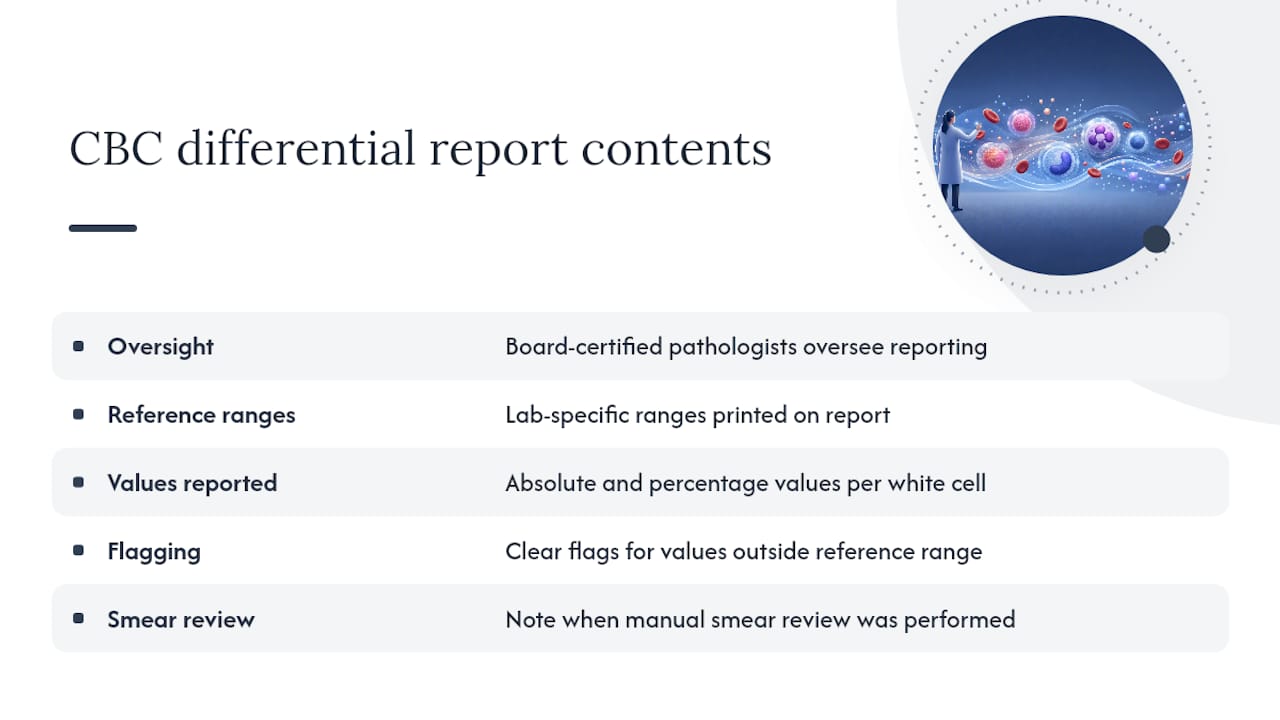
EIV Diagnostics is an independent pathology laboratory offering clinical pathology, molecular pathology, digital pathology, and mobile phlebotomy services, staffed by board-certified pathologists who oversee result reporting.
A reliable lab report should give you more than a bare number. Expect lab-specific reference ranges printed directly on the report, both absolute and percentage values for each white cell type, clear flags on anything outside range, and a note whenever a manual smear review was performed to confirm an automated result.
A CBC differential report is only as useful as the context around it. Clear flagging, absolute counts, and a documented smear review when needed give both patients and providers something they can actually act on, not just a page of numbers.
EIV Diagnostics supports clinicians with timely, detailed reporting and offers patients mobile phlebotomy, so a blood draw can happen at home or the office instead of a waiting room. For details on getting testing done directly, see how blood work without a standing doctor’s order typically works.
A Note From EIV Diagnostics
Your CBC differential is a snapshot, not a verdict. Numbers on a page mean the most when a clinician reads them next to your symptoms, history, and prior results. If something on your report concerns you, gather your symptom timeline and medication list, then reach out to your provider.
If you need testing done and want it handled conveniently, EIV Diagnostics offers mobile phlebotomy and clinical pathology services, including clinical pathology testing for patients and providers who want accurate, well-documented results without the runaround.
Sources
- Normal and Abnormal Complete Blood Count With Differential - StatPearls
- Manual review after automated hematology analyzer flags (PubMed article)
Bring these to your next appointment if you want to talk specifics with your clinician.
This article is general information, not a substitute for advice from a qualified doctor. Consult a qualified healthcare professional about your own circumstances before acting on anything here.
FAQ
How do you interpret a CBC differential?
Look at the absolute counts for each white cell type alongside your total WBC, then consider which cell types are elevated or low relative to your symptoms; clinicians combine this with history rather than reading any single value in isolation.
What should you worry about in CBC results?
Focus on very low platelets with bleeding, very low neutrophils with fever, or very low hemoglobin with chest pain or severe shortness of breath. These combinations warrant prompt medical attention rather than a wait-and-see approach.
What cancers can a CBC detect?
A CBC with differential can raise suspicion for blood cancers like leukemia when patterns show unexplained, persistent abnormalities across multiple cell lines, but it cannot diagnose cancer on its own; a bone marrow biopsy or flow cytometry is needed to confirm.
What is the normal range for CBC counts?
The typical adult total WBC reference interval is about 4,500 to 11,000 cells per microliter, though exact ranges vary by lab, and ranges for children differ from those used in adults.
What is the difference between a CBC and a CBC with differential?
A standard CBC gives one total white blood cell number, while a CBC with differential breaks that total into five specific cell types, giving clinicians far more information about the likely cause of any abnormality.
Recommended
- ICD-10 for CBC with Diff: Medicare Guide for Providers | EIV Diagnostics | EIV Diagnostics
- CMP Test Code 10231: What It Measures and Why It Matters | EIV Diagnostics | EIV Diagnostics
- Clinical Pathology Labs: What Patients Need to Know | EIV Diagnostics | EIV Diagnostics
- Cytology Testing in Tulare County: What You Need to Know | EIV Diagnostics | EIV Diagnostics