
By EIV Diagnostics · August 3, 2026
Same Day Lab Results: How to Get Them Fast
Discover how to get same day lab results quickly! Learn the best options for urgent and non-urgent testing to receive fast, accurate results.

Most common blood panels — CBC, BMP/CMP, electrolytes, glucose, creatinine, pregnancy hCG, PT/INR, and urgent troponin — can realistically return same day when processed on-site. The fastest route: go to a hospital or ER for urgent clinical needs, or choose a direct-to-consumer (DTC) lab with in-house analyzers for non-urgent testing. Hospital and emergency labs prioritize these panels for rapid treatment decisions, often reporting most high-volume panels within hours (commonly 1–2 hours) of the draw.
Your fastest path to same day results:
- For urgent symptoms (chest pain, shortness of breath), go directly to an ER with an on-site 24/7 lab.
- For non-urgent needs, choose an urgent care clinic or DTC lab that explicitly runs tests in-house, not a facility that ships samples to a reference lab.
- At check-in, ask: “Do you have on-site analyzers?” and “What is your turnaround time for this specific test?”
- Request STAT processing if a clinician determines it is medically justified.
Look for labs carrying CLIA certification and CAP accreditation, with board-certified pathologists overseeing results. Those two credentials are the clearest signal that a lab’s speed claims are backed by real quality controls.
Table of Contents
- Which lab tests can actually return same day?
- What actually determines how fast your results arrive?
- How to get same day or next day results: a practical checklist
- What does same day testing actually cost?
- Tests that routinely take the longest — and why
- How to choose a lab that actually delivers fast, accurate results
- Key Takeaways
- Speed without shortcuts: why both matter
- Eivdiagnostics: fast results with board-certified oversight
- Useful sources
- FAQ
Which lab tests can actually return same day?
The answer depends almost entirely on whether the test runs on an automated analyzer or requires biological time, batching, or specialist interpretation. Routine panels processed on automated analyzers run multiple times per day at high volume; specialized or low-volume tests get batched or shipped out.
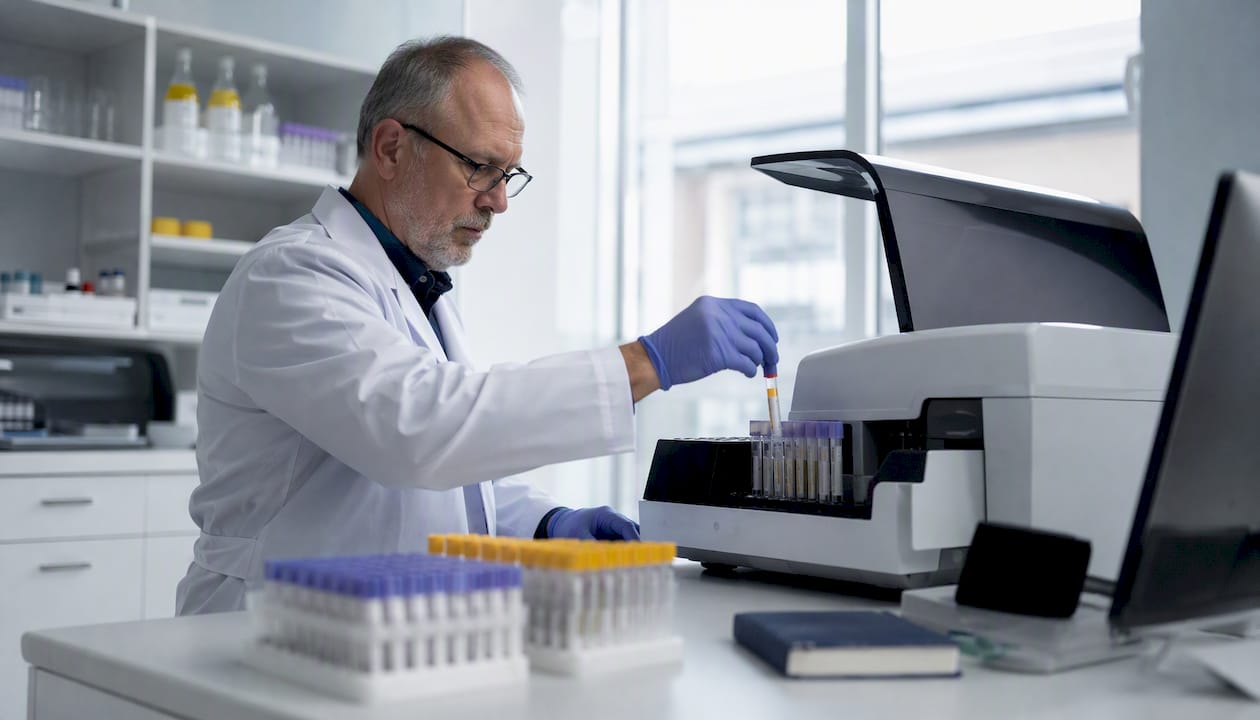
| Test | On-site hospital | Outpatient in-house | Send-out / reference lab |
|---|---|---|---|
| CBC | typically 1–2 hours | typically 1–2 hours | several business days |
| BMP / CMP | typically 1–2 hours | typically 1–2 hours | several business days |
| Glucose / electrolytes | typically 1–2 hours | typically 1–2 hours | several business days |
| PT/INR | typically 1–2 hours | typically 1–2 hours | several business days |
| Pregnancy hCG | typically 1–2 hours | typically 1–2 hours | several business days |
| Troponin (urgent) | typically about 1 hour | typically 1–2 hours | Not recommended |
| Rapid HIV antibody | very rapid point-of-care results | very rapid point-of-care results | N/A |
| TSH / thyroid panel | 2–4 hours (on-site) | Often next day | 2–5 business days |
| Vitamin D / hormones | Rarely same day | 1–3 days | 3–7 business days |
| Genetic / molecular panels | Not available | Days to weeks | Days to weeks |
Rapid HIV antibody tests return results in 10–20 minutes at point-of-care, but confirmatory or viral load assays run on a completely different schedule. Understanding that gap matters before you assume a “rapid” label means the full picture.
Tests most likely to return same day:
- High-volume chemistry panels: BMP, CMP, electrolytes, creatinine, glucose
- Hematology: CBC with differential
- Coagulation: PT/INR
- Pregnancy: urine or serum hCG
- Cardiac: troponin (when ordered STAT)
Pro Tip: When a lab advertises “same-day results,” ask which specific tests that covers. Many clinics mean CBC and basic chemistry only. Thyroid panels, vitamin D, and hormone levels often still go to a reference lab, even at facilities that market fast turnaround.
What actually determines how fast your results arrive?
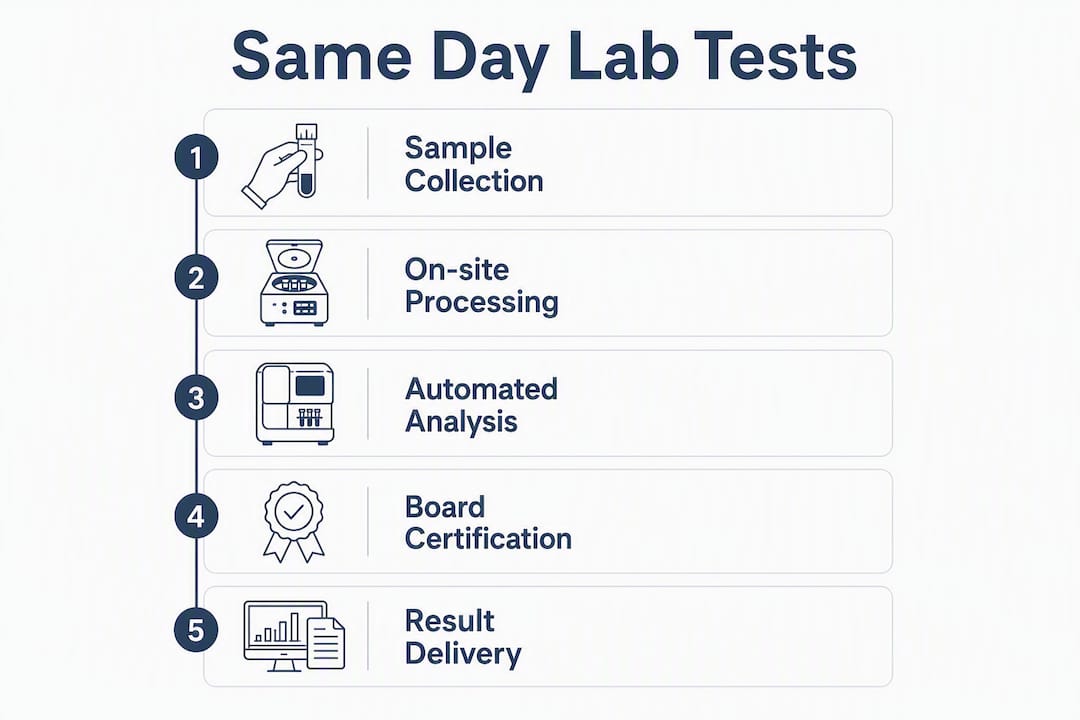
Speed is not just about the analyzer. Total turnaround time (TAT) includes every step from draw to patient notification: collection, transport, centrifugation, analysis, quality review, and result release. Even when an analyzer finishes in 30 minutes, the overall process commonly adds 4–24 hours in outpatient settings.
The main factors:
- On-site vs. reference lab: In-house analyzers produce results within hours; send-out workflows add 3–7 business days for transit and batch processing, plus the risk of redraws if a specimen clots or is inadequate.
- Courier schedules and cutoffs: Many outpatient labs have one or two daily courier pickups. Miss the afternoon cutoff and your sample sits overnight.
- Batching: Low-volume or specialized tests accumulate until there are enough samples to run a batch economically. That can push results to the next day or later.
- Centrifugation and sample prep: Serum-based tests require spin-down time before analysis begins.
- Clinician review and portal release: Provider-ordered tests typically add 1–2 days before results reach the patient because a clinician must review and release them. DTC tests often bypass or automate that step.
- STAT vs. routine priority: Analyzers process STAT orders before routine ones. Without a STAT flag, your sample joins the queue.
Workflow failures and communication breakdowns between lab staff and ordering clinicians are a frequently overlooked source of result delays — especially in busy outpatient settings where STAT flags get missed or portal release rules are inconsistently applied.
Clinical-priority tests — troponin, D-dimer, PT/INR — are routinely flagged for immediate processing in hospital settings because treatment decisions depend on them. That same urgency does not automatically apply at a standalone outpatient clinic.
How to get same day or next day results: a practical checklist
- Decide urgency first. Chest pain, stroke symptoms, or severe bleeding go to the ER. Everything else can go through urgent care or a DTC lab.
- Choose the right facility. Confirm the clinic runs tests in-house before you walk in. Many urgent cares that advertise fast testing still send samples to a reference lab with next-day TATs.
- Confirm on-site processing and TAT. Ask: “Do you have on-site analyzers for this test?” and “When is your last courier pickup today?”
- Request STAT or priority processing if a clinician agrees it is clinically justified. Without that flag, routine queue times apply.
- Confirm how results reach you. Ask: “Will results post directly to a patient portal, or do they require clinician release first?” Direct-to-consumer orders often post faster because automated review replaces manual clinician sign-off.
Exact questions to ask at check-in:
- “Do you process this test on-site or send it to a reference lab?”
- “What is your typical turnaround for a CBC / BMP today?”
- “When is the last courier pickup if you do send out?”
- “Will I see results in a portal, or does my doctor have to release them?”
Pro Tip: If the test is non-urgent and you need results today, stay at the facility only if they confirm on-site processing. Otherwise, mobile phlebotomy paired with a same-day courier to an in-house lab can get you results without the waiting room.

What does same day testing actually cost?
Pricing varies by setting, and the differences are significant.
- Insured via provider or clinic: Insurance typically covers medically necessary tests ordered by a physician. ER and hospital labs bill at facility rates, which are higher. Expect copays, deductibles, and potential surprise bills for out-of-network draws.
- Self-pay DTC pricing: Direct-to-consumer labs publish transparent self-pay prices. A basic metabolic panel often runs $20–$60 at DTC labs, compared to $100–$300+ at hospital outpatient facilities billed to insurance. Eivdiagnostics publishes self-pay options for patients ordering without insurance.
- STAT or rush fees: Some labs charge an additional fee for STAT processing. Ask upfront whether a priority flag adds cost.
- Mobile phlebotomy visit fees: Home or office draws typically carry a separate visit fee on top of the test cost. That fee covers the phlebotomist’s travel and draw time.
For affordable self-pay lab testing, DTC labs consistently offer the most price transparency. Insurance can lower out-of-pocket costs for covered tests, but it also introduces clinician review delays that push results past same day. If speed is the priority, self-pay DTC often wins on both price clarity and turnaround.
Tests that routinely take the longest — and why
Some tests cannot be accelerated regardless of equipment. Biology sets the floor.
- Blood cultures: Bacteria or fungi must grow to detectable levels. That takes 1–5 days minimum, sometimes longer for slow-growing organisms.
- Genetic and molecular panels: Next-generation sequencing and complex PCR workflows require nucleic acid extraction, amplification, sequencing, and bioinformatic analysis. Expect days to weeks. For context on why molecular testing timelines differ from rapid PCR, the assay type matters as much as the lab’s equipment.
- Histology and tissue pathology: Tissue samples require fixation, embedding, sectioning, staining, and pathologist review. Standard turnaround is 3–7 business days; complex cases take longer.
- Specialized hormones and reference immunoassays: Low-volume tests like cortisol stimulation panels, specialized thyroid antibodies, or rare tumor markers are batched at reference labs and commonly take 2–14 days.
If you are waiting on a long-turnaround test and need interim guidance, ask your ordering provider whether any preliminary findings are available, or whether a faster proxy test can inform treatment decisions while the full result is pending.
Automated chemistry runs quickly; microbiology cultures need organism growth and cannot be shortened by faster equipment. That is a biological limit, not a lab efficiency problem.
How to choose a lab that actually delivers fast, accurate results
Not every lab that claims “same-day” delivers it. Here is how to verify before you commit.
Trust signals to look for:
- CLIA certification: Required by federal law for any lab performing clinical testing. Verify at the CMS CLIA database.
- CAP accreditation: Voluntary but rigorous. CAP-accredited labs meet standards beyond the CLIA minimum.
- Board-certified pathologists: Oversight by a pathologist means results go through expert review, not just automated flagging.
- Published turnaround times: Reputable labs list specific TATs by test, not vague “fast results” language.
- Patient portal access: Direct result delivery to a secure portal speeds personal access.
- Mobile phlebotomy availability: On-site or home draw options reduce transit time and missed courier windows.
- Transparent self-pay pricing: Published prices signal operational confidence.
Red flags:
- “Same-day results” with no published TATs by test name
- No mention of on-site analyzers (all samples sent to a reference lab)
- No pathologist or clinician oversight listed
- Hidden courier cutoffs not disclosed at booking
For a deeper look at what clinical pathology labs actually do and how to evaluate them, the operational details matter more than marketing language.
Key Takeaways
Same day lab results are realistic for high-volume chemistry and hematology panels when processed on-site, but biological limits, courier schedules, and clinician review steps make same-day turnaround impossible for cultures, genetic panels, and most send-out tests.
| Point | Details |
|---|---|
| High-probability same-day tests | CBC, BMP/CMP, glucose, PT/INR, hCG, and urgent troponin typically return within 1–2 hours when run on in-house analyzers. |
| Ask about on-site processing | Many clinics advertising fast results still send samples to reference labs with 1–3 business day TATs. |
| Clinician review adds time | Provider-ordered tests typically add 1–2 days before results reach the patient; DTC orders often post faster. |
| Long tests cannot be rushed | Blood cultures (1–5+ days), genetic panels (days to weeks), and histology (3–7 days) are set by biology, not lab speed. |
| Eivdiagnostics as a vetted option | Eivdiagnostics offers mobile phlebotomy, in-house processing, and board-certified pathologist oversight for fast, accurate results. |
Speed without shortcuts: why both matter
The push for same-day turnaround is legitimate. Waiting three days for a basic metabolic panel when you feel unwell is genuinely frustrating, and in many cases, completely unnecessary given what modern in-house analyzers can do. But the labs that cut corners to hit a speed claim — skipping quality checks, bypassing pathologist review, or releasing unverified results directly to patients — create a different kind of problem.
What most people underestimate is how much the verification step protects them. A flagged result that looks alarming on a raw printout often has a straightforward clinical explanation that a board-certified pathologist catches immediately. Without that review layer, patients end up in urgent care over a lab artifact. The real value of a fast lab is not just speed — it is speed with oversight. Mobile phlebotomy and in-house analyzers make the draw-to-result window shorter; board-certified review makes the result worth trusting.
Eivdiagnostics: fast results with board-certified oversight
If you want same-day or next-day turnaround without the ER waiting room or the uncertainty of a reference lab send-out, Eivdiagnostics offers a direct path. Based in Fresno, CA, the lab combines mobile phlebotomy (home or office draws) with in-house processing and board-certified pathologist oversight — the combination that actually produces fast, reliable results rather than just fast ones.
Eivdiagnostics serves patients directly, with or without a doctor’s order, and accepts self-pay with transparent pricing. Healthcare providers can order advanced diagnostics including clinical pathology services, molecular pathology, and digital pathology. The mobile phlebotomy option eliminates the courier delay that pushes most outpatient results to next day — the draw happens where you are, and processing begins immediately.
To order a test or book a mobile phlebotomy visit, contact Eivdiagnostics directly through eivdiagnostics.com.
Useful sources
- Navigating blood work at urgent care — SolvHealth: practical guide to urgent care lab workflows, in-house vs. send-out processing, and typical CBC turnaround times.
- Blood test results same day: which labs return fast — Kantesti: detailed breakdown of which panels are high-probability same-day and how reference lab batching affects outpatient TATs.
- How long do blood test results take? — FixFirst Health: explains clinician review delays and how DTC orders can speed patient access.
- How long do blood tests take? Plus tips for getting results fast — Healthline: covers rapid point-of-care tests vs. laboratory molecular testing, including HIV rapid antibody timelines.
- Walk-in lab tests: what to expect — Health First Urgent Care: addresses patient expectations vs. clinical reality for automated chemistry and microbiology tests.
- How long do blood test results take? A GP explains — Shire Family Medical: covers send-out workflows, specimen problems, and the 3–7 business day range for reference lab results.
FAQ
Can you get blood test results back the same day?
Yes, for high-volume panels like CBC, BMP/CMP, glucose, and PT/INR when processed on in-house analyzers. Hospital and urgent care labs with on-site equipment commonly return these results within 1–2 hours.
What questions should I ask to get same day results?
Ask whether the lab processes your specific test on-site, what the turnaround time is for that test today, and whether results post directly to a patient portal or require clinician release first.
What lab results take the longest?
Blood cultures take 1–5 days minimum because organisms must grow to detectable levels. Genetic and molecular panels, histology, and specialized reference immunoassays commonly take days to weeks regardless of lab speed.
Does direct-to-consumer testing give faster results than provider-ordered tests?
Often yes. DTC results frequently post faster because automated review replaces manual clinician sign-off, which typically adds 1–2 days to provider-ordered results.
Can Eivdiagnostics provide same day or next day results?
Eivdiagnostics offers mobile phlebotomy combined with in-house processing and board-certified pathologist oversight, which shortens the draw-to-result window for common panels. Contact Eivdiagnostics directly to confirm turnaround times for your specific test.
Recommended
- Fast Testing Results: What Patients in Clovis Need to Know | EIV Diagnostics | EIV Diagnostics
- Mobile Phlebotomy | EIV Diagnostics | EIV Diagnostics
- Top 5 11 Panel Drug Test Providers 2026 | EIV Diagnostics | EIV Diagnostics
- Top 4 Affordable Lab Testing Providers 2026 | EIV Diagnostics | EIV Diagnostics