
By EIV Diagnostics · August 1, 2026
Direct Access Lab Testing: Order Your Own Labs Today
Discover the convenience of direct access lab testing. Order your tests online, get results quickly, and take charge of your health today!

Direct access lab testing lets you order clinical lab tests yourself, pay out of pocket, and receive results through a secure portal without a doctor’s order. Pick a test online, pay upfront, get your sample collected at a draw center or through mobile phlebotomy, and your results come back from a CLIA-certified lab the same way a provider-ordered test would. Three things to confirm before you order:
- The lab holds a current CLIA certificate
- Prices are published on the site before checkout
- Results are delivered through a password-protected portal
About 37 states and the District of Columbia allow consumers to order some or all lab tests directly, so access depends on where you live. If you’re in a state that permits it, the process is straightforward.
Table of Contents
- How does direct access lab testing work, step by step?
- What tests can you actually order yourself?
- What does direct access testing cost, and will insurance cover it?
- Where can you get your sample collected?
- Are direct access test results as accurate as provider-ordered ones?
- When is direct access testing appropriate, and when is it not?
- How do you choose a reputable direct-access lab provider?
- Key Takeaways
- A lab professional’s honest take on self-ordered testing
- Order direct access tests through Eivdiagnostics
- Useful sources
- FAQ
How does direct access lab testing work, step by step?
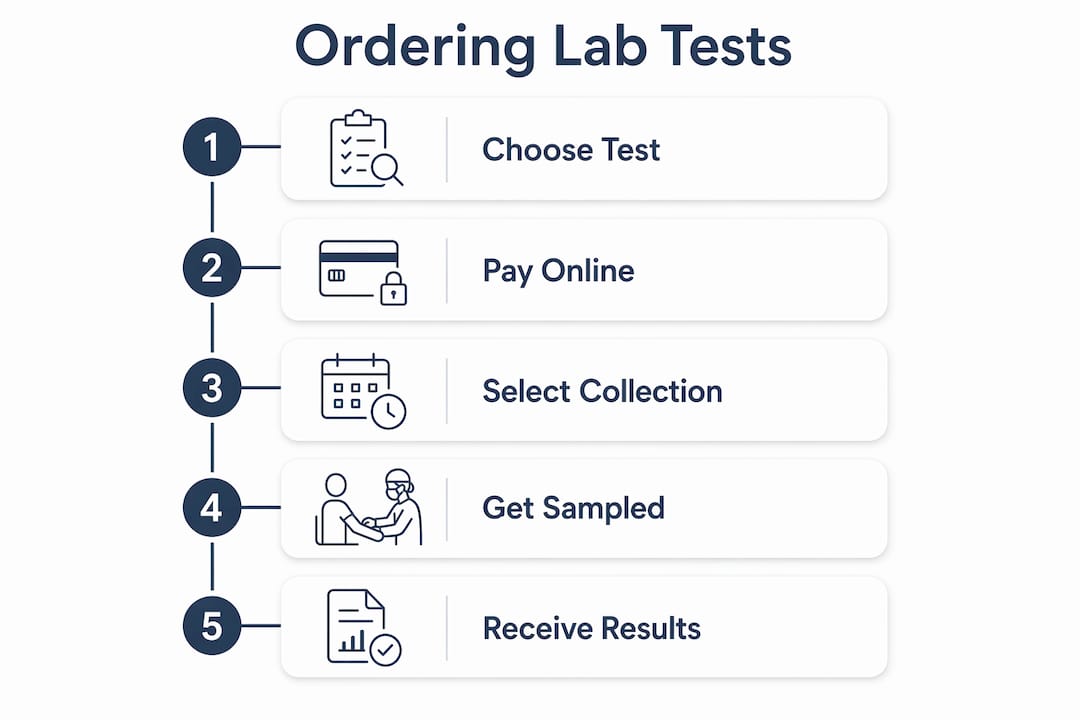
The ordering flow is simpler than most people expect. Here’s the typical sequence:
- Pick your test or panel online. Browse the lab’s menu, select individual tests (CBC, lipid panel, TSH) or a bundled wellness panel, and add to cart.
- Pay out of pocket at checkout. Payment is due upfront. Insurance generally won’t reimburse self-ordered tests, so you’re paying the listed price directly.
- Choose your collection method. Schedule a draw at a patient service center, book mobile phlebotomy at your home or office, or receive an at-home collection kit by mail.
- Sample goes to a CLIA-certified lab. Whether you walked in or a phlebotomist came to you, the specimen is processed under the same federal quality standards as any provider-ordered test.
- Results post to your secure portal. Most direct access testing services deliver results within one to three business days, sometimes faster for routine panels. You’ll get a numeric value, a reference range, and often brief educational notes — but not a formal medical diagnosis.
Pro Tip: Download or print your results and bring them to your next primary care appointment. A shareable report keeps your clinician in the loop and avoids duplicate testing later.
What tests can you actually order yourself?
Clinically useful tests that are commonly available for self-directed lab testing include:
- Comprehensive Metabolic Panel (CMP) / Basic Metabolic Panel (BMP): kidney function, electrolytes, blood sugar, liver enzymes
- Complete Blood Count (CBC): red cells, white cells, platelets
- Lipid panel: total cholesterol, LDL, HDL, triglycerides
- TSH / thyroid panel: thyroid-stimulating hormone, free T3/T4
- HbA1c: three-month blood sugar average, useful for diabetes monitoring
- Vitamin D (25-OH): deficiency screening
- STD panels: HIV, chlamydia, gonorrhea, syphilis, hepatitis B/C
- Basic hormone panels: testosterone, estradiol, DHEA-S
Skip IgG food-sensitivity panels. Professional bodies do not support them as clinically valid for diagnosing food intolerance, and the results routinely mislead people into unnecessary dietary restrictions. The tests above are best used for screening or monitoring established markers, not for diagnosing new or serious symptoms on your own.
What does direct access testing cost, and will insurance cover it?
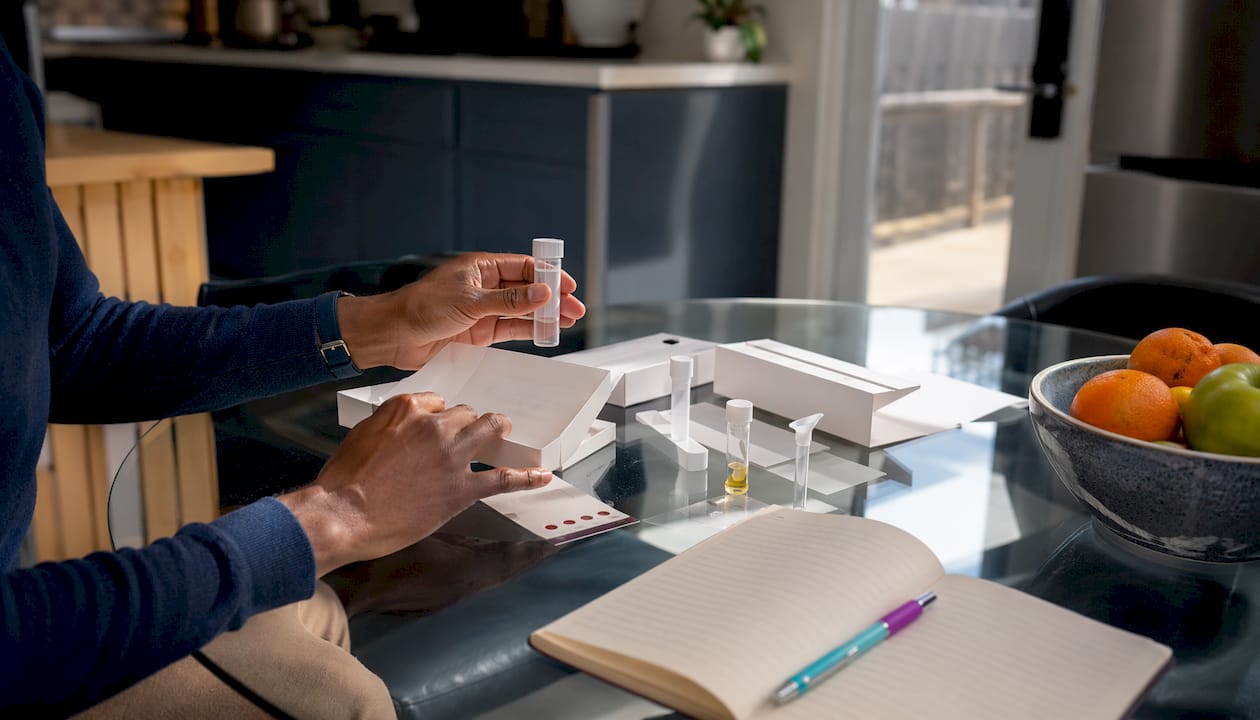
Consumers pay out of pocket for self-ordered tests because insurers typically reimburse only clinician-authorized orders. That’s unlikely to change soon. The upside: self-pay prices at independent labs are often lower than the billed rate your insurer would negotiate anyway.
Pricing varies by test complexity, panel size, and collection method. The table below shows representative price shapes, not exact quotes, since published prices differ by provider.
| Test Type | Typical Price Shape |
|---|---|
| Single routine blood test (e.g., TSH, CBC) | Lower end of the self-pay range |
| Multi-panel wellness package (CMP + CBC + lipid + HbA1c) | Mid-range bundled price, often less than individual tests combined |
| At-home collection kit (finger-stick or saliva) | Kit fee plus lab processing; return shipping may be included or extra |
| Mobile phlebotomy add-on | Per-visit fee on top of test cost; confirm before booking |
For a closer look at affordable lab testing options and how prices compare across providers, that breakdown is worth reading before you order.
Pro Tip: Any reputable lab publishes its full test menu with prices before you enter payment information. If you can’t find the price without creating an account, that’s a red flag.
Where can you get your sample collected?
Three collection models cover most consumer needs, and each has real tradeoffs.
- Walk-in patient service centers: The fastest path for most people. No scheduling required at many locations. Fasting tests (glucose, lipids) are easiest here because you can time your arrival after an overnight fast.
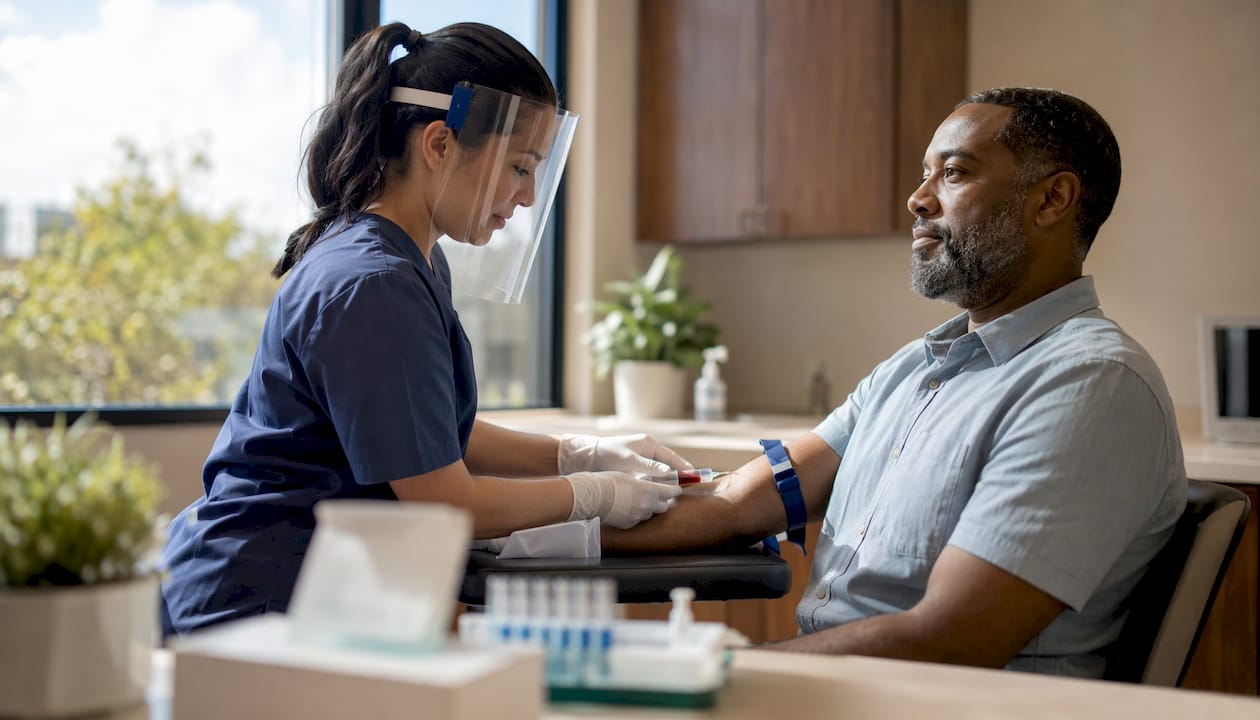
- Mobile phlebotomy (home or office draw): A certified phlebotomist comes to you. Convenient for people with mobility limitations, busy schedules, or anyone who finds clinic visits stressful. Confirm fasting and timing requirements in advance — an invalidated sample means starting over. Eivdiagnostics offers mobile phlebotomy directly to patients in the Fresno area.
- At-home self-collection kits: Mailed kits use finger-stick blood, saliva, or stool samples. Convenient for STD screening or gut-health panels. Return shipping is usually prepaid. Turnaround is typically longer than an in-person draw because of transit time.
In-person draws at a service center generally produce results fastest. At-home kits add one to three days of shipping each way. Before you book any method, confirm whether the lab will generate a clinician-ready report you can share with your primary care provider.
Are direct access test results as accurate as provider-ordered ones?
Yes, analytically. Under CLIA, labs performing direct access tests must meet the same quality and safety standards as labs running provider-ordered tests. CLIA regulates the laboratory, not who placed the order. The specimen goes through the same analyzers, the same quality controls, and the same reporting chain.
37 states and the District of Columbia allow consumers to order some or all lab tests directly. That means most Americans have legal access to self-ordered testing, though the scope of what’s allowed varies by state.
Trust signals worth verifying on any provider’s site:
- Current CLIA certificate number (look for a “CLIA-certified” statement with a certificate number)
- CAP accreditation (College of American Pathologists), which adds a second layer of quality oversight
- Board-certified laboratory director or pathologist overseeing operations
- Secure, password-protected results portal
- Published test menu with reference ranges
Pro Tip: Reference ranges differ slightly between labs because they’re calibrated to each lab’s instruments and patient population. If you’re comparing results over time, use the same lab whenever possible. For clinical pathology quality standards, that context matters.
When is direct access testing appropriate, and when is it not?
Self-ordered testing works well in specific situations. It does not replace a clinical evaluation.
Appropriate uses:
- Routine screening for known risk factors (cholesterol, blood sugar, thyroid)
- Monitoring a stable, already-diagnosed condition between provider visits
- STD screening when privacy is a priority
- Checking vitamin or hormone levels when you’re generally well
Not appropriate as a standalone tool:
- New, unexplained, or worsening symptoms (chest pain, unexplained weight loss, severe fatigue)
- Diagnosing a condition you haven’t discussed with a clinician
- Adjusting prescription medications based on self-ordered results
Laboratory medicine specialists specifically flag the risk of patients changing medication doses based on self-ordered data without clinician input. That’s a real danger. If a result comes back outside the reference range, don’t self-treat. Contact your primary care provider, seek urgent care for anything alarming, or request a clinician-ordered confirmatory test. Consumer direct access can also increase the risk of over-testing, which generates anxiety and follow-up costs without clinical benefit.
How do you choose a reputable direct-access lab provider?
Work through this checklist before placing an order:
Regulatory credentials:
- CLIA certificate visible on the site
- CAP accreditation listed (preferred but not universal)
- Named laboratory director with board certification
Transparency:
- Full test menu with prices published before checkout
- Clear turnaround time stated per test
- Explicit data privacy and sharing policy
Collection and support:
- At least one collection method that works for your location
- Option to reach a laboratorian or telehealth clinician with questions
- Clinician-ready report format for sharing with your PCP
Red flags to avoid:
- Vague claims like “optimize your wellness” with no specific test methodology
- No published lab credentials or CLIA number
- Broad “food sensitivity” or “toxin” panels with no clinical validation
- Hidden fees that appear only at checkout
Reputable services use CLIA-certified and often CAP-accredited labs. For test-level explanations before you order, LabTestsOnline is a reliable, professionally maintained resource.
For a side-by-side look at how to compare diagnostic providers, that guide walks through the key evaluation criteria.
| Evaluation Criterion | What to Look For | Red Flag |
|---|---|---|
| Lab accreditation | CLIA certificate number on site | No credentials listed |
| Pricing | Full price list before checkout | Prices hidden behind account creation |
| Collection options | Multiple methods available | Single option with no alternatives |
| Results delivery | Secure portal with reference ranges | Email-only, no portal |
| Clinician access | Telehealth or laboratorian consult available | No follow-up support offered |
Key Takeaways
Direct access lab testing gives you self-pay access to CLIA-regulated clinical results without a doctor’s order, but it works best as a screening and monitoring tool paired with clinician follow-up for any abnormal findings.
| Point | Details |
|---|---|
| How to order | Pick a test online, pay upfront, choose a collection method, and access results through a secure portal. |
| Primary trust check | Confirm the lab holds a current CLIA certificate and lists a board-certified laboratory director before ordering. |
| Insurance reality | Self-ordered tests are almost always out of pocket; insurers reimburse clinician-ordered tests, not consumer-initiated ones. |
| Biggest red flag | Avoid providers that hide prices, lack published credentials, or offer unvalidated “wellness optimization” panels. |
| Eivdiagnostics | Eivdiagnostics offers self-pay direct access testing with mobile phlebotomy, board-certified pathologists, and CLIA compliance in Fresno, CA. |
A lab professional’s honest take on self-ordered testing
The conversation around direct access testing tends to split into two camps: enthusiasts who frame it as pure patient empowerment, and skeptics who warn it’s dangerous without a clinician. Both miss the more useful point.
Self-ordered testing is genuinely valuable for a specific job: confirming that a known marker is staying in range, or screening for something you have real reason to monitor. A person managing prediabetes who checks their HbA1c between annual physicals is using this tool correctly. Someone who orders a 60-marker “comprehensive optimization panel” because they feel tired, then starts adjusting supplements based on marginal values, is not.
The risk isn’t the test. It’s the interpretation gap. Lab reports are built for clinicians who combine numeric values with a patient’s history, medications, and physical exam. A number outside the reference range can mean nothing, or it can mean something urgent. Without that context, consumers often do one of two things: panic over a borderline result that a clinician would watch but not treat, or feel falsely reassured by a normal result when symptoms actually warrant investigation.
The practical answer isn’t to avoid self-ordered testing. It’s to use it with a clear scope. Order tests you understand, for conditions you’re already tracking, and bring every result to your next provider visit. Treat the portal report as data, not a diagnosis.
Order direct access tests through Eivdiagnostics
Eivdiagnostics is an independent pathology laboratory in Fresno, CA, built for patients who want clinical-grade results without the friction of a physician referral. The concrete difference: you get board-certified pathologists reviewing your results, mobile phlebotomy that comes to your home or office, and clinical pathology services processed under full CLIA compliance.
Ordering is direct. Browse the test menu, pay the published self-pay price, and choose your collection method. Mobile phlebotomy is available for patients who prefer a home or office draw. Results are delivered through a secure portal with turnaround times designed for timely decision-making. Every report is formatted so you can share it with your primary care provider without translation.
To get started or ask about a specific test, visit Eivdiagnostics services or book a mobile phlebotomy appointment directly.
Useful sources
Core references for verifying the claims in this article and learning more about specific tests:
- CMS CLIA Guidance on Direct Access Testing — federal regulatory baseline for lab quality standards
- ADLM Position Statement: Direct-to-Consumer Laboratory Testing — professional body guidance on appropriate use and safeguards
- ASCLS Position on Consumer Direct Access Testing — laboratory science perspective on access, risks, and professional oversight
- ADLM CLN Article: Direct Access Testing — state-by-state access overview and consumer considerations
- LabTestsOnline — plain-language test explanations maintained by clinical laboratory professionals
- Clinical Chemistry peer-reviewed commentary on DTC testing — specialist analysis of interpretation risks and professional concerns
FAQ
What is direct access lab testing?
Direct access lab testing lets consumers order clinical laboratory tests without a physician’s order, pay out of pocket, and receive results through a secure portal. Labs must still meet the same CLIA quality standards as provider-ordered testing.
Can I order my own blood tests in every state?
About 37 states and the District of Columbia allow consumers to order some or all lab tests directly, but the scope varies. Check your state’s rules before ordering, as some states restrict the test menu available without a clinician’s authorization.
Will my insurance cover a self-ordered lab test?
Almost never. Insurers typically reimburse only tests ordered by a licensed clinician. Self-ordered tests are out-of-pocket expenses, though self-pay prices at independent labs are often lower than standard billed rates.
How do I know if a direct access lab is trustworthy?
Look for a published CLIA certificate number, a named board-certified laboratory director, a full price list before checkout, and a secure results portal. CAP accreditation is an additional quality signal worth checking.
Does Eivdiagnostics offer direct access testing without a doctor’s order?
Yes. Eivdiagnostics accepts self-pay orders from patients without a physician referral, offers mobile phlebotomy in the Fresno, CA area, and processes specimens through a CLIA-compliant laboratory staffed by board-certified pathologists.
Recommended
- Lab Test Packages | EIV Diagnostics | EIV Diagnostics
- Lab Tests Without a Doctor’s Order Near You in Madera | EIV Diagnostics | EIV Diagnostics
- Top 4 Affordable Lab Testing Providers 2026 | EIV Diagnostics | EIV Diagnostics
- Fast Testing Results: What Patients in Clovis Need to Know | EIV Diagnostics | EIV Diagnostics