
By EIV Diagnostics · October 29, 2026
TSH Reflex Testing: What It Means and How It Works
TSH reflex testing runs a free T4 only when your TSH is outside the reference range. Learn how it works, how to read results and how to get it done.
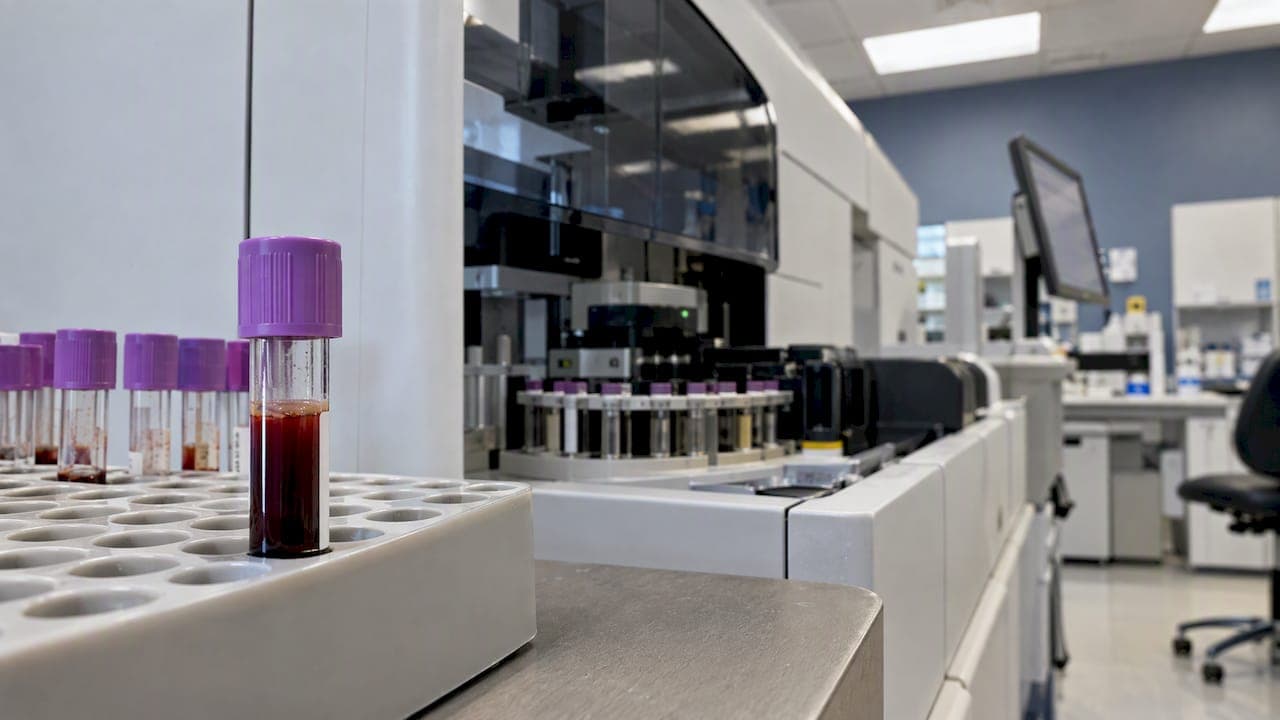
TSH reflex testing is a two-step thyroid test run on a single blood draw. The lab measures thyroid-stimulating hormone (TSH) first. If the result falls outside the lab’s reference range, it automatically adds a free T4 measurement on the same sample. If TSH is in range, the lab stops there, and you are not billed for a second test you did not need. This guide explains what the order means, when the second test is triggered, how to read the two numbers together and what to do if your report shows TSH alone.
TL;DR
- “TSH with reflex to free T4” means the lab runs TSH first and adds free T4 only when TSH is outside the reference range.
- The add-on uses the blood you already gave. No second needle stick, no second appointment.
- A common adult TSH reference range is 0.40 to 4.50 mIU/L, but each lab prints its own range, and that range is what triggers the reflex.
- A report with TSH only usually means TSH was in range. Check the panel’s reflex rule to be sure.
- A normal result does not rule out every thyroid problem, and an abnormal one is not a diagnosis. Your clinician puts the numbers together with your symptoms.
Table of Contents
- What “TSH with reflex” means
- When an abnormal TSH triggers a free T4
- What the two results tell you together
- Why labs and clinicians use reflex testing
- Why your report might show TSH only
- How often TSH should be checked
- How to prepare and what happens at the draw
- Perspective: what we see at EIV Diagnostics
- Getting a TSH test in the Fresno area
- Questions to ask before your test
- FAQ
- Sources
What “TSH with reflex” means
Reflex testing is an automated laboratory process. The lab adds tests based on a defined algorithm, using the sample you already provided, as the American Thyroid Association describes it. A person does not decide in the moment. The rule is set in advance, and the instrument or lab software follows it.
For thyroid testing, the rule is simple. TSH is the first test. A free T4 is measured only if TSH is outside the reference range. You may see the order written several ways: “TSH reflex,” “TSH with reflex to free T4,” “TSH rfx FT4” or “TSH w/ reflex T4, free.” They describe the same idea. Some labs use a different follow-up, such as total T3 plus free T4, so the exact add-on depends on the panel.

Why TSH goes first
TSH is made by the pituitary gland. It tells the thyroid how much hormone to produce. When thyroid hormone drops, TSH usually rises. When thyroid hormone climbs too high, TSH usually falls. That feedback loop makes TSH a sensitive first check for thyroid trouble, which is why it leads most screening panels.
Free T4 measures the unbound, active portion of thyroxine in your blood. It tells your clinician whether an abnormal TSH reflects a real shortage or excess of hormone, or something milder.
When an abnormal TSH triggers a free T4
The trigger is the lab’s own reference interval. If your TSH is flagged high or low on that lab’s scale, the free T4 is added. If it sits inside the interval, it is not.
The American Thyroid Association lists a TSH reference range of 0.40 to 4.50 mIU/L for adults aged 20 and older. Individual laboratories may print slightly different limits because of the assay they use and the population they calibrated on. The rule is applied against the printed range, not against a textbook number.
Two details matter here:
- The upper limit is debated. The ATA notes that the upper edge of the TSH range may be higher in older or obese patients. A result just above the printed limit can therefore be a borderline finding, not a clear problem.
- Some panels use a narrower trigger. Certain reflex rules fire only at certain cutoffs, so a mildly out-of-range TSH may or may not add a free T4. Published research has looked at which TSH cutoffs make reflex testing most efficient, and labs set their own policies. The exact rule is printed in the lab’s test catalog or on the requisition.
If you want to know exactly what will fire the second test, ask the lab or the ordering clinician for the panel’s reflex rule before the draw.
What the two results tell you together
TSH and free T4 are read as a pair. Here is the usual logic, which your clinician will apply to your whole picture:
| TSH | Free T4 | What it commonly points to |
|---|---|---|
| High | Low | Primary hypothyroidism: the thyroid is underproducing |
| High | Normal | Often called subclinical hypothyroidism, or a temporary fluctuation |
| Low | High | Hyperthyroidism: too much thyroid hormone |
| Low | Normal | Often called subclinical hyperthyroidism, or another cause of a low TSH |
| Low or normal | Low | Possible pituitary or hypothalamic cause, which needs a clinician’s follow-up |
| Normal | Not run | Reflex not triggered. No free T4 needed on this draw. |
That table is a reading aid, not a diagnosis. A normal free T4 alongside an abnormal TSH can still reflect early thyroid disease, a temporary swing, medication effects or a non-thyroid illness. The next step is usually a repeat test, additional antibody testing or imaging, chosen by your clinician.
Why a reflex can miss pituitary problems
Because the reflex starts from TSH, it works best when the pituitary is behaving normally. If a pituitary or hypothalamic problem is suspected, TSH can look normal or low while thyroid hormone is actually low. In that setting, a clinician typically orders free T4 up front instead of leaving it to a reflex. If you have symptoms that point beyond the thyroid, say so when you order or when you talk to your provider.
Why labs and clinicians use reflex testing
The appeal is efficiency. According to research on thyroid testing strategies, TSH reflex testing screens for dysfunction efficiently and cuts free T4 testing when TSH is normal, which makes it cost-effective. For patients, that means:
- One draw. The add-on uses your existing sample, so there is no return visit.
- Lower cost when all is well. If TSH is in range, you are not paying for a test you did not need.
- Faster answers. The second result comes back with the first, not days later after a callback.
For providers, a reflex order removes a decision from the workflow and keeps testing consistent from patient to patient.
Why your report might show TSH only
This is the most common point of confusion. You ordered “TSH with reflex,” and your portal shows one number. There are three usual explanations:
- Your TSH was in range. The reflex rule was not met, so no free T4 was run. This is the expected outcome for most healthy adults.
- The reflex used a narrower cutoff. Your TSH may have been slightly outside the printed range but inside the panel’s trigger window. The reflex rule has to come from that panel’s own documentation.
- The reflex result is delayed or listed separately. Some portals post the add-on later or on a different line.
If your TSH was clearly flagged and no free T4 appears, call the lab that ran it or your ordering clinician. Do not guess or assume the result was missed. Do not change or stop any medication while you wait. Tell your provider about everything you take, and stop a medicine only if your provider says so.
How often TSH should be checked
There is no single schedule that fits everyone. Frequency depends on why you are being tested:
- Screening with no symptoms. Your clinician decides based on age, family history and risk factors.
- Starting or adjusting thyroid medication. Rechecks are more frequent while the dose is being settled, then spaced out once stable. Your prescriber sets the interval.
- New symptoms. Fatigue, weight change, temperature intolerance, palpitations and changes in mood or skin can prompt testing. Keep in mind that in people with treated hypothyroidism or Hashimoto’s thyroiditis and normal tests, vague symptoms are nonspecific and common in the general population, with several possible explanations. A normal result does not mean your symptoms are imaginary. It means the cause may lie elsewhere and is worth discussing.
TSH can also shift from one draw to the next without any change in disease. Time of day, acute illness, recent medication changes and biotin supplements are all commonly cited reasons for a surprising number. If a result does not fit how you feel, a repeat draw under consistent conditions is a reasonable question for your clinician.
Thyroid screening also turns up in family-building plans. A surrogacy medical screening checklist is one example of where the TSH-first sequence and a follow-up free T4 come into play when a TSH falls outside range.
How to prepare and what happens at the draw
Preparation is minimal for the TSH test itself. The practical points:
- Fasting is usually not required for TSH, but if your provider orders other tests on the same sample, fasting for several hours may be needed. Ask before you go.
- Keep taking your medicines unless your provider tells you otherwise. Bring a list of everything you take, including supplements.
- The draw is quick. A health care professional takes a blood sample from a vein in your arm, and the procedure usually takes less than five minutes.
If you take thyroid medication, ask your clinician whether to take your dose before or after the draw on test day. Practice varies, and the best answer is the one your prescriber gives you for your situation.
Perspective: what we see at EIV Diagnostics
As an independent pathology laboratory in Fresno, we see why reflex testing appeals to both patients and physicians. A patient wants one visit and a clear answer. A provider wants a consistent protocol and a fast report from a board-certified pathology team. Reflex logic delivers both, as long as everyone knows the rule behind it.

Our advice is practical. Know which panel you are ordering. Know what range will trigger the add-on. Read the two numbers together, and do not read a single TSH value as a verdict. If a result surprises you, or if your symptoms do not match your numbers, bring the report to your clinician instead of searching for an answer alone.
We also see that convenience affects follow-through. Retesting after a dose change is easy to postpone when it means taking time off work. That is one reason we built mobile phlebotomy into what we do, so the draw can happen at home or at the office.
— EIV Diagnostics
Getting a TSH test in the Fresno area
You can get thyroid testing with a clinician’s order, or, where the lab offers it, by paying yourself without a visit first. If you want to understand how self-ordering works and what to check before you buy, our guide on ordering lab tests online and checking CLIA status covers it.
EIV Diagnostics serves patients and providers across Fresno, Clovis, Madera, Visalia and the surrounding Central Valley. Our self-pay testing option is built for people who want lab work without insurance billing, with or without a doctor’s order. Providers can look at our clinical pathology services for their patients’ routine and diagnostic panels.
If getting to a draw site is the obstacle, mobile phlebotomy brings the blood draw to your home or office, from $65 per visit. Contact us to confirm that the specific TSH reflex panel you need is available and what it costs before you book.
EIV Diagnostics is CAP-accredited and works with board-certified pathologists, so the result your clinician receives is backed by the same quality standards whether the sample was collected in a lab or at your kitchen table.
Questions to ask before your test
A few questions make the whole process smoother, whether you order through a provider or on your own:
- Which exact panel is this, and which test does it reflex to?
- What cutoff triggers the reflex, and which reference range will my report show?
- Will the lab bill separately if the free T4 is added?
- Should I take my thyroid medicine before the draw?
- Who will review my result with me, and how soon?
Self-pay patients should also ask for the total price, including any collection fee, before the draw. If you are ordering for a family member, confirm that the name and date of birth on the requisition match their ID.
FAQ
What does “TSH with reflex to free T4” indicate?
It is a conditional two-step thyroid test. The lab measures TSH, and only if that value is outside the reference range does it add a free T4 on the same sample. The result helps your clinician tell whether an abnormal TSH reflects too little or too much thyroid hormone.
Is a TSH reflex the same as a full thyroid panel?
No. A full panel measures several markers up front, such as TSH, free T4 and sometimes T3 or thyroid antibodies. A TSH reflex is a leaner screen that adds a second test only when TSH calls for it. If your clinician suspects a pituitary problem or is monitoring treatment, they may order more tests directly.
Do I need to fast for a TSH reflex test?
Usually not for TSH itself. If your provider orders other tests on the same sample, fasting for several hours may be required, so confirm before you go. Do not stop any medicine unless your provider tells you to.
What is a normal TSH level?
The American Thyroid Association gives 0.40 to 4.50 mIU/L for adults aged 20 and older. Your lab’s printed range is the one that counts, and it can differ slightly. The upper limit may also run higher in older or obese patients.
Why did my report show only TSH?
Most often your TSH was within range, so the free T4 was not triggered. If your TSH was flagged and no free T4 appears, contact the lab or your clinician to ask about the panel’s reflex rule.
Sources
- Rationalizing Thyroid Function Testing: Which TSH Cutoffs Are Optimal? (Journal of Clinical Endocrinology & Metabolism)
- American Thyroid Association, Clinical Thyroidology for Patients, February 2018
- American Thyroid Association, Thyroid Function Tests brochure
- American Thyroid Association, An Approach to the Patient with Persistent Symptoms
- MedlinePlus: TSH (Thyroid-stimulating hormone) Test
- MedlinePlus: Thyroxine (T4) Test