
By EIV Diagnostics · November 2, 2026
Bruise After a Blood Draw: Causes, Care and Red Flags
A bruise after a blood draw is usually harmless. Learn why it happens, how to care for it, how to lower your odds next time and when to call a clinician.
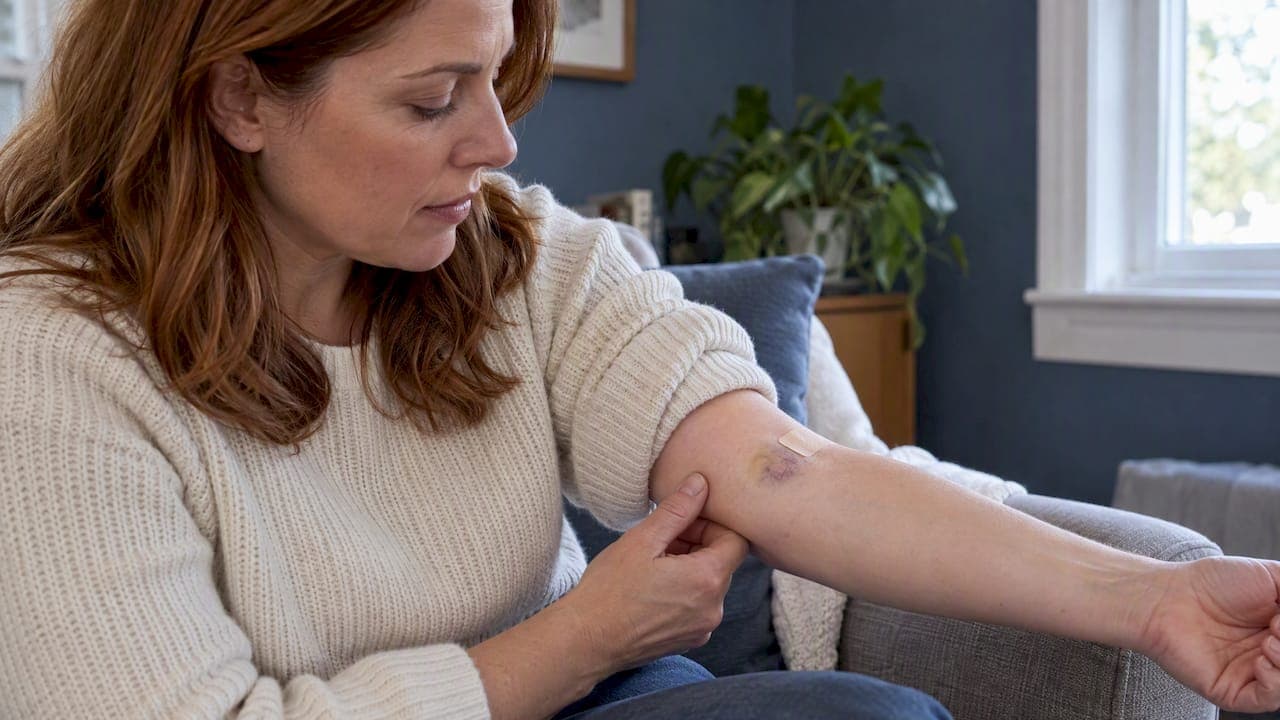
A bruise after a blood draw is common and usually harmless. A little blood seeps from the vein into the tissue around it, shows up as a purple or blue mark, and your body clears it over the following days. Press firmly after the needle comes out, go easy on that arm for a day, and watch for the few warning signs listed below. At EIV Diagnostics, we see the same questions every week, so this guide covers what is normal, what helps and what needs a call to a clinician.
TL;DR
- Slight bruising is a known, minor effect of blood collection and usually goes away quickly, according to MedlinePlus.
- Firm, steady pressure right after the needle is removed is the single best way to prevent a bruise.
- A cold pack helps early on. After 48 hours, low heat may ease soreness and help healing.
- Call a clinician for a growing or painful bruise, a lump, numbness, tingling, fever, or redness and heat at the site.
- Medications, hard-to-find veins and heavy use of the arm afterward all raise your odds of bruising.
Table of Contents
- Is a bruise after a blood test normal?
- Why blood draws leave bruises
- What to do right after the draw
- Treating a bruise at home
- How long does a blood draw bruise last?
- When a bruise needs a professional
- How to lower your odds of bruising next time
- Our perspective
- Blood work at home, without the waiting room
- FAQ
- Sources
Is a bruise after a blood test normal?
Yes. MedlinePlus, the U.S. National Library of Medicine’s patient site, describes venipuncture as carrying very little risk, with slight pain or bruising that usually passes quickly. For a routine complete blood count, it also notes that slight bruising may occur and soon goes away.
A bruise is not a sign that the person drawing your blood did something wrong. Veins are small, they sit close to the surface, and a needle has to pass through the vein wall. Even a flawless stick can leave a small leak. Some people simply bruise more easily than others, because of skin thinness, age, medications or how their veins behave.
What “normal” looks like:
- A small spot or patch at or near the puncture site, often on the inner elbow.
- Tenderness when you press on it or bend your arm.
- A mark that may not appear until the next day.
- Color changes over days, from reddish or purple to blue, then green and yellow, as the blood is reabsorbed.
That last point is reassuring. A bruise that changes color and slowly shrinks is doing what it should.
Why blood draws leave bruises
The mechanism is simple. Harvard Health explains that a little blood can seep from the vein into the surrounding tissue after the needle goes in, forming a bruise that may show up the next day. Healthline adds that needle damage to tiny capillaries can cause bleeding beneath the skin.
The same logic applies to any needle. Clinics that give cosmetic injections deal with it too, and one men’s skin clinic explains how clinics limit bruising with simple preparation and aftercare. The principle carries over: less trauma at the site and good pressure afterward mean less leakage.

What raises the chance of bruising
Healthline lists several factors that can increase bruising: difficult vein access, repositioning the needle, needle depth or size, and not enough pressure after the needle is removed. Other sources note that aspirin and blood thinners can make bruising more likely. Putting that together, these are the situations to watch:
| Factor | Why it matters | What you can do |
|---|---|---|
| Small or hard-to-find veins | More probing and needle adjustment | Drink water beforehand and stay warm, unless you were told to fast from fluids |
| Blood-thinning medicines or aspirin | Blood clots more slowly at the puncture | Tell the phlebotomist, and never stop a prescribed medicine without your prescriber’s advice |
| Pressure released too soon | The clot at the puncture can dislodge | Hold pressure until bleeding stops |
| Bending or lifting right away | Strain on the site can reopen the leak | Use the other arm for a day |
| Thin or fragile skin | Vessels are less supported | Ask for the smallest suitable needle |
What to do right after the draw
The first few minutes matter most.
- Press firmly on the site. A Canadian provincial lab’s patient instructions advise pressing on the puncture site for at least 5 minutes and leaving the bandage on for at least 15 minutes, longer if needed. If you are on a blood thinner, expect to need longer.
- Keep your arm straight or lightly extended. Bending the elbow tightly while you hold pressure can make it harder to seal the vein. Press with the arm relaxed.
- Do not peek too early. Lifting the gauze every 30 seconds restarts the clock. Keep steady pressure until bleeding has clearly stopped.
- Keep the bandage on for a while. Many people keep a dressing on for at least a few hours. If your lab gave written instructions, follow those over general advice.
- Take it easy with that arm. MedlinePlus advises avoiding heavy lifting for 24 hours after blood collection, a rule it stresses especially after arterial draws. Carry groceries and your gym bag on the other side.
How long should gauze stay on?
There is no single number every lab agrees on. Hold pressure with gauze until the bleeding has stopped, which is often several minutes. Then keep the adhesive bandage on for a few hours, longer if you bruise easily or take blood thinners. If blood soaks through, apply fresh gauze and press again for several more minutes. If it keeps bleeding after about 10 to 15 minutes of firm pressure, that is the time to ask the staff or seek medical help.

Treating a bruise at home
Most blood-draw bruises need nothing more than time. These steps can make you more comfortable.
Cold first, then warmth
Cigna’s patient guidance says you can treat a needle-puncture bruise with a cold pack for 10 to 15 minutes every 3 to 4 hours as needed, with fabric between the pack and your skin. The same page says that after 48 hours, low heat may relieve pain and promote healing.
So, does ice still help after 48 hours? Cold is mainly useful in the first day or two, when the aim is to limit leakage and ease soreness. After that, a warm (not hot) compress is the better choice.
Should you massage it?
For the first day or two, we suggest leaving it alone. Rubbing a fresh puncture site can disturb the clot and let more blood escape. Later, once the area is no longer tender and has stopped growing, light touch is fine, but never press hard on a painful bruise. If it hurts when you touch it, that is your cue to stop.
Other comfort tips
- Rest the arm and avoid repetitive heavy use for a day.
- Wear loose sleeves so nothing rubs on the site.
- If you need pain relief, ask a pharmacist or your doctor which over-the-counter option is safe with your other medicines, since some pain relievers affect bleeding.
How long does a blood draw bruise last?
Small bruises commonly fade over several days, and larger ones can take a couple of weeks. Harvard Health notes that the body normally reabsorbs blood that seeped beneath the skin, which is why the color shifts as it heals. Bruises on older adults, or on people taking blood thinners, often linger longer. What matters is direction: smaller and lighter each day is the right trend.
When a bruise needs a professional
Most people never need more than a cold pack. Contact a clinician or urgent care in these situations, based on guidance from Harvard Health and Healthline:
- The bruise is painful or keeps getting bigger. Harvard Health says pain or continued enlargement is a reason for concern.
- Redness, heat, pain or fever at the site. Harvard Health says these should be reported because they may point to infection.
- Tingling or numbness, significant pain or swelling, unusual bleeding elsewhere, a large bruise or a lump at the site. Healthline advises medical evaluation for these.
Call your primary care provider or the ordering clinician for most of these. If the arm becomes severely swollen, you cannot stop the bleeding with firm pressure, or you feel faint or short of breath, call 911 or go to an emergency department. For a deeper look at rarer problems, see our guide to blood draw complications and warning signs.
How to lower your odds of bruising next time
You cannot control everything, but you can stack the odds in your favor.
- Tell the phlebotomist about your medicines. That includes aspirin, anticoagulants and supplements. They may adjust technique or hold pressure longer.
- Mention past bruising. If you have bruised badly before, say so. Ask them to use a smaller needle if appropriate.
- Stay hydrated. Well-hydrated veins are easier to find, which can mean fewer attempts. If you are fasting, check what is allowed; our guide to fasting for blood tests explains that water is usually part of the plan, but confirm with your provider.
- Stay warm. Cold arms mean harder veins. Keep sleeves on until you sit down.
- Hold pressure the whole time. Do not let go early to check the site.
- Plan your day. Skip heavy lifting, intense upper-body workouts or a long carry right after your draw.
Children can bruise too, and they may need extra reassurance. Parents will find tips in our guide to the pediatric blood draw.
Our perspective
Bruising is the question patients ask us about most after a draw, and the worry usually comes from not knowing what normal looks like. Our view is that a calm, well-prepared draw is the best bruise prevention there is.
At EIV Diagnostics, we are an independent pathology laboratory in Fresno, and specimen quality starts at the moment of collection. That is why we pair careful technique with clear aftercare instructions: pressure, a day of rest for the arm, and plain guidance on what to watch for.
Our mobile phlebotomy service brings the draw to your home or office. For many patients, that means a quieter setting, no waiting room and time to sit comfortably and stay warm before the stick, all of which make the process easier. Results are then reviewed by our board-certified pathologists, and we are CAP-accredited.
If you ever have a bruise that worries you, we would rather you call than wonder.
EIV Diagnostics
Blood work at home, without the waiting room
If bruising worries make you dread the lab, a calmer setting can help. EIV Diagnostics offers mobile phlebotomy across the Fresno area, including Clovis, Madera, Visalia and nearby communities, with visits starting from $65 as a one-off fee. You can tell the phlebotomist about your medicines and your bruising history before the draw, and ask any aftercare questions on the spot.

No doctor’s order? Our self-pay testing lets you buy lab tests directly, and our guide on getting blood work done without a doctor walks through how it works. Before you book, read how a good faith estimate helps you avoid surprise charges on home draws. You can also see our full list of laboratory services, or learn how an onsite blood draw is prepared.
FAQ
Is bruising after a blood draw normal?
Yes. MedlinePlus lists slight bruising as a minor, usually short-lived risk of blood collection. It appears when a little blood leaks from the vein into nearby tissue. A bruise that stays small and fades gradually needs no treatment.
Does ice help a bruise after 48 hours?
Cold is most useful in the first day or two. Cigna’s guidance suggests a cold pack for 10 to 15 minutes every few hours early on, with fabric between the pack and your skin. After 48 hours, low heat may ease soreness and support healing.
Is it okay to massage a bruise after a blood draw?
We suggest not rubbing it at first, because that can disturb the clot at the puncture. Once it is no longer tender and has stopped spreading, light touch is generally fine. Stop if it hurts, and call a clinician if the area is growing or very painful.
How long should I keep gauze on after a blood draw?
Hold firm pressure until bleeding stops, usually several minutes. One lab’s patient instructions say at least 5 minutes of pressure and 15 minutes with the bandage on. Keep it on longer if you take blood thinners or bruise easily.
What should I do if the site keeps bleeding?
Put fresh gauze on top and press firmly again without lifting to check. If bleeding continues after 10 to 15 minutes of steady pressure, contact the lab or a clinician. Go to an emergency department if you cannot control it.
Sources
- What You Need to Know About Blood Testing, MedlinePlus
- CBC blood test, MedlinePlus Medical Encyclopedia
- Blood Testing, Harvard Health
- Bruising After Blood Draw: Why, What to Do, and Prevention, Healthline
- Needle Punctures for Health Reasons, Cigna
- Blood Collection patient instructions, Alberta Precision Laboratories
- Alcohol Before Botox for Men: How Clinics Limit Bruising