
By EIV Diagnostics · August 6, 2026
Respiratory PCR Panel: What It Detects and When to Order It
Discover when to order a respiratory PCR panel. This test detects key respiratory viruses and guides critical treatment decisions.

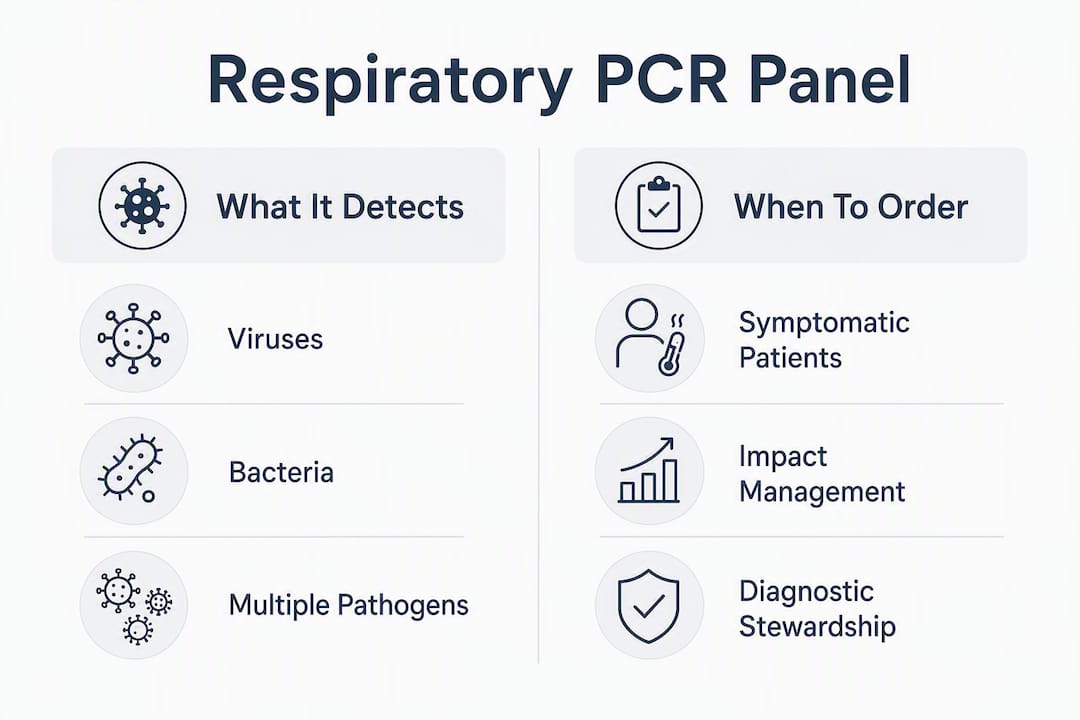
A respiratory PCR panel is a multiplex molecular test that simultaneously detects genetic material from many common respiratory viruses and, on some panels, atypical bacteria. It is most useful when the result will change how a patient is managed: guiding antiviral therapy, directing infection-control precautions, or narrowing the differential in an immunocompromised or severely ill patient.
For otherwise healthy outpatients with mild illness, a broad panel rarely changes treatment and adds cost without proportional benefit. The test earns its place in the workup when the stakes are high enough that knowing the specific organism matters.
Table of Contents
- What does a respiratory PCR panel test for?
- How are respiratory samples collected and handled?
- How multiplex PCR works and what its limits are
- When should you order a respiratory PCR panel?
- How to interpret positive, negative, and multi-pathogen results
- What turnaround times and reporting look like
- Ordering, CPT codes, and payer considerations
- What does a respiratory PCR panel cost, and who pays?
- Limitations and pitfalls to know before you order
- What Eivdiagnostics offers for respiratory PCR testing
- Key Takeaways
- Why labs see confusing results more often than clinicians expect
- Respiratory PCR testing at Eivdiagnostics: how to get started
- Useful sources
- FAQ
What does a respiratory PCR panel test for?
Most multiplex respiratory panels cover a core set of viral targets, with some extending to atypical bacterial pathogens. Exact organism lists vary by laboratory and test version, so always confirm the specific panel before ordering.
Common viral targets:
- Influenza A (including subtype differentiation on many panels) and influenza B
- Respiratory syncytial virus (RSV) A and B
- Human metapneumovirus
- Parainfluenza viruses 1, 2, 3, and 4
- Adenovirus
- Rhinovirus and enterovirus
- Seasonal coronaviruses (229E, HKU1, NL63, OC43)
- SARS-CoV-2 (included on some panels; tested separately on others depending on the lab)
Atypical bacterial targets (panel-dependent):
- Mycoplasma pneumoniae
- Chlamydia pneumoniae
- Bordetella pertussis and Bordetella parapertussis
Not every panel includes bacterial targets. Some labs offer a viral-only version and a broader syndromic version. Before ordering, check the laboratory’s test catalog to confirm which organisms are covered, because a panel that omits Bordetella pertussis will not rule out whooping cough regardless of how the result reads.
How are respiratory samples collected and handled?
The nasopharyngeal swab is the standard specimen for most upper respiratory PCR panels. Collection involves inserting a flexible-shaft, mini-tip swab parallel to the palate until resistance is felt at the posterior nasopharynx, rotating gently to collect secretions, then withdrawing and placing the swab in viral or universal transport medium. No special patient preparation is required, but technique matters considerably.
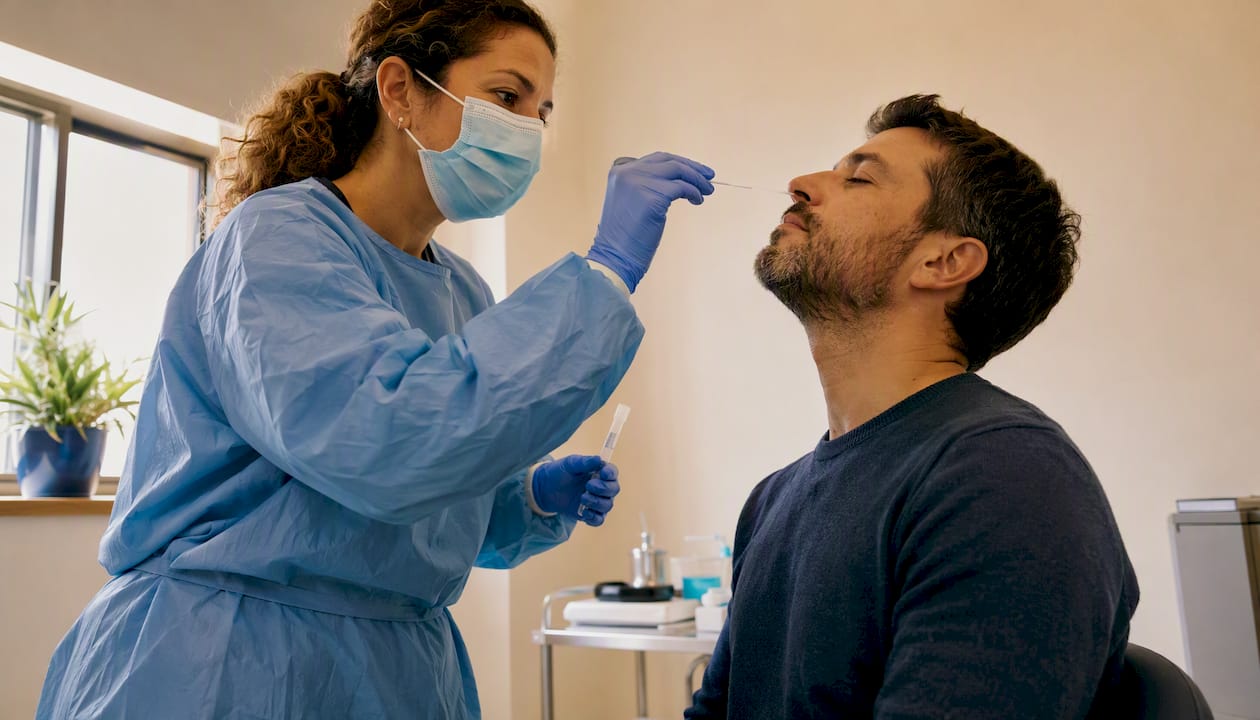
Other acceptable specimen types on some panels include mid-turbinate nasal swabs, oropharyngeal swabs, sputum, and bronchoalveolar lavage (BAL). Specimen type is not interchangeable. Upper and lower respiratory specimens are built into different panel configurations; when lower respiratory tract infection is suspected, a nasopharyngeal swab may be insufficient and BAL or sputum may be required for reliable detection.
Transport requirements are straightforward but unforgiving: keep specimens in viral transport medium, maintain cold-chain conditions during shipping, and process within the time window specified by the performing laboratory. Repeated freeze-thaw cycles degrade nucleic acid and can produce false-negative results.
Pro Tip: The single biggest source of false negatives is poor swab technique. The swab must reach the posterior nasopharynx, not just the anterior nares. If the patient is late in their illness course, communicate that timing to the lab — nucleic acid levels drop as infection resolves, and a negative result in week two of illness carries a different interpretation than one on day two.
How multiplex PCR works and what its limits are
Nucleic acid amplification tests (NAATs) are the most sensitive method available for detecting respiratory viruses, and real-time reverse-transcription PCR (RT-PCR) is the dominant technology in use. The assay amplifies a target genetic sequence and detects increasing fluorescence as copies accumulate. Most respiratory panels run multiple primer-probe sets simultaneously, producing a qualitative positive or negative call for each target in a single reaction.
For a broader understanding of how molecular diagnostic testing works at the platform level, the method is the same whether the panel covers 6 targets or 22.
Key performance characteristics:
- High sensitivity and specificity compared with viral culture and most antigen tests for the covered targets
- Qualitative output only on most panels — no viral load, no indication of which detected pathogen is dominant
- Detects genomic material, not viable virus — a patient can remain PCR-positive for weeks after symptoms resolve without being infectious
- Sensitivity varies by pathogen and specimen quality — the platform is only as good as the sample it receives
- Validated specimen types — labs validate specific specimen-platform combinations before clinical use; off-label specimen types may not perform as labeled
Multiplex assays provide faster, more sensitive detection than viral culture, but high analytic sensitivity is a double-edged feature: it can detect nonviable genomic material and generate results that are not clinically relevant without careful interpretation.
When should you order a respiratory PCR panel?
The clearest indication for a broad multiplex panel is a clinical situation where knowing the specific pathogen will change what you do next. Studies show that expanded panels can reduce intravenous antibiotic duration and hospital length of stay in some hospitalized adult populations, but their benefit in otherwise healthy outpatients is inconsistent.
High-yield indications:
- Hospitalized patients with severe or worsening respiratory illness
- Immunocompromised patients, where identifying a specific pathogen may be lifesaving by enabling targeted antiviral therapy or infection-control measures
- Patients where results will directly affect antimicrobial prescribing or isolation decisions
- Outbreak investigation or infection-control surveillance settings
When targeted testing is usually preferable:
- Healthy outpatients with mild illness — test for influenza, RSV, or SARS-CoV-2 individually when clinically indicated, rather than running a 20-target panel
- When a single-pathogen result would fully answer the clinical question
Pro Tip: Before ordering, ask: “If this panel comes back positive for pathogen X, will I do something different?” If the honest answer is no, the broad panel is probably not the right tool for this patient at this visit.
Diagnostic stewardship applies here the same way it applies to antibiotics. Ordering a broad panel on every febrile outpatient generates cost, occasional incidental findings, and interpretive complexity without improving outcomes for that population.
How to interpret positive, negative, and multi-pathogen results
Start with the clinical picture. A panel result is a data point, not a diagnosis. Correlate every result against the patient’s symptoms, illness timing, and risk factors before acting on it.

Positive result: Confirm that the detected pathogen plausibly explains the clinical syndrome. Influenza A detected in a patient with classic flu symptoms during flu season is straightforward. The same result in a patient three weeks post-symptom onset who is now recovering warrants more caution — PCR positivity can persist for weeks to months after symptom resolution and does not confirm ongoing infectiousness.
Multiple positives: Qualitative panels do not show which pathogen is dominant or present at higher viral load. Coinfection is real and detectable with multiplex testing, but when two or three targets come back positive, clinical correlation and sometimes targeted quantitative or culture-based follow-up are needed to guide therapy. Do not assume every positive target is contributing to the illness.
Negative result: Consider specimen quality and illness timing. A negative panel does not rule out infection by pathogens not included on the panel, and early or late infection with low nucleic acid levels can produce false negatives even for covered targets.
Pro Tip: Avoid ordering a repeat panel as a “test of cure.” PCR positivity after clinical recovery is common and expected for many respiratory viruses. A positive result in a recovered patient is not evidence of ongoing infection.
What turnaround times and reporting look like
Result timing depends on the platform and laboratory workflow. The table below summarizes typical ranges:
| Platform type | Typical TAT | Clinical setting |
|---|---|---|
| Rapid point-of-care multiplex | Under 1 hour | ED, urgent care, clinic |
| On-demand lab multiplex | 2–6 hours | Inpatient, hospital lab |
| Batched high-throughput | 4–24+ hours | Reference lab, surveillance |
Point-of-care and rapid multiplex platforms can deliver results in under an hour; high-throughput batched systems take longer but support large-volume testing. For time-sensitive inpatient decisions, on-demand or rapid platforms are the practical choice. For surveillance or non-urgent outpatient workups, batched processing is cost-effective.
Most reports list each target with a qualitative positive or negative call. Some include comments on specimen adequacy or test limitations. When a panel detects a bacterial target that requires susceptibility data, the lab may reflex to culture or send the sample for additional testing. That reflex step adds turnaround time and may affect billing, so it is worth confirming the lab’s reflex policy before ordering.
For patients who want to understand what fast testing results mean in practice, turnaround time directly affects when treatment decisions can be made.
Ordering, CPT codes, and payer considerations
Ordering a respiratory PCR panel requires a provider order that specifies the specimen type, the test SKU or panel name as listed in the laboratory’s catalog, and the clinical indication. For direct-to-consumer or self-pay patients, many labs including Eivdiagnostics offer ordering without a physician referral.
Key billing and coding points:
- CPT codes for multiplex respiratory panels vary by panel size and platform; large panels may carry different reimbursement policies than targeted single-pathogen assays
- Payer coverage depends on medical necessity documentation; insurers may require a specific diagnosis code or prior authorization for broad panels
- Medicare and other payers may apply coverage limitations to syndromic panels ordered in outpatient settings; respiratory care coverage rules are updated periodically and should be verified before ordering
- An Advance Beneficiary Notice (ABN) should be provided when there is reason to believe Medicare may not cover the test, so the patient can make an informed decision about self-pay
Pro Tip: Call the performing laboratory’s client services before ordering if you are unsure about CPT codes or payer coverage. Labs maintain current billing guidance and can flag whether a specific payer requires preauthorization for the panel you intend to order. This one step prevents most surprise billing situations.
What does a respiratory PCR panel cost, and who pays?
Multiplex respiratory panels typically involve substantial cost that varies widely depending on panel size, platform, and the performing laboratory. Patient out-of-pocket responsibility varies widely based on insurance plan, deductible status, and whether the test meets the payer’s medical necessity criteria.
Insurance coverage is not guaranteed for broad panels in outpatient settings. Payers may cover a targeted influenza or SARS-CoV-2 test more readily than a 20-target syndromic panel for a mild outpatient illness. Self-pay options are available through many laboratories, including direct-to-consumer portals that allow patients to order and pay without going through their insurer.
Direct access lab testing is a practical option for patients who want results without navigating insurance, or for those whose providers have not ordered the test but who want to know what they are dealing with.
Mobile phlebotomy and specimen pickup services add another layer of access, particularly for patients who cannot easily travel to a draw site. These services may carry a separate fee, so confirm the total cost before scheduling.
Pro Tip: Ask the laboratory for a self-pay price estimate before your appointment. Most labs will provide one. Also confirm whether mobile phlebotomy or courier fees are included in the quoted price or billed separately.
Limitations and pitfalls to know before you order
The test is genuinely powerful, but several misuses are common enough to address directly.
- Overtesting low-risk outpatients: A broad panel on a healthy adult with a three-day cold rarely changes management and adds cost without benefit. The evidence for panel utility is strongest in inpatient and high-risk populations.
- Misreading persistent positivity: PCR can remain positive for weeks after recovery. A positive result in a clinically improved patient is not evidence of ongoing infection or a reason to extend isolation.
- Multi-positive confusion: When three targets come back positive, it is tempting to treat all three. Qualitative panels cannot tell you which organism is driving the illness. Clinical judgment and, when needed, targeted follow-up testing are required.
- Specimen-type mismatch: Ordering a nasopharyngeal panel when lower respiratory tract infection is suspected may miss the causative pathogen entirely. Match the specimen to the clinical question.
- Poor swab technique producing false negatives: A swab that only reaches the anterior nares is not a nasopharyngeal specimen. The result it generates is unreliable.
Pro Tip: When results do not fit the clinical picture, call the lab. Clinical microbiologists can advise on specimen adequacy, explain why multi-positive results occur, and recommend whether reflex culture or quantitative testing would add useful information.
What Eivdiagnostics offers for respiratory PCR testing
Eivdiagnostics offers molecular pathology services that include respiratory PCR testing supported by board-certified pathologists and CLIA-level quality management processes. Specimen types and validated platforms are confirmed before clinical use, and results are reported with the specificity clinicians need to act.
For providers, Eivdiagnostics supports both institutional and individual ordering, with client services available to confirm specimen requirements, CPT codes, and payer guidance before you submit the order. For patients, direct-to-consumer ordering is available with or without insurance, and self-pay pricing is provided upfront.
The mobile phlebotomy service is a practical differentiator: a trained collector comes to your home or office, handles specimen collection and transport, and eliminates the need to travel to a draw site. This matters most for patients who are symptomatic, immunocompromised, or simply unable to make it to a clinic.
Pro Tip: Contact Eivdiagnostics client services before your first order to confirm the current respiratory panel test catalog, specimen requirements, and any applicable CPT codes. The team can also advise on mobile phlebotomy scheduling and self-pay pricing.
Key Takeaways
A respiratory PCR panel delivers the most clinical value when the result will change patient management, particularly in hospitalized, immunocompromised, or severely ill patients where targeted therapy and infection-control decisions depend on knowing the specific pathogen.
| Point | Details |
|---|---|
| Order when results change management | Broad multiplex panels show the clearest benefit in inpatient and high-risk populations, not routine outpatient mild illness. |
| Specimen quality drives accuracy | Nasopharyngeal swabs must reach the posterior nasopharynx; specimen type must match the clinical question (upper vs. lower respiratory). |
| PCR detects genetic material, not viable virus | Persistent positivity after recovery is common and does not indicate ongoing infection or infectiousness. |
| Multi-positive results require clinical correlation | Qualitative panels cannot show which pathogen is dominant; clinical judgment and targeted follow-up guide therapy. |
| Eivdiagnostics | Board-certified molecular pathology lab in Fresno, CA, offering provider and direct-to-consumer respiratory PCR testing with mobile phlebotomy. |
Why labs see confusing results more often than clinicians expect
The interpretive challenges that clinicians find frustrating are, from the laboratory side, almost entirely predictable. Multiplex assays are extraordinarily sensitive. They will detect genomic fragments from a rhinovirus that cleared two weeks ago alongside an active influenza infection. They will find Mycoplasma pneumoniae DNA in a patient whose symptoms are entirely explained by RSV. The assay is doing exactly what it was designed to do. The problem is that “detected” and “causing this illness” are not the same statement.
Prolonged nucleic acid persistence is not a quirk or a flaw. It is a property of PCR-based detection that every clinician ordering these panels should understand before the result arrives. When a panel comes back with two or three positives and the clinical picture only fits one of them, the right move is not to treat all three. It is to call the lab.
Laboratory consultation is underused. Clinical microbiologists can review the result in context, advise on whether a particular combination of positives is biologically plausible, and recommend whether quantitative testing or culture would add meaningful information. Including a clear clinical indication on the requisition, even a brief one, gives the lab the context to flag unusual results and guide reflex testing appropriately. A requisition that says “fever, cough, day 3, immunocompromised” is far more useful than one that says “respiratory symptoms.”
Respiratory PCR testing at Eivdiagnostics: how to get started
Eivdiagnostics makes respiratory PCR testing accessible without the friction that typically slows down results. Providers can submit orders through the standard requisition process, with client services available to confirm the current test catalog, specimen handling requirements, and CPT code guidance before the order goes in. Patients can order directly through the self-pay portal with upfront pricing, no insurance required.
Mobile phlebotomy is available for patients who need specimen collection at home or at their office. A trained collector handles the swab, packages the specimen correctly, and manages transport to the lab, so the sample arrives in optimal condition. Contact Eivdiagnostics client services to schedule a mobile collection, request a self-pay price estimate, or ask about expedited processing for time-sensitive cases. Visit the molecular pathology services page for the current test catalog and ordering details.
Useful sources
The following sources informed this article and are recommended for clinicians and patients who want to read the primary evidence:
- Making Sense of Respiratory Viral Panel Results — American Society for Microbiology review on interpreting multiplex panel results, coinfections, and clinical correlation
- Laboratory Testing for Respiratory Viruses for the Clinician — Cleveland Clinic Journal of Medicine summary of NAAT methods, platform performance, and clinical use
- BioFire Respiratory Panel for the Detection of Viruses and Bacteria — American Academy of Family Physicians practical summary of syndromic panel evidence and outpatient utility
- Respiratory Pathogens Panel: MedlinePlus Medical Test — patient-facing test description covering specimen collection, what the test detects, and how results are used
- Panels and Syndromic Testing in Clinical Microbiology — PMC review of syndromic panel assays, turnaround times, and diagnostic stewardship considerations
- Respiratory Tract Infections and Laboratory Diagnostic Methods — MDPI review focusing on syndromic panel-based assays, specimen type considerations, and performance
- Lower Respiratory Multiplex Panels for the Detection of Bacterial and Viral Infections — PMC review of commercial multiplex panels for lower respiratory tract infections, analytical performance, and patient outcome data
This article provides general educational information about respiratory PCR panel testing and is not a substitute for professional medical advice. Confirm current coverage rules, CPT codes, and clinical indications with your laboratory, payer, or a qualified healthcare provider.
FAQ
How long does a full respiratory PCR panel take?
Turnaround time depends on the platform: rapid point-of-care multiplex systems can return results in under an hour, on-demand lab systems typically take 2–6 hours, and batched high-throughput assays may take 4–24 hours or longer. Contact the performing laboratory to confirm timing for the specific panel ordered.
How much does a respiratory viral panel cost?
Costs vary by panel size, platform, and laboratory, and patient responsibility depends on insurance coverage and medical necessity. Self-pay pricing is available at many labs, including Eivdiagnostics; request a price estimate from client services before scheduling.
What viruses show up on a respiratory PCR test?
Most multiplex respiratory panels detect influenza A and B, RSV, human metapneumovirus, parainfluenza viruses, adenovirus, rhinovirus/enterovirus, and seasonal coronaviruses; SARS-CoV-2 is included on some panels. Some panels also cover atypical bacteria such as Mycoplasma pneumoniae and Bordetella pertussis, but the exact organism list varies by laboratory and test version.
How is a respiratory PCR sample collected?
The standard specimen is a nasopharyngeal swab: a flexible mini-tip swab is inserted parallel to the palate until resistance is felt, rotated to collect secretions, then placed in viral transport medium. Other specimen types such as mid-turbinate nasal swabs or bronchoalveolar lavage may be accepted depending on the panel and clinical indication.
Does a positive respiratory PCR result mean you are still contagious?
Not necessarily. PCR detects genetic material, and positivity can persist for weeks to months after symptoms resolve without indicating ongoing infectiousness. A positive result in a clinically recovered patient should be interpreted in context, not used as a standalone marker of active infection.
Recommended
- PCR vs Rapid Test: Which COVID Test Is Right for You? | EIV Diagnostics | EIV Diagnostics
- Molecular Diagnostic Testing: What Patients and Clinicians Need to Know | EIV Diagnostics | EIV Diagnostics
- Direct Access Lab Testing: Order Your Own Labs Today | EIV Diagnostics | EIV Diagnostics
- CMP Test Code 10231: What It Measures and Why It Matters | EIV Diagnostics | EIV Diagnostics