
By EIV Diagnostics · August 14, 2026
H. Pylori PCR Testing: Detection, Resistance, and Results
Discover how H. pylori PCR testing uniquely detects bacterial DNA and identifies resistance mutations, guiding effective treatment choices.
H. pylori PCR detects bacterial DNA in clinical specimens and, when designed with resistance-marker probes, identifies the specific point mutations driving clarithromycin and fluoroquinolone treatment failure. That dual capability is what separates it from every other noninvasive test in the H. pylori diagnostic toolkit.
The clinical case for ordering PCR rather than a urea breath test or stool antigen comes down to one question: does the antibiotic choice matter for this patient? The Maastricht VI/Florence consensus report explicitly recommends molecular methods, including real-time PCR, whole-genome sequencing, and digital PCR, to detect resistance mutations and guide susceptibility-directed therapy.
Key entities to know before reading further:
- Resistance targets: 23S rRNA mutations (A2142G, A2143G, A2144G) for clarithromycin; gyrA mutations for fluoroquinolones (levofloxacin)
- Validated specimen types: gastric biopsy, stool (feces), gastric juice; saliva studied in research settings
- Guideline alignment: Maastricht VI/Florence consensus; 2025 Korean revised guidelines endorsing DPO-PCR tailored therapy
Key Takeaways
H. pylori PCR is the only noninvasive test that simultaneously confirms infection and identifies the resistance mutations that determine whether clarithromycin or levofloxacin will work.
| Point | Details |
|---|---|
| Stool PCR diagnostic accuracy | Pooled sensitivity 0.97 and specificity 0.98 for clarithromycin resistance detection across prospective studies. |
| Resistance targets | 23S rRNA mutations (A2142G, A2143G, A2144G) for clarithromycin; gyrA mutations for fluoroquinolones. |
| When to order PCR | Prior macrolide exposure, regional resistance above 15%, treatment failure, or when noninvasive resistance data is needed. |
| Panel limitations | Standard panels cover only known mutations; escalate to sequencing or culture after two treatment failures. |
| EIV Diagnostics | Offers molecular PCR-based H. pylori resistance testing with board-certified sign-out and mobile phlebotomy for specimen collection. |
Table of Contents
- Which specimen types and PCR methods are used for H. pylori testing?
- How PCR identifies H. pylori and its resistance mutations
- Analytic performance: what the evidence says about accuracy
- When should you order H. pylori PCR?
- Specimen collection, transport, and ordering best practices
- How to read PCR results and act on them
- PCR vs other H. pylori test methods: a practical comparison
- Common causes of false negatives and false positives
- What to expect from a molecular pathology lab
- Integrating PCR-guided therapy into routine practice
- Molecular H. pylori PCR testing at EIV Diagnostics
- Sources
- FAQ
Which specimen types and PCR methods are used for H. pylori testing?
Not every specimen works equally well, and the method applied depends heavily on what the clinician needs from the result.
| Specimen | Typical use case | PCR approach | Practical considerations |
|---|---|---|---|
| Gastric biopsy | Endoscopy patients; histology also needed | Real-time qPCR, nested PCR, Sanger/NGS sequencing | Gold standard for resistance; biopsy from antrum + corpus improves yield |
| Stool (feces) | Noninvasive detection + resistance screening | Direct real-time qPCR; some labs use nested PCR | No endoscopy required; PCR inhibitors possible; PPI/antibiotic withholding needed |
| Gastric juice/fluid | Endoscopy patients when biopsy volume is limited | Real-time qPCR | Less commonly used; lower bacterial density than biopsy |
| Saliva / dental plaque | Research contexts only | Nested PCR, conventional PCR | High false-positive risk; not validated for clinical use |
Stool PCR is the specimen of choice when endoscopy is not planned. A prospective study of 169 patients found stool-based real-time PCR achieved 99.3% sensitivity and 100% specificity for H. pylori detection versus gastric biopsy, with a clarithromycin-resistance concordance kappa of approximately 0.805. This level of agreement is strong enough to guide first-line therapy in most outpatient scenarios.
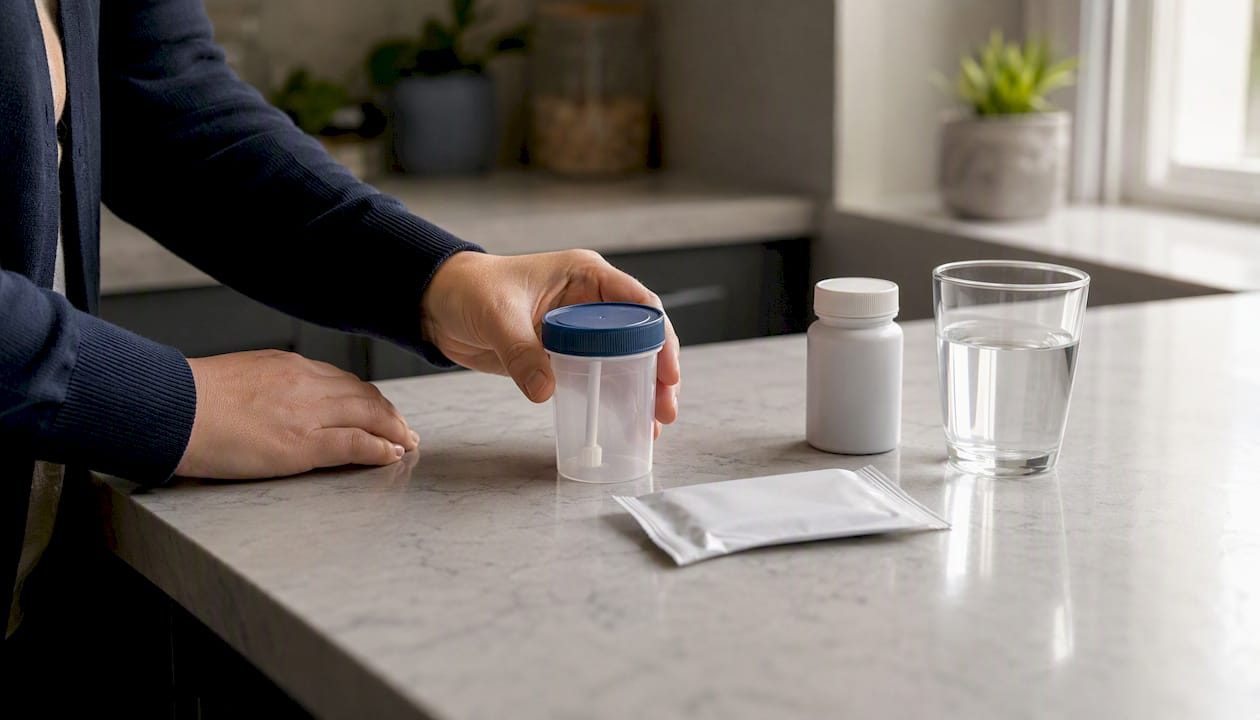
Gastric biopsy remains preferred when histologic assessment of the mucosa is also needed, when broader phenotypic antimicrobial susceptibility testing (AST) is required, or when the patient is already undergoing endoscopy for another indication. Rapid urease test (RUT) biopsy material can be forwarded directly to the molecular lab for PCR without a repeat procedure, a practical point the Maastricht VI consensus explicitly endorses.
How PCR identifies H. pylori and its resistance mutations
The assay workflow moves from DNA extraction through targeted amplification to an interpretive call. Understanding each step helps clinicians read reports accurately.
-
DNA extraction. The lab lyses the specimen (stool, biopsy homogenate, or gastric fluid) and purifies bacterial DNA. An internal extraction control is run in parallel to flag inhibited specimens.
-
Target amplification. Primers flanking the resistance loci amplify specific gene regions. For clarithromycin resistance, the target is the 23S rRNA gene at positions A2142G, A2143G, and A2144G. For fluoroquinolone resistance, the gyrA gene is amplified. Some expanded panels also include rdxA (metronidazole) and rpoB (rifampicin) loci.
-
Detection and allele discrimination. Most clinical labs use one of three formats:
- TaqMan probe-based real-time PCR: allele-specific probes fluoresce when a mutation is present; fast and quantitative.
- FRET/melting-curve probes: hybridization probes detect mutation-driven shifts in melting temperature; well-suited for clarithromycin resistance calls.
- Allele-specific PCR: primers designed to amplify only the mutant or wild-type sequence; useful for single-locus confirmation.
-
Sequencing for confirmation or expansion. Sanger sequencing or next-generation sequencing (NGS) is used when the panel result is ambiguous, when rare mutations outside the standard loci are suspected, or when a full resistance profile is needed after multiple treatment failures.
-
Algorithmic interpretation and sign-out. The molecular pathologist reviews the amplification curves, mutation calls, and internal controls, then issues a report categorizing the isolate as susceptible, resistant, or heteroresistant.
Reviews of molecular methods consistently note that PCR is faster and more sensitive than culture for both detection and resistance profiling, largely because H. pylori is fastidious and slow-growing in culture. Real-time PCR hybridization assays, particularly FRET and melting-curve formats, are among the most reliable for rapid clarithromycin resistance detection in both biopsy and stool specimens.
Pro Tip: Heteroresistance, where a specimen contains a mixed population of susceptible and resistant organisms, appears on PCR as a dual signal or reduced allele-specific fluorescence. When the lab reports heteroresistance, treat the isolate as resistant for prescribing purposes. Culture samples too few colonies to reliably detect this mixed state, which is one reason PCR can be more predictive of treatment failure than phenotypic AST alone.
Analytic performance: what the evidence says about accuracy
The diagnostic accuracy of stool-based PCR for clarithromycin resistance is well-characterized. A systematic review and meta-analysis across 11 prospective adult studies reported:
Those numbers hold up across different PCR techniques, which suggests the performance is a property of the molecular target rather than any single assay format. The wide lower bound on specificity (0.81) reflects real heterogeneity across studies, so a single-center result below 0.90 is not necessarily an outlier.
The prospective validation study cited above adds granularity: clarithromycin-resistance detection showed high sensitivity and reasonable specificity when stool PCR was compared directly to biopsy-based genotyping. A negative PCR for infection is highly reliable. A positive resistance call is also reliable, but a negative resistance call in a patient with prior macrolide exposure warrants clinical judgment.
Key limitations to keep in mind:
- Geographic heterogeneity: resistance prevalence varies widely (under 10% in some US regions, over 30% in parts of Europe and Asia), which affects positive predictive value.
- Reference standard variation: studies comparing PCR to culture, sequencing, or biopsy-based genotyping produce different concordance estimates.
- Technique variation: nested PCR, direct qPCR, and probe-based formats are not interchangeable; lab-specific validation matters.
- Guideline endorsement: the Maastricht VI consensus recommends molecular susceptibility testing precisely because the evidence base for PCR-guided therapy is strong enough to support clinical implementation.
When should you order H. pylori PCR?
PCR is not the right first test for every patient. It earns its place in specific clinical scenarios.
Order PCR when:
- Clarithromycin resistance in your region or patient population is above 15% or unknown, and you want to avoid empirical macrolide use.
- The patient has had prior macrolide exposure (azithromycin, clarithromycin) for any indication, which substantially raises personal resistance probability.
- First-line therapy has already failed and you need to know which antibiotics remain active before choosing a salvage regimen.
- Endoscopy is not planned, but you still need resistance data (stool PCR fills this gap).
- Culture is unavailable or impractical at your institution.
- The patient has a penicillin or fluoroquinolone allergy that limits regimen options, making susceptibility data especially valuable.
When empirical quadruple therapy is reasonable instead:
If PCR is unavailable or the turnaround time would delay treatment unacceptably, bismuth quadruple therapy remains a guideline-endorsed empirical option in high-resistance settings. The 2025 Korean guidelines recommend PCR- or sequencing-based susceptibility testing to guide first-line therapy where available, and default to bismuth quadruple therapy where it is not.
A practical scenario: A 52-year-old patient with dyspepsia tests positive on stool antigen. She took a 10-day course of azithromycin for a respiratory infection six months ago. Rather than prescribing standard clarithromycin triple therapy, you order stool PCR. The result returns: A2143G mutation detected, no gyrA mutation. You prescribe bismuth quadruple therapy instead of a macrolide-containing regimen. That single data point likely prevented a treatment failure and avoided selecting for further resistance.
Specimen collection, transport, and ordering best practices
Getting the specimen right is as important as choosing the right test. PCR is sensitive to pre-analytical variables.
Stool collection:
- Collect a fresh stool sample (approximately 5–10 g) in a clean, leak-proof container. Most labs provide a dedicated collection kit.
- Withhold PPIs and antibiotics for appropriate intervals before sample collection, as recommended by the testing laboratory. Document any recent exposure on the requisition regardless.
- Refrigerate at 2–8°C if transport to the lab occurs within 24–48 hours. For longer delays, freeze at –20°C or –80°C per the lab’s protocol.
- Do not collect during active GI bleeding; blood can inhibit PCR amplification.
Gastric biopsy:
- Take gastric biopsies from multiple stomach regions to improve bacterial yield.
- Place in a dry sterile container or the lab’s specified transport medium. Do not use formalin if PCR is the primary test (formalin degrades DNA).
- RUT biopsy material can be forwarded directly for PCR after the urease test is read, per Maastricht VI guidance.
- Transport on ice; process within 24 hours or freeze.
Ordering the test:
- Specify on the requisition: clinical indication, recent antibiotic and PPI use (drug, dose, dates), and whether resistance testing is requested in addition to detection.
- If the patient has had multiple treatment failures, note this explicitly and request reflex sequencing or culture if the standard panel is negative or ambiguous.
- ARUP Consult and similar lab catalogs provide test codes and specimen requirements; confirm with your reference lab before collection.
For patients who need guidance on noninvasive test preparation, the H. pylori breath test preparation guide at EIV Diagnostics covers timing and withholding rules that overlap with PCR specimen requirements.
Pro Tip: Write “PCR inhibitor suspected” on the requisition if the patient has had recent GI bleeding, diarrhea, or is on iron supplementation. Labs can then prioritize the internal control review and flag specimens for re-extraction before reporting a false negative.
How to read PCR results and act on them
PCR reports for H. pylori typically include a detection call and, when resistance testing was requested, a mutation-specific resistance call. Here is how to translate those outputs into prescribing decisions.
| PCR result | Clinical interpretation | Recommended action |
|---|---|---|
| H. pylori DNA detected; no clarithromycin or gyrA mutations | Susceptible to clarithromycin and levofloxacin | Clarithromycin-based triple or concomitant therapy appropriate if regional resistance is low |
| H. pylori DNA detected; A2143G (or A2142G) mutation present | Clarithromycin-resistant | Avoid macrolides; use bismuth quadruple or levofloxacin-based therapy if gyrA negative |
| H. pylori DNA detected; gyrA mutation present | Fluoroquinolone-resistant | Avoid levofloxacin; bismuth quadruple therapy preferred |
| H. pylori DNA detected; both clarithromycin and gyrA mutations present | Dual resistance | Bismuth quadruple therapy; consider culture/full AST before salvage regimen |
| H. pylori DNA detected; heteroresistance reported | Mixed susceptible/resistant population | Treat as resistant; avoid the implicated antibiotic class |
| H. pylori DNA not detected | Infection not detected by this assay | Confirm with urea breath test or stool antigen if clinical suspicion remains high; check for PPI/antibiotic interference |

Quantitative PCR reports may include a cycle threshold (Ct) value. A low Ct (high bacterial load) generally correlates with higher confidence in the resistance call. A high Ct (near the assay’s detection limit) warrants caution: the mutation call may be less reliable, and a borderline result near the cutoff should prompt clinical discussion with the lab.
When to escalate to phenotypic culture or sequencing: after two treatment failures, when the panel result conflicts with the clinical picture, or when rare mutations outside the standard loci are suspected. Expanded NGS panels can profile the full resistance genome and identify mechanisms the standard 3-locus panel misses.
Pro Tip: When communicating results to patients, avoid “your bacteria are resistant.” Instead, say: “The test found a specific change in the bacteria that means one common antibiotic won’t work well for you. We’ll use a different combination that should be more effective.” Clear language improves adherence to the adjusted regimen.
PCR vs other H. pylori test methods: a practical comparison
Choosing between H. pylori test types depends on what clinical question you are actually trying to answer.
| Feature | PCR (stool or biopsy) | Culture + AST | Histology | Urea breath test | Stool antigen |
|---|---|---|---|---|---|
| Invasiveness | Noninvasive (stool) or endoscopic (biopsy) | Endoscopic biopsy required | Endoscopic biopsy required | Noninvasive | Noninvasive |
| Turnaround time | 1–7 days (in-house vs reference lab) | 7 days | 3–7 days | Same day to 24 hours | Same day to 24 hours |
| Resistance detection | Yes (targeted mutations) | Yes (full phenotypic AST) | No | No | No |
| Typical sensitivity range | over 90% | approximately 85% (fastidious growth) | approximately 85% | around 90% | approximately 97% |
| When preferred | Resistance screening without endoscopy; post-failure | Full AST needed; rare mutations | Mucosal disease assessment | Confirmation of eradication | Initial diagnosis; low-resistance settings |
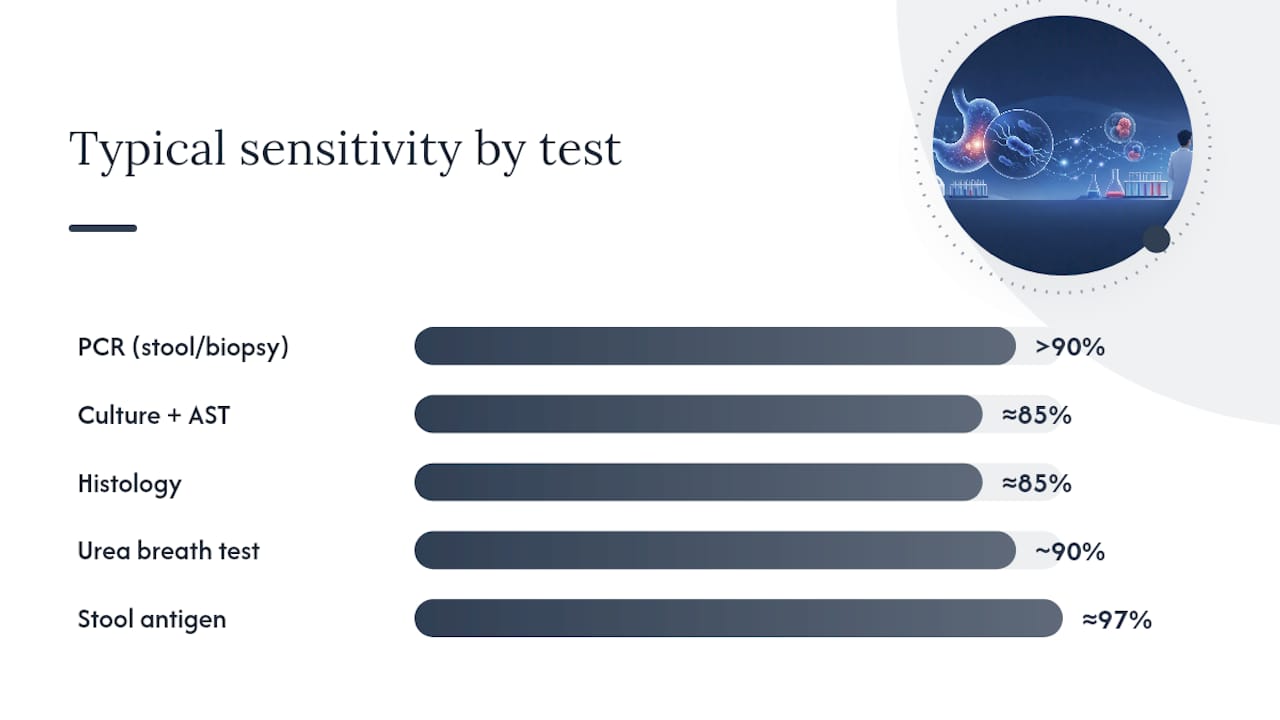
The urea breath test and stool antigen remain the first-line noninvasive tests for most patients who simply need a yes/no infection answer. PCR adds value specifically when resistance data will change the prescription. Culture provides the most complete resistance profile but is slow, technically demanding, and not available at most US community hospitals.
Where PCR adds the most value:
- Noninvasive resistance detection without endoscopy
- Rapid turnaround compared to culture (days vs weeks)
- Detection of heteroresistance that culture may miss
- Guiding first-line therapy in macrolide-exposed or treatment-failure patients
Where other tests still matter:
- Histology remains the standard for assessing gastric mucosal disease, intestinal metaplasia, and ruling out malignancy.
- Culture is still needed when full phenotypic AST is required or when NGS is unavailable and rare mutations are suspected.
- Mayo Clinic notes that stool PCR may be more expensive and less widely available than stool antigen, which is a real access consideration in some US settings.
Common causes of false negatives and false positives
PCR is not infallible. Knowing where it fails helps you decide when to confirm or repeat.
False negatives:
- Low bacterial load from recent PPI or antibiotic use suppresses H. pylori DNA below the assay’s detection threshold. This is the most common cause of a missed infection.
- PCR inhibitors in stool (bile salts, complex polysaccharides, hemoglobin from GI bleeding) can block amplification. Labs use internal controls to catch this, but inhibited specimens still occasionally slip through.
- Inadequate sampling: a single antral biopsy may miss patchy colonization; stool samples collected during active diarrhea are diluted.
- DNA degradation from improper storage or delayed transport.
False positives:
- Detection of non-pylori Helicobacter species. Some assays cross-react with H. cinaedi or H. canicola, which can produce a positive signal in a patient without true H. pylori infection. A study in the Journal of Clinical Microbiology documented this cross-reactivity risk and recommended confirmatory testing when clinical findings are discordant.
- Detection of DNA from nonviable organisms shortly after successful eradication. PCR does not distinguish live from dead bacteria, so testing too soon after treatment (less than 4 weeks) can return a positive result from residual DNA.
- Contamination during specimen handling, particularly in high-throughput labs without strict pre-analytical controls.
Targeted-panel blind spots:
Standard panels test three to five known mutations. Rare or novel resistance mechanisms outside those loci will not be detected, and the report will read “susceptible” even when resistance is present. This is the strongest argument for sequencing after two treatment failures.
Key clinical warning: Heteroresistance and mixed infections are underdiagnosed by both culture and standard PCR panels. When a patient fails a susceptibility-guided regimen, do not assume the PCR result was wrong. Consider that a minor resistant subpopulation expanded under antibiotic pressure. Escalate to NGS or culture-based full AST before choosing the next regimen.
What to expect from a molecular pathology lab
A well-run molecular pathology lab follows a defined workflow from specimen receipt to signed-out report. Understanding that workflow helps clinicians set realistic expectations and ask the right questions.
Standard lab workflow:
- Specimen accession and pre-analytical review (volume, transport conditions, labeling)
- DNA extraction with internal extraction control
- PCR amplification with positive and negative controls in each run
- Detection and mutation calling by the instrument software
- Pathologist review of raw data, controls, and interpretive flags
- Report sign-out by a board-certified molecular pathologist
Turnaround time norms:
- In-house molecular labs: 1–3 business days for standard real-time PCR panels
- Reference labs: 3–7 business days, longer if reflex sequencing is triggered
- Point-of-care PCR platforms are emerging and could eventually compress this to same-visit results, though they are not yet standard in most US outpatient settings
What a complete report should include:
- Assay method (real-time PCR, nested PCR, sequencing)
- Gene targets tested and mutations covered by the panel
- Detected mutations with nucleotide and amino acid notation (e.g., 23S rRNA A2143G)
- Assay analytical sensitivity and specificity as validated by the lab
- Internal control result (passed/failed)
- Interpretive comment (susceptible, resistant, heteroresistant) with recommended clinical context
For a broader overview of what molecular diagnostic workflows involve, the molecular diagnostic testing guide at EIV Diagnostics covers the fundamentals in patient-accessible language.
Pro Tip: Before sending specimens to a reference lab, ask two questions: Do they report heteroresistance as a distinct call, or do they collapse it into “resistant”? And will they reflex to sequencing or culture automatically on ambiguous results, or do you need to request that separately? The answers determine how much interpretive work lands back on you.
Integrating PCR-guided therapy into routine practice
The gap between what PCR can do and what most US clinicians currently order is real, and it is narrowing. Countries like South Korea have integrated DPO-PCR into national reimbursement frameworks with regional reference centers, making susceptibility-guided first-line therapy the default rather than the exception. US adoption is increasing but remains uneven, tied to lab network access and payer policies.
A practical pathway worth building into your workflow: identify patients who meet PCR indications (prior macrolide exposure, treatment failure, high-resistance region, or allergy limiting regimen options), coordinate specimen logistics with your molecular lab before the patient leaves the office, and use the resistance result to choose first-line therapy rather than defaulting to empirical triple therapy.
After two treatment failures, involve gastroenterology and consider a formal culture-based AST or NGS panel before the third attempt. Local resistance surveillance, even informal tracking of your own PCR results over time, gives you a real-world picture of resistance prevalence in your patient population that no national estimate can replicate.
The primary value of PCR-guided therapy is not just getting the right antibiotic. It is avoiding the wrong one, which reduces selection pressure and slows the spread of resistance in your community.
Molecular H. pylori PCR testing at EIV Diagnostics
Ordering susceptibility-guided H. pylori therapy starts with getting the right specimen to the right lab. EIV Diagnostics, an independent pathology laboratory in Fresno, CA, offers molecular pathology services that include PCR-based H. pylori detection and resistance profiling, with sign-out by board-certified molecular pathologists.

For clinicians who need stool or biopsy PCR with resistance mutation reporting, EIV Diagnostics provides rapid turnaround and clear, actionable reports that specify the gene targets tested, detected mutations with nucleotide notation, and an interpretive resistance call. Patients who cannot travel to a draw site can use EIV’s mobile phlebotomy service, which brings specimen collection directly to the home or office. Direct-to-consumer ordering is also available for patients who want to self-pay without a provider order. To get started, contact EIV Diagnostics directly or submit a test requisition through the lab portal, including clinical indication, recent antibiotic and PPI history, and whether reflex sequencing is requested.
Sources
The following sources are the highest-value references for clinicians who want to read the primary literature and guideline statements:
- Real‑time PCR assay performance for detection of H. pylori infection and clarithromycin/levofloxacin resistance in stool and gastric biopsy specimens
- Molecular methods vs culture for H. pylori detection and resistance testing (review)
- Evidence-Based Guidelines for the Diagnosis and Treatment of Helicobacter pylori Infection in Korea: 2025 Revised Edition
This article is general information, not a substitute for advice from a qualified doctor. Consult a qualified healthcare professional about your own circumstances before acting on anything here.
FAQ
What is a PCR test for H. pylori?
H. pylori PCR is a molecular test that detects bacterial DNA in a stool or gastric specimen and, when designed with resistance probes, identifies specific mutations linked to antibiotic resistance. It is the only noninvasive method that can simultaneously confirm infection and guide antibiotic selection.
What happens if I test positive for H. pylori?
A positive result means active infection is present and treatment is recommended. If the PCR also identifies resistance mutations, your clinician will select an antibiotic regimen that avoids ineffective drugs, typically bismuth quadruple therapy when clarithromycin resistance is detected.
Is H. pylori infection serious?
H. pylori is the leading cause of peptic ulcer disease and a recognized risk factor for gastric cancer, so treatment is warranted in virtually all confirmed cases. Eradication rates with susceptibility-guided therapy are substantially higher than with empirical regimens in resistant populations.
What can interfere with an H. pylori PCR test?
The most common causes of a false-negative result are recent PPI or antibiotic use (which suppresses bacterial load), PCR inhibitors in stool such as bile salts or blood, and improper specimen storage. Withholding PPIs for at least 2 weeks and antibiotics for at least 4 weeks before collection reduces these risks significantly.
How does stool PCR compare to the urea breath test or stool antigen?
The urea breath test and stool antigen are faster and less expensive for simple yes/no infection detection, but neither provides resistance data. Stool PCR takes longer and costs more, but it is the only noninvasive option that tells you whether clarithromycin or levofloxacin will actually work for a given patient.
Recommended
- Can I Drink Water Before an H. Pylori Breath Test? | EIV Diagnostics | EIV Diagnostics
- PCR vs Rapid Test: Which COVID Test Is Right for You? | EIV Diagnostics | EIV Diagnostics
- Molecular Diagnostic Testing: What Patients and Clinicians Need to Know | EIV Diagnostics | EIV Diagnostics
- Clinical Pathology Labs: What Patients Need to Know | EIV Diagnostics | EIV Diagnostics