
By EIV Diagnostics · August 30, 2026
Dermatopathology Timing: 2–3 Days, 7 Qs for Patients & Clinicians
Dermatopathology timing: routine biopsies 2–3 days, complex or molecular tests 2–3 weeks. Lab step timeline plus 7 questions to speed results.
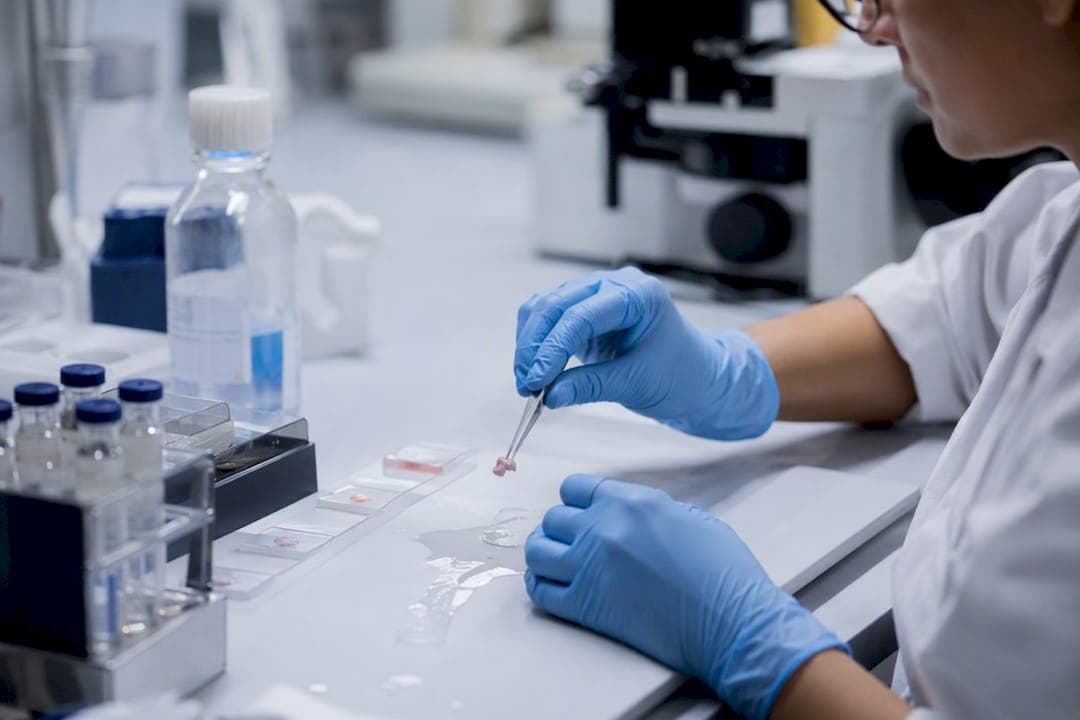
Routine dermatopathology biopsies typically report back in 2 to 3 working days, measured from the moment the lab logs the specimen (accession) to the day the final report gets released. Complex specimens, immunohistochemistry, molecular send-outs, or a requested second opinion can stretch that window to 7 to 14 days or longer. Most of the variance comes down to four things: how much tissue there is to process, whether special stains or molecular testing are ordered, whether the case needs a consult, and plain administrative lag in getting the report entered.
TL;DR:
- Complex specimens requiring immunohistochemistry or molecular testing can extend turnaround times to three weeks or more, especially at referral or academic labs.
- Most routine small biopsies return results within 2 to 3 days, but larger or complex cases often take 5 to 7 days, with specialized tests adding additional delays.
- Tissue processing steps like fixation, embedding, and sectioning usually constitute the main bottlenecks, with full reports often issued within about 10 days.
- Urgent cases, such as suspected melanoma or positive margins, can be processed and diagnosed within 24 to 48 hours with proper lab notification.
- Asking whether ancillary testing will be needed upfront is the most reliable way to estimate realistic turnaround time, as infrastructure differences heavily influence delay.
Table of Contents
- What Is a Typical Dermatopathology Turnaround Time?
- What Happens to a Biopsy Between the Office and the Report?
- Why Do Some Results Take So Much Longer?
- How Will You Actually Find Out the Result?
- What Should You Ask When You Call for a Status Update?
- How Fast Can Urgent or Suspected-Cancer Cases Move?
- How EIV Diagnostics Approaches Fast, Accurate Reporting
- What the Numbers Actually Tell You
- Get a Faster, More Direct Path to Your Dermatopathology Results
- Sources
- FAQ
What Is a Typical Dermatopathology Turnaround Time?
A standard punch or shave biopsy processed at a hospital-affiliated lab usually comes back in 2 to 3 days, according to turnaround benchmarks published by UC Davis Health. That same guidance notes larger or more complex specimens, like wide excisions or specimens needing extra sectioning, often take 5 to 7 days, and cases requiring advanced immunohistochemistry or special testing can run 7 to 10 days or more.
Real-world data backs up the wide spread. One departmental study found a mean laboratory turnaround of 7.5 days, but with a standard deviation of 9.7 days and a range stretching from 3 to 18 days, largely because case mix and outside consultations pull the average upward (PMC study on surgical biopsy turnaround). A separate study looking specifically at skin biopsies found small specimens averaged around 2.56 days while larger 5mm specimens averaged 4.64 days, tied directly to the extra sectioning bigger tissue requires (study on skin biopsy turnaround times).
| Specimen type | Typical turnaround |
|---|---|
| Routine small biopsy (punch, shave) | 2 to 3 days |
| Larger excision or complex specimen | 5 to 7 days |
| Case requiring immunohistochemistry | 7 to 10+ days |
| Molecular send-out testing | Up to 2 to 3 weeks |
Academic centers tend to run slightly longer than community labs, not because they’re slower, but because they see more complex referrals. Over time, use of immunostains and consensus reviews has risen, which naturally pushes average turnaround upward even as processing technology improves (study on dermatopathology case complexity trends). A few patterns show up consistently:
- Small, routine biopsies move fastest because they need minimal sectioning.
- Larger specimens require more slides, which adds hours to microtomy and staining.
- Academic and referral centers see a higher share of complex cases, which skews their averages up.
- Community labs handling mostly routine skin checks often report faster median times.
What Happens to a Biopsy Between the Office and the Report?
A biopsy isn’t examined the moment it arrives. It moves through a fixed sequence, and each step has its own clock.
- Accession: the lab logs the specimen and assigns it a case number. This is the official start of turnaround time tracking.
- Fixation: tissue sits in formalin, usually for several hours up to overnight, to preserve cellular detail.
- Grossing: a pathologist or assistant examines and trims the specimen, deciding which pieces get sectioned.
- Processing and embedding: tissue is dehydrated and set in paraffin wax, typically an overnight cycle.
- Microtomy: thin slices get cut from the wax block, usually same-day once the block is ready.
- Staining: slides are stained (hematoxylin and eosin for routine cases), a same-day process.
- Pathologist review and sign-out: the pathologist examines slides under the microscope and finalizes a diagnosis.
- Report entry: the finished diagnosis gets transcribed and released to the ordering provider.
Fixation, processing, and embedding are usually the rate-limiting steps because they run on fixed biological and chemical timelines that can’t be rushed without compromising the specimen. The National Cancer Institute notes that preparing fixed sections normally takes several days on its own, with full reports often issued within about 10 days of biopsy (NCI pathology report guidance). Weekend staffing gaps and courier schedules for outside labs commonly add a day or more even after the technical work is done (study on surgical pathology report turnaround). If you want a deeper technical look at how tissue moves through fixation and embedding, this guide to biological sample processing breaks down each stage.
Why Do Some Results Take So Much Longer?
Immunohistochemistry, or IHC, is the biggest single factor that extends a routine timeline. It’s a staining technique that uses antibodies to highlight specific proteins in tissue, and pathologists order it when a diagnosis under the microscope alone isn’t conclusive, such as distinguishing between certain melanoma mimics or lymphoma subtypes.
- IHC typically adds 3 to 5 days, since slides need a separate staining run and antibody incubation.
- Some cases require multiple IHC rounds if the first panel doesn’t resolve the diagnosis, which can double that delay.
- Molecular testing (gene rearrangement studies, mutation panels) frequently gets sent to a reference lab, and turnaround for those results often runs 1 to 3 weeks once you account for transit time and batch processing schedules.
- Second-opinion consultations vary widely: a digital consult where slides are scanned and shared electronically can add just a day or two, while a traditional “bench” consult, where physical slides are mailed to another pathologist, can add 5 days or more round trip.
Statistic check: the American Cancer Society notes that while routine biopsy results might be ready in a day or two, molecular tests or outside send-outs can stretch waits to 2 to 3 weeks, and requesting a second opinion adds several more days on top of that (American Cancer Society guidance on biopsy result timing). Deeper sectioning, when a pathologist needs additional cuts from the original tissue block, adds time too. Ordering those extra sections upfront rather than after an inconclusive first look can actually shorten the overall process, according to research on additional tissue sectioning in dermatopathology (study on additional tissue sections).
How Will You Actually Find Out the Result?
Results usually reach the ordering clinician before they reach you. That’s intentional, not a delay tactic: the person who ordered the biopsy needs to interpret the finding against your history and exam before discussing it.
- A verbal or preliminary finding sometimes gets communicated to the clinician’s office ahead of the signed final report, especially for concerning cases.
- The finalized, signed report is what lands in the medical record and, depending on the clinic’s system, your patient portal.
- Portal timing varies by practice. Some patients see the final report the moment it’s signed, sometimes before their clinician has reviewed it, which can mean confusing terminology lands in your inbox with no context.
- If you’re a provider, confirm with the lab whether “verbal” findings are considered preliminary and always subject to revision once ancillary testing completes.
Pro Tip: If your result appears in a portal before you’ve heard from your clinician’s office, resist Googling every term in isolation. Call the office, reference the report date, and ask for a same-week callback to walk through it together.
If you’re waiting on a biopsy tied to a suspicious mole or lesion, this guide on what to expect after a skin cancer diagnosis walks through the typical next steps once a report comes back.
What Should You Ask When You Call for a Status Update?
- What date was the specimen accessioned, and what’s the case number?
- Is the case still in routine processing, or is it pending IHC or molecular testing?
- If ancillary testing was ordered, has the sample already been sent out, and when?
- Is this case flagged for rush or expedited processing?
- Will the result come as a verbal preliminary first, or only as a final signed report?
- How will the result be delivered: portal, phone call, or fax to the referring office?
- Is a second-opinion consult involved, and if so, is it digital or a physical slide transfer?
A red flag worth noting: if a lab can’t provide an accession number or a case has shown “processing” status for more than 10 to 12 days with no explanation, it’s worth asking directly what’s causing the hold.
How Fast Can Urgent or Suspected-Cancer Cases Move?
Rush or STAT processing exists for good reason: positive surgical margins, suspected melanoma, or urgent staging decisions can’t wait a standard cycle. When a case is flagged rush, many labs prioritize grossing, cutting, and pathologist review, often delivering a preliminary read within 24 to 48 hours.
- Frozen section analysis, used intraoperatively, can deliver a diagnostic answer in 20 to 30 minutes, but it’s limited in detail compared with permanent fixed sections and reserved for specific surgical decisions (NCI guidance on pathology reports).
- Rush status speeds the core workflow, but it doesn’t shorten fixation chemistry or IHC antibody incubation, both of which run on fixed biological timelines.
- Ordering clinicians should explicitly mark specimens as urgent on the requisition and confirm with the lab that expedited courier or processing logistics are actually in place, not assumed.
How EIV Diagnostics Approaches Fast, Accurate Reporting
Speed only matters if the diagnosis underneath it is right. EIV Diagnostics builds its dermatopathology workflow around board-certified pathologists who review every case, backed by in-house technology that removes the biggest bottlenecks other labs outsource.
In-house PCR-based molecular testing means fewer cases get shipped to outside reference labs, cutting the transit and batching delays that routinely push molecular turnaround past two weeks elsewhere. Confocal microscopy and digital pathology tools speed up consultations, since slides can be shared and reviewed electronically rather than mailed for a bench consult. Mobile phlebotomy adds another layer of speed on the front end, since specimens can be collected at a patient’s home or a provider’s office and routed directly into the workflow rather than waiting on a scheduled draw.
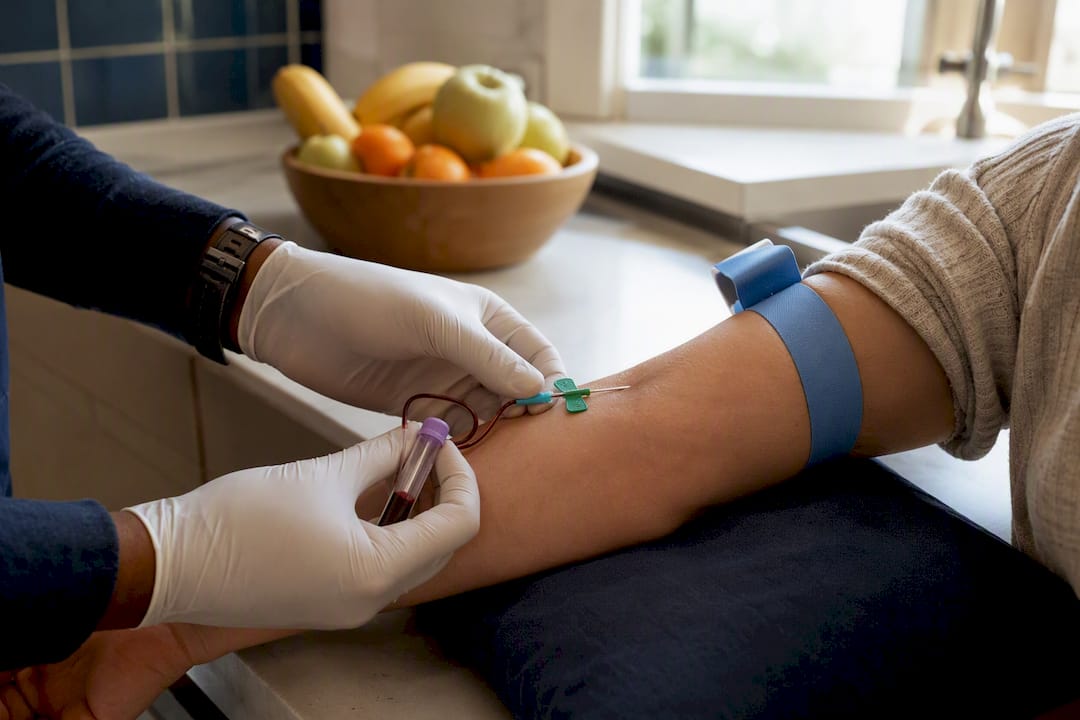
EIV Diagnostics also works directly with patients holding a prescription and with self-pay, direct-to-consumer customers, not just referring providers, which widens who can access faster reporting. None of that comes at the expense of thoroughness. A quicker result that misses a diagnosis is worse than no result at all, and every case still gets the same pathologist-level scrutiny before it ships.
What the Numbers Actually Tell You
The conventional advice on this topic treats turnaround time like a single number you can pin down and demand. It isn’t.
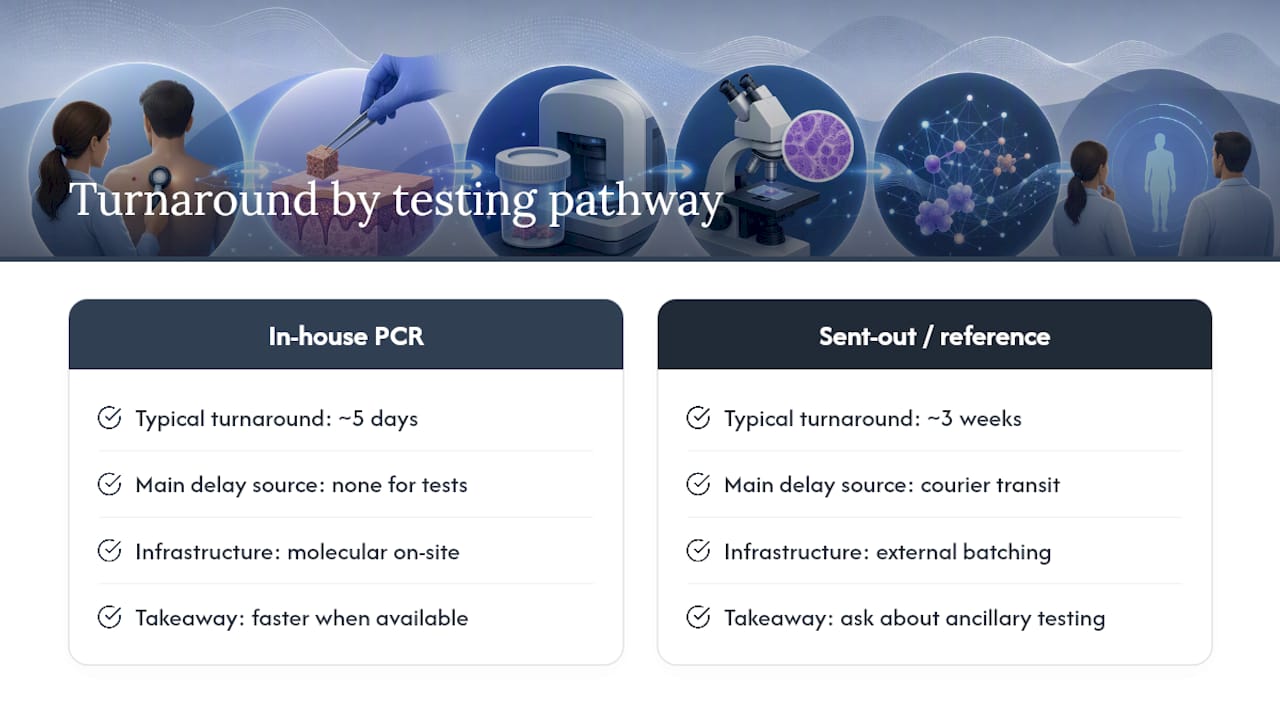
What gets underestimated is how much a lab’s infrastructure, not just its staff’s effort, determines where you land in that range. A lab running molecular testing in-house is structurally faster than one that has to ship samples out and wait for a courier schedule. That’s not a marginal difference, it’s the difference between a 5 day wait and a 3 week one.
If you take one thing from this, prioritize asking whether ancillary testing will be needed before you start counting days. That single question tells you more about your realistic timeline than any average turnaround statistic ever will.
— EIV Diagnostics
Get a Faster, More Direct Path to Your Dermatopathology Results
If you’ve read this far, you already know the biggest turnaround killer is a slow handoff, whether that’s a specimen sitting at a courier depot or a molecular test stuck in someone else’s queue. EIV Diagnostics was built to remove those handoffs. Its dermatopathology services run through board-certified pathologists supported by in-house molecular pathology testing, so complex cases don’t sit waiting for an outside reference lab’s schedule.
Patients can order testing directly, with or without a physician’s prescription, and providers get a lab that treats turnaround time as a diagnostic priority, not an afterthought. Mobile phlebotomy means specimen collection doesn’t have to wait on your calendar either. If you’re a provider evaluating a new dermatopathology partner, or a patient who wants a clearer path to answers, start by reviewing EIV Diagnostics’s dermatopathology offerings and request testing directly.
This article is general information, not a substitute for advice from a qualified doctor. Consult a qualified healthcare professional about your own circumstances before acting on anything here.
Sources
- Specimen turnaround time — UC Davis Health
- Laboratory Turnaround Time of Surgical Biopsies at a Histopathology Service
- Pathology reports — National Cancer Institute (NCI)
- Waiting for your biopsy or cytology test results — American Cancer Society
- Changing trends in dermatopathology case complexity: a 9-year academic center experience
FAQ
How Competitive Is Dermatopathology as a Specialty?
Dermatopathology is one of the more competitive pathology subspecialties to enter, requiring completion of a dermatopathology fellowship after residency in either pathology or dermatology, with a limited number of fellowship slots nationally each year.
What Percentage of Skin Biopsies Come Back Cancerous?
The exact percentage varies widely by clinical setting and why the biopsy was taken in the first place, so there’s no single reliable figure that applies across all practices; your dermatologist’s pretest suspicion for a given lesion is a better guide than any general statistic.
Is Dermatopathology the Same Thing as a Biopsy?
No. A biopsy is the sample taken from the skin; dermatopathology is the medical specialty and laboratory process of examining that tissue under a microscope to reach a diagnosis.
How Many Years Does It Take to Become a Dermatopathologist?
Becoming a dermatopathologist typically requires four years of medical school, three to four years of residency in pathology or dermatology, and then a one to two year dermatopathology fellowship, putting the total path at roughly a decade after undergraduate study.
How Long Should I Wait Before Following Up on a Biopsy Report?
If you haven’t heard back within the typical 2 to 3 day window for a routine biopsy, or 10 to 14 days for a complex case involving special testing, it’s reasonable to call your clinician’s office and ask for a status check using your accession number.