
By EIV Diagnostics · July 23, 2026
Skin Pathology Billing: A Clear Guide for Hanford Patients
Understand billing skin pathology for Hanford patients. Learn about the costs and what to expect for biopsies and lab fees.

How does billing skin pathology work?
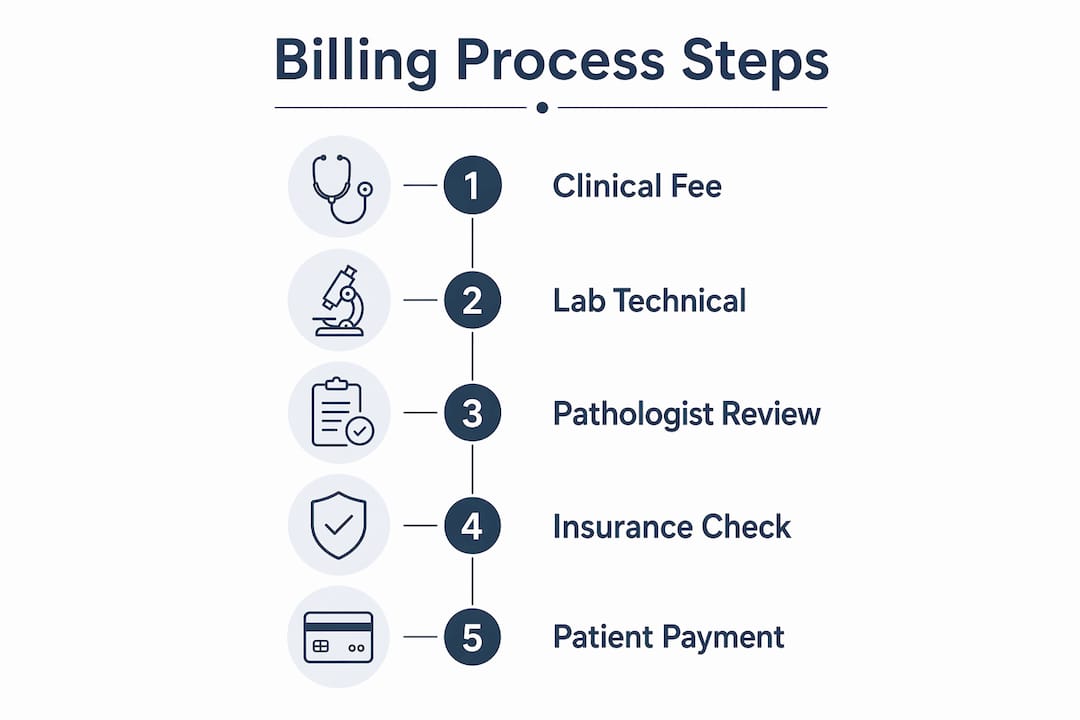
A skin biopsy generates not one bill but three. The clinical office visit or procedure, the lab’s technical fee for processing and preparing slides, and the pathologist’s professional fee for reading those slides each arrive as separate charges, often weeks apart. Three separate bills from a single biopsy catch patients off guard more often than any other aspect of dermatology care.
Here is what the skin pathology billing process typically involves:
- Clinical procedure fee: Charged by the dermatologist’s office for performing the biopsy. This covers the visit, anesthesia, and tissue removal.
- Lab technical fee: Charged by the pathology laboratory for processing the specimen, preparing slides, and running any special stains.
- Professional pathology fee: Charged by the dermatopathologist for microscopically examining the slides and writing the diagnostic report.
- Typical cost range: Expect pathology charges alone to run $100 to $600, depending on complexity, lab location, and your insurance plan.
- Turnaround time: Most labs deliver a final report within 5–10 business days. Urgent or complex cases may take longer.
- Online and phone payment: Most major labs and dermatology practices now accept payment through a patient portal, by phone, or via check. Ask your provider at the time of the biopsy which portal they use.
- Insurance claims: Your insurer processes each bill separately. Common billing codes for skin pathology include CPT 88305 (tissue examination by a pathologist) and CPT 88307 for more complex specimens.
Pro Tip: Ask your dermatologist’s office which lab they send specimens to before your procedure. Confirm that lab is in-network with your insurance. An out-of-network lab can turn a covered biopsy into a surprise bill, even when the dermatologist is in-network.
Accurate documentation of the specimen source, submission date, and lab destination is critical to avoid insurance denials for pathology services. Misdocumentation is the leading cause of billing delays.
Which local providers offer skin pathology services in Hanford?
Three dermatology practices serve Hanford patients with clinical skin pathology services, each with distinct strengths.
| Provider | Services offered | Specializations | Rating | Location/Service area | Billing options |
|---|---|---|---|---|---|
| Skin and Cancer Institute - Hanford | Medical and cosmetic dermatology, Mohs surgery, biopsies, skin cancer screening, teledermatology, full-body exams | Skin cancer detection and treatment, medical and cosmetic dermatology | 4.7★ | Hanford, CA | Insurance accepted; patient portal available |
| Lux Dermatology | Medical, cosmetic, and surgical dermatology, Mohs surgery, electronic brachytherapy, pediatric dermatology, telehealth | Surgical dermatology, skin cancer treatment, pediatric care | 4.8★ (435 reviews) | Serves Hanford and surrounding area | Insurance accepted; telehealth billing available |
| South Valley Dermatology: Shahan Fred MD | Clinical dermatology and skin care procedures | Clinical dermatology | — | Hanford, CA | Not publicly listed |
Skin and Cancer Institute - Hanford stands out for the sheer breadth of what it handles under one roof. Board-certified dermatologists perform biopsies, Mohs surgery, and full-body cancer screenings, and the practice offers teledermatology for patients who cannot come in person. For anyone navigating skin cancer detection alongside the billing process, having the clinical procedure and pathology coordination managed by the same team simplifies the paperwork considerably.
Lux Dermatology brings a wider clinical toolkit, including electronic brachytherapy for skin cancer and dedicated pediatric dermatology. Its telehealth option means billing can be initiated remotely, which matters for patients in rural Kings County who want to avoid unnecessary travel before a diagnosis is confirmed.
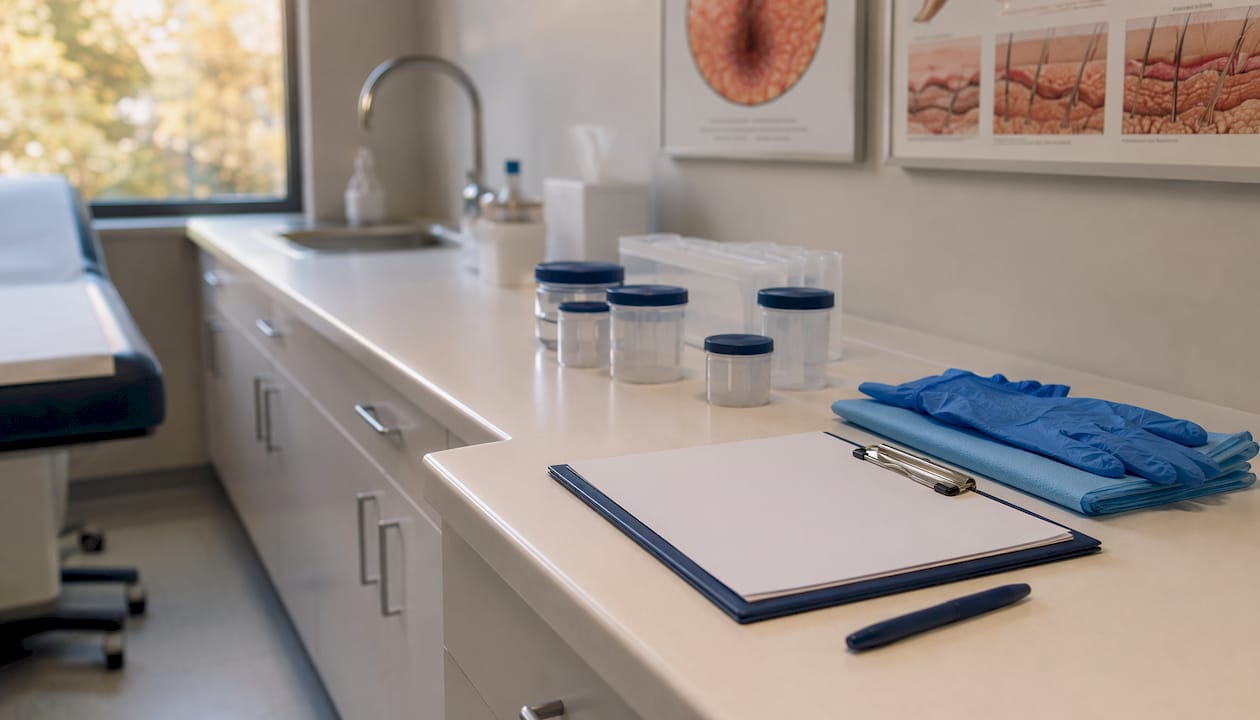
South Valley Dermatology: Shahan Fred MD is a local Hanford practice offering clinical dermatology and skin care procedures. Specific billing details are not publicly listed; contact the office directly for insurance and payment information.
How to choose the right skin pathology provider for your needs
The right provider is not always the closest one. These questions cut through the noise:
- Does the practice use a board-certified dermatopathologist, or does it send specimens to a general pathology lab?
- Is the lab in-network with your insurance plan? Ask for the lab’s name and NPI number before the biopsy.
- What is the typical turnaround time for a written report?
- Does the practice offer an online patient portal for viewing results and paying bills?
- Will the dermatologist communicate directly with the pathologist if the clinical picture and biopsy result do not match?
Board certification and lab accreditation are the two trust signals that most directly affect diagnostic accuracy and billing fairness. A lab without accreditation may not meet the documentation standards insurers require, which increases denial risk.
Verifying insurance participation before the procedure is the single most effective step for avoiding unexpected out-of-pocket costs. Patients with high-deductible plans should ask for an estimate of the pathology fee specifically, since that charge often arrives weeks after the clinical visit and catches people off guard.
Pro Tip: If your biopsy result is ambiguous or the diagnosis does not match your symptoms, ask your dermatologist to request a clinicopathological correlation review. This means the pathologist re-examines the slide with your clinical history in hand, which increases diagnostic accuracy compared to blind evaluation.
What does a dermatopathology report actually tell you?
A dermatopathology report is the written output of a specialized physician who examines your biopsy specimen under a microscope and integrates that finding with your clinical history. The report typically includes the specimen description, the microscopic findings, and a final diagnosis or differential diagnosis list.
Key terms you will encounter:
- Epidermis/dermis: The two main skin layers the pathologist examines for structural changes.
- Histopathology: The microscopic study of tissue. When a report says “histopathology shows,” it means what the pathologist saw under the microscope.
- Clinicopathological correlation: The process of matching the microscopic findings to your symptoms and clinical presentation. Studies show that clinicopathological concordance runs higher when the dermatologist provides detailed clinical information on the requisition form.
- Differential diagnosis: A list of possible conditions the findings are consistent with, ranked by likelihood.
- Margins: In excision specimens, whether the removed tissue has clear edges free of disease.
Accuracy in dermatopathology depends heavily on the quality of clinical information the dermatologist provides. A retrospective study of 3,949 biopsy reports00003-X/abstract) found that pathological diagnoses were consistent with clinical diagnoses in 76.8% of cases, and consistency was higher when sufficient clinical descriptive information was included. That gap between a good report and a great one often comes down to communication between the clinician and the pathologist.
What innovations are changing dermatopathology access and speed?
Digital pathology and molecular diagnostic technologies have meaningfully shortened turnaround times and improved the precision of skin disease diagnosis. The practical impact for patients is faster results and fewer repeat biopsies.
Current advances worth knowing:
- Digital pathology: Whole-slide imaging lets pathologists review specimens remotely, which expands access beyond major medical centers.
- PCR-based molecular pathology: Detects disease at the cellular and molecular level, useful for infectious skin conditions and certain cancers where standard histology is inconclusive.
- Confocal microscopy: Provides real-time, high-resolution imaging of skin tissue, sometimes reducing the need for a traditional biopsy altogether.
- Mobile phlebotomy: In-home or office lab draws remove the barrier of travel for patients with mobility challenges or demanding schedules.
- Direct-to-consumer testing: Some labs now accept orders from patients without a physician referral, giving self-pay patients direct access to dermatopathology services.
Board-certified pathologists using these tools can deliver reports faster and with greater confidence, which also reduces the back-and-forth that delays insurance claims.
Eivdiagnostics offers an independent path to skin pathology testing
If you want a dermatopathology workup without being locked into a single clinic’s lab network, Eivdiagnostics is worth a direct look. Based in Fresno and serving the Central Valley including Hanford, Eivdiagnostics is an independent pathology laboratory staffed by board-certified pathologists who specialize in dermatopathology, molecular pathology, and digital pathology.
The practical difference: Eivdiagnostics accepts orders from both providers and self-pay patients, so you are not dependent on a clinic’s in-house lab or a hospital network’s preferred vendor. Mobile phlebotomy brings the draw to your home or office. Rapid turnaround reporting means your provider gets results quickly enough to act on them. For patients managing insurance claims, the lab’s documentation practices are built to meet insurer requirements and reduce denial risk. Visit eivdiagnostics.com to review testing options or speak with the team directly.
Key Takeaways
Skin pathology billing involves three separate charges, and knowing them in advance is the most effective way to avoid billing surprises.
| Point | Details |
|---|---|
| Three-part billing | Every skin biopsy generates a clinical fee, a lab technical fee, and a pathologist’s professional fee, each billed separately. |
| Cost range | Pathology charges alone typically run $100–$600 depending on complexity and insurance plan. |
| In-network lab check | Confirming the lab is in-network before the biopsy is the single most effective step to avoid unexpected out-of-pocket costs. |
| Report accuracy | Clinicopathological concordance reaches 76.8% when dermatologists provide complete clinical information on requisition forms. |
| Eivdiagnostics | An independent lab serving Hanford and the Central Valley, accepting provider and self-pay orders with mobile phlebotomy and rapid reporting. |
FAQ
What is a pathology report for a skin biopsy?
A skin biopsy pathology report is a written diagnosis produced by a dermatopathologist after examining your tissue sample under a microscope. It includes the microscopic findings, a final diagnosis or differential diagnosis, and notes on margins when relevant.
How accurate is dermatopathology?
Dermatopathology is highly accurate when clinical information accompanies the specimen. A large retrospective study found pathological diagnoses consistent00003-X/abstract) with clinical diagnoses in 76.8% of cases, with accuracy rising when dermatologists provide detailed patient history.
What is dermatology pathology?
Dermatopathology is the subspecialty that combines dermatology and pathology to diagnose skin, hair, and nail diseases through microscopic examination of biopsy specimens. Dermatopathologists complete training in both disciplines before interpreting skin tissue samples.
How much does a dermatopathologist make in California?
According to salary data, the range for a dermatopathologist in California runs from $354,331 to $486,793 per year, reflecting the subspecialty training and diagnostic responsibility the role requires.
What billing codes apply to skin pathology services?
CPT 88305 covers routine tissue examination by a pathologist and is the most commonly used code for skin biopsy billing. CPT 88307 applies to more complex specimens requiring additional analysis. Your lab or provider’s billing department assigns the appropriate code based on specimen type and complexity.