
By EIV Diagnostics · August 2, 2026
Self-Pay Blood Work: Order Online, Compare Prices, Get Results Fast
Order self pay blood work online without insurance. Choose your tests, compare prices, and get results fast from Eivdiagnostics!

You can order self-pay blood work today from a CLIA-certified direct-to-consumer lab service or through Eivdiagnostics, which offers mobile phlebotomy that brings the draw to your home or office. No insurance required. No doctor’s appointment first. Pick your test, pay upfront, and get results in as little as one to three business days.
Fastest next step: Choose the test or panel you need, compare posted cash prices, then complete checkout online or call Eivdiagnostics to schedule a mobile phlebotomy visit.
Common out-of-pocket price ranges to know before you shop:
- CBC (complete blood count): $28–$39
- CMP (comprehensive metabolic panel): $35–$65
- Lipid panel: $28–$45
- TSH (thyroid-stimulating hormone): $35–$59
- Vitamin D: $39–$59
- Wellness panels: $99–$199
Statistic: DTC cash prices for routine tests are typically lower than combined office visit plus lab fees for uninsured or high-deductible patients.
Table of Contents
- How does self-pay blood testing actually work, from order to results?
- What does self-pay blood work actually cost?
- Where and how can your blood sample be collected?
- Which tests do people most commonly order for themselves?
- How fast will you get results, and what does the report look like?
- Six questions to ask before you order self-pay lab tests
- What self-pay lab tests cannot tell you, and when to call a clinician
- Key Takeaways
- Why mobile phlebotomy changes the self-pay equation
- Eivdiagnostics makes self-pay blood work straightforward
- FAQ
How does self-pay blood testing actually work, from order to results?
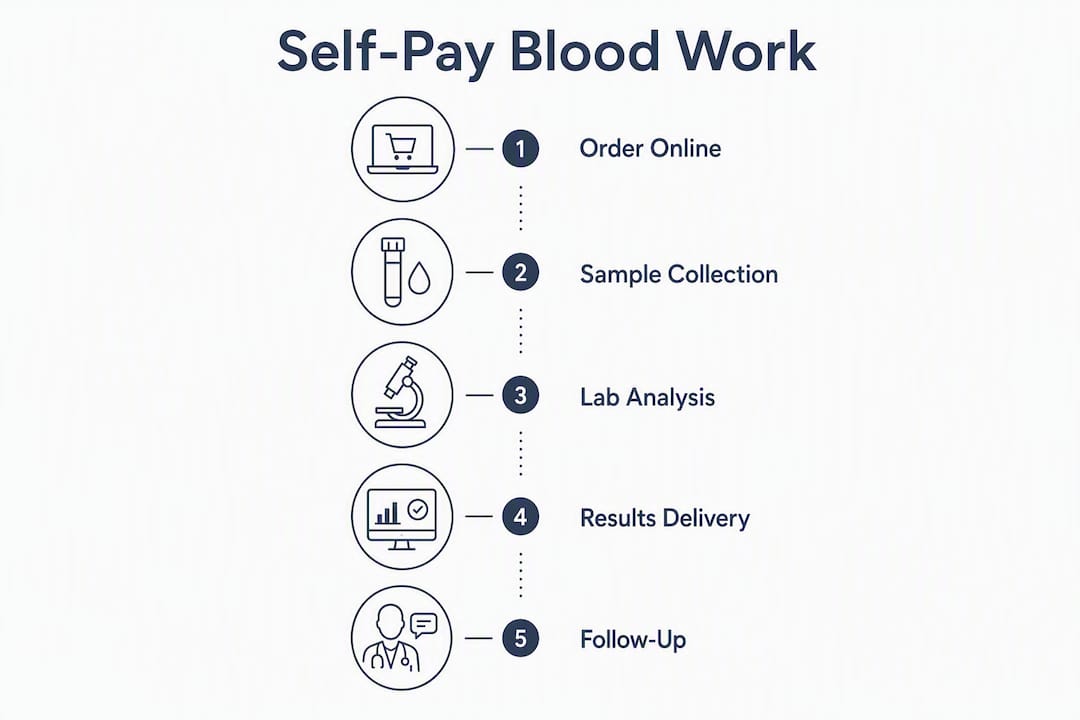
Direct-to-consumer lab testing is legal in most U.S. states and lets you skip the traditional doctor’s-office route entirely. Here is the standard flow:
- Choose your test online. Browse a test menu, select a single test or panel, and add it to your cart.
- Pay upfront. You pay the posted cash price at checkout. No insurance billing, no surprise statements later.
- Receive a physician requisition. Most platforms use an independent physician network that electronically signs your lab order after purchase. This satisfies state requirements without a separate doctor’s visit or fee in most cases, though some platforms charge a small physician-order fee.
- Choose your collection method. Go to a draw center in the lab’s network, use an at-home collection kit if the test supports it, or schedule mobile phlebotomy through a service like Eivdiagnostics.
- Sample is processed at a CLIA-certified lab. Samples ordered through consumer platforms are processed in the same CLIA-certified facilities clinicians use.
- Results delivered digitally. You receive a notification when results are ready in your secure online portal, usually as a PDF you can download or share with a clinician.
One thing to note: venous draws (a needle in the arm) are required for most blood chemistry panels. Fingerstick and mail-in kits work for a narrower set of tests, like HbA1c or lipid screening. If you need a full panel, plan on a venous draw.
What does self-pay blood work actually cost?
Transparent, flat-fee pricing is one of the biggest advantages of the direct-to-consumer model. You see the price before you buy, which is rarely true at a traditional clinic.
| Test | Typical DTC Cash Price |
|---|---|
| CBC (complete blood count) | $28–$39 |
| CMP (comprehensive metabolic panel) | $35–$65 |
| Lipid panel | $28–$45 |
| TSH | $35–$59 |
| HbA1c | $28–$45 |
| Vitamin D | $39–$59 |
| Ferritin | $28–$45 |
| Testosterone (total) | $35–$65 |
| Comprehensive wellness panel | $99–$199 |
Price ranges sourced from DTC lab pricing guides; actual prices vary by provider and location.
Several factors push prices up or down: test complexity, the lab network processing the sample, your collection method (mobile phlebotomy typically adds a service fee), and whether you qualify for a first-time or membership discount.
Ways to keep costs down:
- Order panels instead of individual tests when you need multiple markers. Bundled pricing almost always beats ordering each test separately.
- Check for first-time discounts or membership programs before checkout.
- Pay with an HSA or FSA card. Most diagnostic lab tests qualify as eligible medical expenses.
- Compare the posted DTC cash price against your insurance’s out-of-pocket cost. For high-deductible plans, self-pay lab services often come out cheaper once you factor in the office visit fee.
- Ask about bundled pricing if you are ordering multiple tests at once.
Where and how can your blood sample be collected?
Your collection options depend on the tests you order and how much convenience matters to you.
| Method | Convenience | Typical Added Cost | Tests Supported | Turnaround Impact |
|---|---|---|---|---|
| In-person draw center | Moderate (travel required) | None or low | Nearly all blood tests | Fastest processing |
| At-home collection kit | High (mail-in) | Kit fee varies | Limited panels (fingerstick-compatible) | Add 1–2 days for shipping |
| Mobile phlebotomy | Highest (comes to you) | Service fee applies | Nearly all venous draw tests | Same as in-person once received |
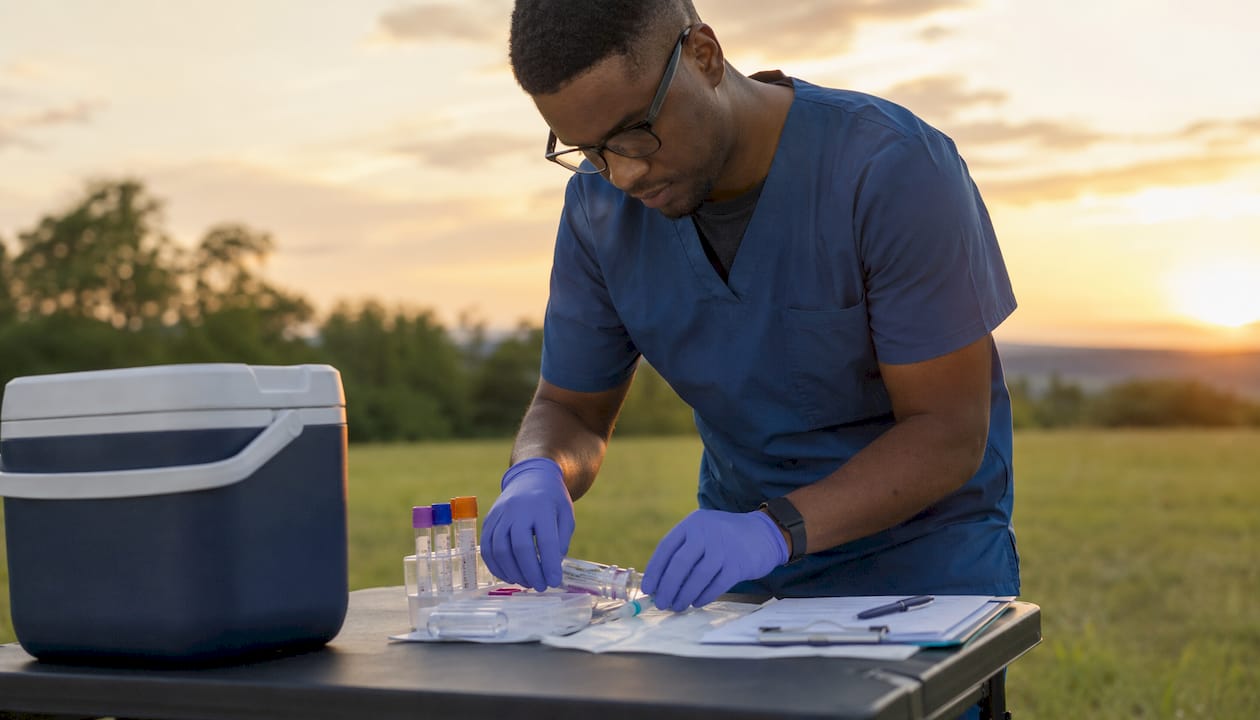
Mobile phlebotomy is the right call when you have mobility limitations, a packed schedule, or simply prefer privacy. A certified phlebotomist comes to your home or office, collects the sample, and sends it to the lab. Eivdiagnostics offers this service directly, which means you get a board-certified pathology lab handling your results without leaving your couch.
One real limitation: some specialized tests require specific handling or temperature conditions that only a draw center can guarantee. If you are ordering a send-out or specialized panel, confirm with the lab that mobile collection is supported before scheduling.
Pro Tip: Mobile phlebotomy is especially useful for testosterone, hormone, or cortisol panels where timing matters. You can schedule the draw at the exact time of day your clinician recommends, something a walk-in draw center cannot always accommodate.
Which tests do people most commonly order for themselves?
Most self-pay orders fall into a handful of categories: routine screening, chronic condition monitoring, and privacy-sensitive testing.
- CBC: Checks red and white blood cell counts, hemoglobin, and platelets. Useful for fatigue, suspected anemia, or general baseline screening.
- CMP: Covers kidney function, liver enzymes, blood sugar, and electrolytes. A go-to for anyone monitoring metabolic health or on medications that affect organ function.
- Lipid panel: Total cholesterol, LDL, HDL, and triglycerides. Ordered for cardiovascular risk assessment or to track diet and medication changes.
- TSH + free T4: The standard thyroid screen. People order this when they suspect hypothyroidism or are monitoring a known thyroid condition.
- HbA1c: A three-month average of blood sugar. Ordered for diabetes screening or to track how well glucose is controlled.
- Vitamin D (25-OH): Deficiency is common and often asymptomatic. Frequently ordered alongside a CBC or CMP.
- Ferritin: The most sensitive marker for iron stores. Useful for fatigue, hair loss, or suspected iron deficiency.
- hs-CRP: High-sensitivity C-reactive protein, a marker of systemic inflammation. Ordered alongside lipid panels for cardiovascular risk.
- Testosterone panel: Total and free testosterone, often ordered by men evaluating energy, libido, or muscle recovery. If you are considering testosterone replacement therapy, baseline labs are the logical first step.
- STD panels: Basic (HIV, syphilis, gonorrhea, chlamydia) or comprehensive. Ordered privately, without involving a primary care provider.
One piece of advice worth repeating: order tests tied to a specific question or symptom. A broad panel of 20 markers sounds thorough, but statistically, at least one result will fall outside the reference range by chance alone, which can send you chasing a false alarm. For specialized panels beyond routine blood chemistry, confirm clinical relevance first.
How fast will you get results, and what does the report look like?
Routine venous blood tests processed at a CLIA-certified lab typically return results in a few business days. Specialized or send-out tests, including some hormone panels and genetic markers, can take longer.
What to expect in your report:
- Reference ranges: Each result appears alongside a normal range. Values outside the range are flagged, usually in red or with an “H” (high) or “L” (low) marker.
- Secure portal access: Most platforms deliver results through a password-protected online portal. You can download a PDF to share with your clinician.
- Clinician review: This varies by provider. Some include a brief clinician note with results; others do not. Eivdiagnostics employs board-certified pathologists who review results before they are released.
- App notifications: Many services send a push notification or email when results are ready.
A flagged result is not a diagnosis. Context matters: a slightly low ferritin in someone who recently donated blood is different from the same number in someone with heavy fatigue and hair loss. If anything comes back abnormal, bring the PDF to your primary care provider or arrange a telehealth consult before drawing conclusions.

Six questions to ask before you order self-pay lab tests
Not every lab service is equal. Before you hand over your credit card, run through this checklist.
- Is the lab CLIA-certified? CLIA certification means the lab meets federal quality standards for clinical testing. No certification, no order.
- Are prices posted and final? Transparent, flat-fee pricing is the standard for reputable DTC services. Hidden fees or “price on request” are red flags.
- What collection methods and locations are available? Confirm draw centers are accessible near you, or that mobile phlebotomy is offered.
- Who signs the physician requisition? Most platforms use an independent physician network to issue orders electronically. Know whether there is a separate fee for this.
- Is clinician follow-up available, and what does it cost? Some services include a brief consult; others charge extra. Know before you need it.
- What is the refund or cancellation policy? If you pay and cannot complete the draw, can you get a refund or reschedule?
Red flags to avoid:
- No verifiable CLIA number or lab accreditation listed
- Prices that change at checkout
- No clear process for accessing results
- No mention of board-certified pathologists or medical oversight
For a deeper look at lab credentials and quality standards, understanding what CLIA certification actually covers helps you ask better questions.
What self-pay lab tests cannot tell you, and when to call a clinician
Self-pay testing is a tool for monitoring and screening, not a substitute for clinical diagnosis. A result outside the reference range tells you something may be worth investigating. It does not tell you why, and it does not account for your medications, fasting state, recent illness, or the lab-to-lab variability that affects some markers.
Practical caution points:
- Fasting matters for lipid panels, glucose, and insulin tests. Draw at the wrong time and the numbers are misleading.
- Some results require confirmatory testing before any clinical decision is made.
- Lab-to-lab variability is real for certain hormone assays. If you are tracking testosterone or thyroid markers over time, use the same lab for consistency.
When to follow up with a clinician:
- Any result flagged as critically high or low
- Abnormal results you cannot explain given your current health status
- Results you plan to use to start, stop, or adjust a medication or supplement
Privacy and legal notes: CLIA accreditation and board-certified pathologist oversight are the two most important trust signals to verify. On the legal side, a small number of states still restrict direct consumer ordering of certain tests. New York and New Jersey, for example, have historically required a physician order for some lab tests. Check your state’s rules or confirm with the lab service before ordering.
Pro Tip: If you receive an abnormal result and are unsure what to do, a single telehealth consult is usually faster and cheaper than an in-person office visit. Many platforms now offer this as an add-on.
Key Takeaways
Self-pay blood work is legal in most U.S. states, costs less than a traditional office visit for most routine tests, and delivers results in 1–3 business days through a secure online portal.
| Point | Details |
|---|---|
| Verify CLIA certification | Only order from labs that display a valid CLIA number — it is the baseline federal quality standard. |
| Compare posted cash prices | DTC prices for routine tests like CBC ($28–$39) and CMP ($35–$65) are typically lower than combined office visit plus lab fees. |
| Choose the right collection method | Mobile phlebotomy supports nearly all venous draw tests and is the most convenient option for most patients. |
| Expect results in 1–3 business days | Routine blood chemistry returns quickly; specialized or send-out panels may take a week or more. |
| Eivdiagnostics for self-pay draws | Eivdiagnostics offers direct-to-consumer ordering, mobile phlebotomy, and board-certified pathologist review from its Fresno, CA lab. |
Why mobile phlebotomy changes the self-pay equation
The standard critique of self-pay testing is that it shifts too much responsibility onto the patient. Order the wrong test, misread a flagged result, and you have spent money to create anxiety rather than clarity. That critique is fair, and it is exactly why the lab behind the result matters as much as the price.
What most DTC platforms do not offer is a board-certified pathologist actually reviewing your results before they land in your portal. That step exists in clinical settings for a reason: a pathologist catches the edge cases, the results that look normal on paper but carry a flag worth noting given the full panel. Eivdiagnostics builds that review into its process. The mobile phlebotomy piece matters too, not just for convenience, but because it removes the friction that causes people to skip testing altogether. A patient who never makes it to a draw center gets no data at all.
The real value of self-pay testing is not that it replaces your doctor. It is that it gives you real data before you walk into that appointment, or between appointments when you are monitoring something that changes slowly. Used that way, it is one of the more practical tools available to anyone managing their own health.
Eivdiagnostics makes self-pay blood work straightforward
Skip the waiting room and the insurance paperwork. Eivdiagnostics is an independent, CLIA-certified pathology laboratory based in Fresno, CA, staffed by board-certified pathologists who review every result before it reaches you. Self-pay patients can order directly, no physician referral required, and choose between visiting a draw location or scheduling mobile phlebotomy at home or at the office.
Payment is simple: credit card, HSA, and FSA are all accepted. Pricing is posted and final at checkout. Results arrive in your secure portal, typically within 1–3 business days for routine panels. For patients who need more than standard blood chemistry, Eivdiagnostics also offers clinical pathology services covering a broad range of diagnostic needs.
Ready to order? Visit eivdiagnostics.com to browse available tests, check pricing, and schedule your draw today.
Useful sources
- CMS lab order requirements — covers documentation standards and medical necessity rules for diagnostic lab tests under federal regulations.
- LabTestInsight guide — practical overview of how to order lab tests without a doctor, including state-by-state legality and DTC pricing examples.
- Merios explainer — explains how independent physician networks issue electronic requisitions and what consumers should expect from the ordering process.
- Paloma Health DTC overview — covers the benefits and limitations of direct-to-consumer testing, including CLIA certification and result interpretation guidance.
- STAT News — reports on clinician concerns about over-ordering and the importance of clinical context when interpreting self-ordered results.
- PMC / NCBI — peer-reviewed analysis of DTC testing quality, regulatory gaps, and consumer risk from unguided test selection.
FAQ
How much does a self-pay blood test cost?
Routine tests through direct-to-consumer platforms typically range from $28–$39 for a CBC, $35–$65 for a comprehensive metabolic panel, and $99–$199 for wellness panels. Prices are posted upfront at checkout.
Can I order blood work without a doctor’s order?
Yes. Direct-to-consumer testing is legal in most U.S. states, and platforms use independent physician networks to issue the required requisition electronically after you purchase.
Is self-pay lab testing cheaper than using insurance?
For uninsured or high-deductible patients, DTC cash prices are generally lower than combined office visit plus lab fees. Compare your plan’s out-of-pocket cost against the posted DTC price before deciding.
Can I get blood work done in a different state?
Most national DTC platforms and their draw center networks operate across multiple states. Mobile phlebotomy availability varies by service area, so confirm coverage before ordering if you are outside your home state.
How do I know if a lab is trustworthy?
Look for a valid CLIA certification number, board-certified pathologist oversight, and transparent posted pricing. Eivdiagnostics meets all three standards and includes pathologist review with every result.