
By EIV Diagnostics · October 5, 2026
10–20 Minute Draws: Phlebotomy for Employers, Compliance and Contracts
Playbook for employers hosting mobile phlebotomy events. Covers OSHA, CLIA, HIPAA checkpoints, vendor contract terms, timing, costs, and EIV Diagnostics...
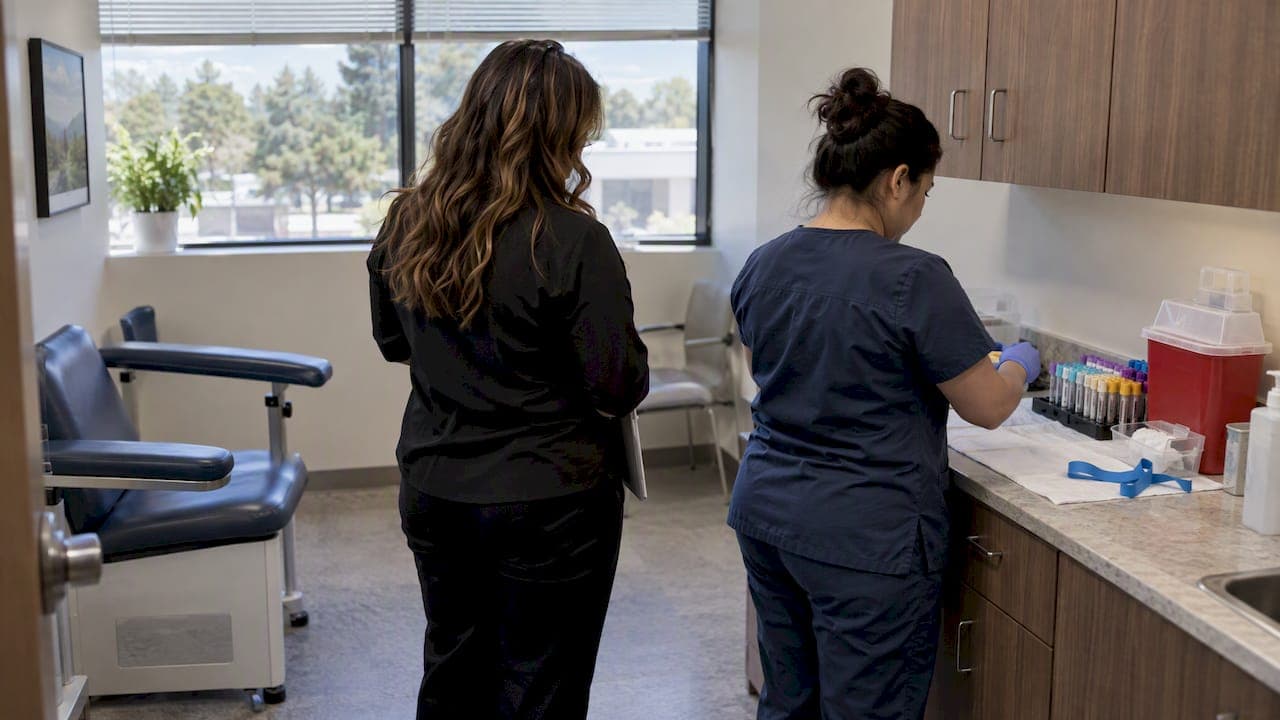
Yes, employers can host mobile phlebotomy events for employee screening, provided they contract with a lab or collection vendor that holds CLIA coverage for the testing performed, and confirm OSHA safety and privacy safeguards before the event. Our main tasks are to confirm who performs the testing, who receives individual results, and that specimen handling and transport are documented. We run mobile phlebotomy events built around those three checkpoints.
TL;DR:
- Employers hosting mobile phlebotomy events must ensure the testing lab holds CLIA coverage and confirm OSHA safety measures are in place for blood handling.
- The event’s purpose dictates test menus and reporting protocols, with wellness screenings, occupational surveillance, and diagnostic testing each requiring different procedures and disclosures.
- A detailed chain-of-custody process, proper specimen labeling, leakproof packaging, sharps disposal, and documented logistics are essential for specimen integrity and liability protection.
- Vendor contracts must include CLIA certification, documented SOPs, insurance proof, and clear results reporting terms to meet regulatory and safety standards.
- Costs generally range from $65 per employee for basic blood draws, with additional fees for lab testing, specimen transport, and follow-up services, and turnaround times should be explicitly defined.
Table of Contents
- What to decide before scheduling a phlebotomy event
- Planning checklist: step-by-step actions for HR and occupational health coordinators
- Regulatory and privacy checkpoints to verify
- Specimen handling, safety, and transport your vendor must document
- How to vet and contract a mobile phlebotomy provider
- Timing and cost expectations for employer phlebotomy events
- EIV Diagnostics: how we support employer phlebotomy events
- Book a mobile phlebotomy event with EIV Diagnostics
- FAQ
- Sources
What to decide before scheduling a phlebotomy event
Before you pick a date, settle what the event is actually for. A wellness screening, an occupational health surveillance program, and a diagnostic testing event carry different test menus, different reporting rules, and different legal exposure. Mixing them without a clear design is the most common planning mistake.
Once the objective is set, the rest follows from it:
- Wellness screenings typically use voluntary, broad panels (cholesterol, glucose, blood pressure) with results going straight to the employee.
- Occupational surveillance, such as lead monitoring, requires hazard-specific testing tied to a documented medical-surveillance protocol and a defined reporting recipient, as the CDC’s employer screening guidance describes.
- Diagnostic testing tied to a benefits program needs a referral pathway so abnormal results reach a clinician, not just a file.
Decide early whether participation is voluntary or incentivized, since that choice affects which EEOC rules apply later in the process.
Planning checklist: step-by-step actions for HR and occupational health coordinators
Running a compliant event is sequential work. Skipping a step rarely surfaces until the day of the draw, when it is hardest to fix.
- Define the program’s goal, target population, and test menu, then set dates and estimate throughput for the site.
- Request vendor documentation: CLIA coverage details for the testing lab, written collection and transport SOPs, phlebotomist credentials, proof of insurance, and an exposure-control plan.
- Design the site layout for privacy during the draw and for basic infection control, including separate waiting and collection areas.
- Distribute employee notices and consent language before the event explaining what is collected, who sees it, and how results are delivered.
- Confirm chain-of-custody steps and transport logistics with the vendor, including who seals and labels specimens.
- Set turnaround-time service levels and an abnormal-result referral workflow in writing.
- Finalize contract and invoice terms, including per-draw pricing and any add-on lab fees.
Pro Tip: Walk the proposed site layout with the vendor in person, not over email, since privacy and sharps-disposal placement issues are easier to catch in the room than on a floor plan.
Regulatory and privacy checkpoints to verify
Three regulatory frameworks govern an employer-hosted draw, and each covers a different piece of the event.
- OSHA: the Bloodborne Pathogens standard (29 CFR 1910.1030) requires an exposure-control plan, PPE, sharps containers, and training for anyone handling blood on site, so your vendor’s staff need documented coverage, not just your own.
- CLIA: the CLIA fact sheet from CMS clarifies that employers generally do not need their own CLIA certificate when an outside certified laboratory performs the testing, but the distinction between collection and testing has to be documented in the contract.
- HIPAA: per HHS guidance on workplace wellness programs, HIPAA applies to protected health information held by a group health plan or its business associates, not to an employer acting purely as an employer, so program structure determines which privacy rules apply.
- EEOC/ADA/GINA: the EEOC’s final rules and sample notice require employers to tell participants what health data is collected and how it is used, and to keep individual medical results confidential.
Design the program so collection, clinical interpretation, and employment administration stay separated. We only receive legally permitted aggregate or operational data, while individuals get personal results directly from the lab or clinician.
Specimen handling, safety, and transport your vendor must document
Specimen integrity depends on steps that happen in the minutes after the draw, not just in the lab. A chain-of-custody process that tracks every handoff from collection to the lab bench protects both the result and the employer from liability.
- Labeling and identification procedures that match each tube to the correct employee before it leaves the site.
- Packaging in leakproof containers with temperature and time controls where the test requires them.
- Sharps containers and a documented waste disposal plan, plus an exposure-response procedure if a needle stick occurs.
- Written documentation for any regulated test, including who signed off on collection and transport.
Specimen collection errors most often happen at labeling and handoff, which is why a written chain-of-custody protocol matters more than verbal assurances from a vendor.
How to vet and contract a mobile phlebotomy provider
A vendor proposal should answer clinical, legal, and logistical questions before you sign anything.
- Request the lab’s CLIA certificate or, where testing happens under a multiple-site exception, documentation that the primary lab’s certificate covers the temporary location.
- Ask for written SOPs covering collection, transport, chain-of-custody, and exposure response, not a summary paragraph.
- Get reporting terms in writing: individual versus aggregate results, turnaround-time service levels, and the referral workflow for abnormal findings.
- Confirm data-protection obligations, indemnity language, and proof of insurance before the contract is finalized.
A CLIA certification overview for lab managers is worth reviewing internally so your team can ask informed questions during vendor calls rather than taking claims at face value.
Timing and cost expectations for employer phlebotomy events
Plan for roughly 10 to 20 minutes per employee, including registration, which sets your throughput for the day. Costs typically break into a few components: a per-visit or per-draw fee, the underlying lab test charges, specimen shipping, sharps disposal, and any follow-up consultation services.
- Turnaround time varies by test type, so build specific SLA language into the contract rather than accepting a general “a few days” promise.
- Budget separately for the event logistics fee and the lab processing fee, since vendors often quote them apart.
- Ask whether follow-up referral calls or re-draws for inconclusive results are included or billed separately.
EIV Diagnostics: how we support employer phlebotomy events
We run mobile phlebotomy events for employers who need onsite or office-based blood draws without sending staff offsite. Our board-certified pathologists oversee the diagnostic side, and we support both provider-ordered testing and self-pay arrangements where employees want to order tests directly.
For an employer event, we document the testing arrangement upfront: which lab performs the work, collection and transport SOPs, and how specimens move from the draw chair to the bench. We also lay out reporting options so HR receives only what it is legally entitled to see, while individual results go to employees or their clinicians. Onsite workflow planning covers everything from sharps disposal to how long a typical draw takes, so coordinators can set realistic schedules before the event date.
— EIV Diagnostics
Book a mobile phlebotomy event with EIV Diagnostics
We offer mobile phlebotomy starting from $65 per visit, bringing the draw to your office so employees are not losing half a workday at an outside clinic.
That same visit can connect to our broader lab capabilities when a program calls for more than a basic draw, including molecular pathology, clinical pathology, and self-pay testing for employees who want to order their own panels. If your program involves specimen types beyond blood, our dermatopathology and digital pathology services are available through the same lab relationship, so you are not managing multiple vendor contracts for one screening cycle.
If you are coordinating a screening event, reach out to schedule a mobile phlebotomy visit and we will walk through test menu, timing, and documentation with you before you commit to a date.

This article is general information, not a substitute for advice from a qualified doctor. Consult a qualified healthcare professional about your own circumstances before acting on anything here.
FAQ
Does an employer need its own CLIA certificate to host a screening event?
Generally no. Per the CLIA fact sheet from CMS, when an outside certified laboratory performs the actual testing, the employer typically does not need a separate CLIA certificate, though the contract should document who performs the testing.
What OSHA rules apply to an onsite blood draw?
The OSHA Bloodborne Pathogens standard (29 CFR 1910.1030) requires an exposure-control plan, PPE, sharps containers, staff training, and record keeping for any event where blood exposure is anticipated. Your vendor’s staff, not just your own employees, need documented compliance with this standard.
Who can see individual employee test results?
Under EEOC rules for wellness programs, employers generally receive only aggregate data, while individual results go directly to the employee or their clinician. HIPAA privacy rules apply when the data is held by a group health plan or its business associate rather than by the employer directly.
What does mobile phlebotomy cost for an employer event?
Pricing structures vary by vendor and typically include a per-visit fee plus separate lab test charges. Mobile phlebotomy through EIV Diagnostics starts from $65 per visit, with lab testing costs quoted separately depending on the test menu.
What should be in a vendor contract for a phlebotomy event?
At minimum, request the lab’s CLIA certificate or multiple-site exception documentation, written SOPs for collection and transport, proof of insurance, and clear terms on turnaround time and reporting. These items protect both the employer and employees if a specimen or results issue arises later.
Sources
For exposure-control rules, CLIA scope, and wellness-program privacy requirements, consult OSHA’s bloodborne pathogens guidance and official agency resources linked throughout this article.
- CDC lead and employer screening guidance
- OSHA Bloodborne Pathogens quick reference
- HIPAA privacy and workplace wellness programs (HHS)
- CLIA fact sheet (CMS)
- EEOC final rules and sample notice on wellness programs