
By EIV Diagnostics · September 1, 2026
Clinicians: Confirm Unexpected Results With LC MS/MS in Pain Testing
Lab‑led, clinic‑ready guidance for clinicians: baseline urine before opioids, confirm unexpected screens with LC MS/MS, plus ordering, billing, and...

Pain management drug testing works as a monitoring system, not a lie detector: order a screening immunoassay, send every unexpected result for confirmatory LC-MS/MS or GC-MS, and set testing frequency by documented risk level rather than habit or suspicion. The single rule that prevents most bad outcomes is simple. Never make a treatment decision off a presumptive screen alone. Guidelines from the CDC, ASIPP, and the VA/DoD all converge here, and a quick consult with your lab’s toxicology staff resolves most confusing results faster than repeating the test.
TL;DR:
- Urine remains the preferred specimen for routine pain management drug testing due to its extensive evidence base and well-understood detection windows.
- Confirmatory testing with LC-MS/MS or GC-MS is essential for unexpected screening results, especially for synthetic opioids like fentanyl and buprenorphine, which immunoassays often miss.
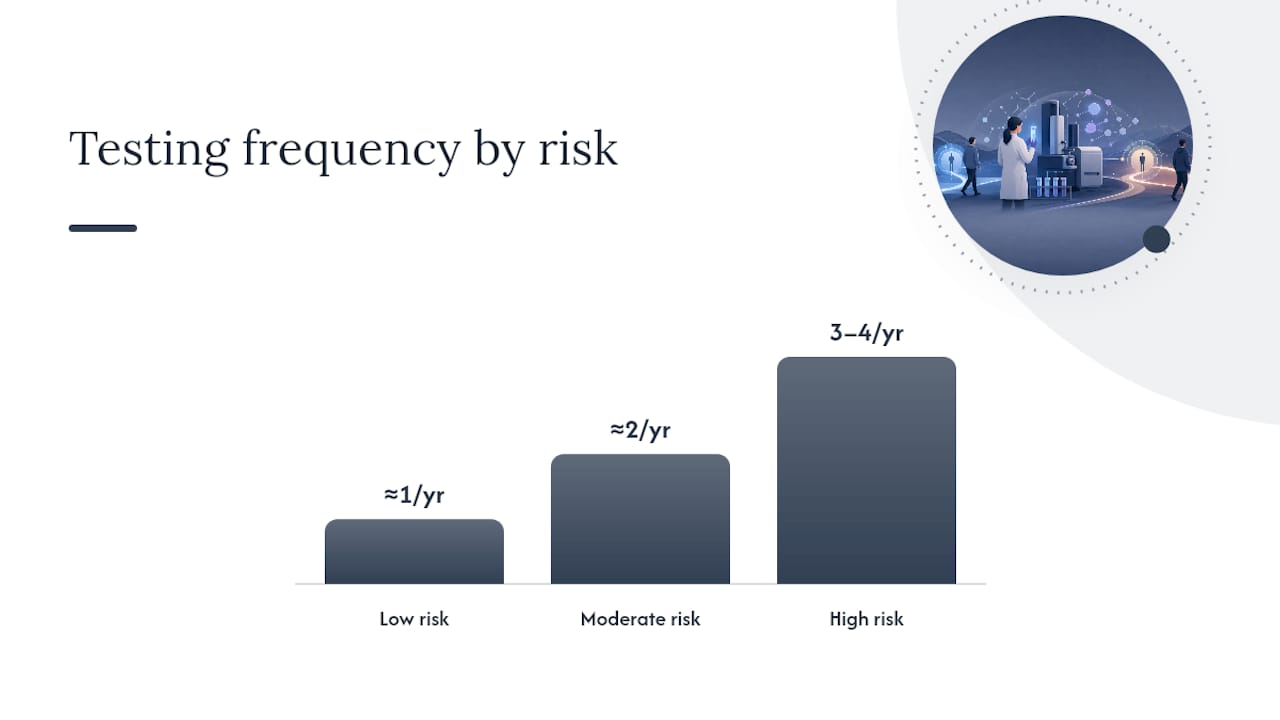
- Testing frequency should be risk-based, with low-risk patients tested annually and high-risk patients up to four times per year, plus random or for-cause tests when needed.
- Proper specimen collection, handling, and documentation are crucial to avoid invalid results, with witnessed collection and chain-of-custody procedures recommended in suspicious cases.
- Clear clinical rationale and correct billing codes are vital for test reimbursement, and lab consultation can help interpret complex or unexpected reports effectively.
Table of Contents
- Testing Modalities and Specimen Matrices: Why Urine Leads
- Ordering Tests and Lab Workflow: A Practical Checklist
- Interpreting Results: Cutoffs, Metabolites, and Common Pitfalls
- Testing Frequency and Risk Stratification
- Specimen Validity: Catching Dilution and Substitution
- Legal, Billing, and Documentation Requirements
- Talking to Patients About Testing and Unexpected Results
- EIV Diagnostics: Laboratory Support for Complex Interpretation
- What We’ve Learned Building Testing Workflows With Clinics
- Ordering Pain Management Drug Testing Through EIV Diagnostics
- Guidelines and Research Worth Bookmarking
- Sources
- FAQ
Testing Modalities and Specimen Matrices: Why Urine Leads
Urine is the default matrix for a reason that has nothing to do with tradition. It has the deepest evidence base of any specimen type, with detection windows that are well characterized for nearly every drug class pain clinics care about, and urine remains the preferred matrix for routine monitoring of patients on chronic opioid therapy precisely because of that depth of study. That doesn’t mean it’s the only matrix worth knowing.
Saliva testing has a shorter detection window than urine but reflects more recent use, which makes it useful for point-of-care checks during a visit when observed collection matters more than history. Blood testing gives you a quantitative snapshot of what’s circulating right now, valuable in acute overdose evaluation or when you need pharmacokinetic precision, but it’s invasive and impractical for routine monitoring. Hair testing extends the detection window to months, which sounds appealing until you consider it can’t detect very recent use and is vulnerable to environmental contamination arguments in legal proceedings. Sweat patches see occasional use in structured monitoring programs but rarely appear in standard pain clinic workflows.
The screening method matters as much as the matrix. Point-of-care immunoassays are fast, cheap, and useful for same-visit decisions, but they’re built to detect drug classes, not specific compounds, and that design creates blind spots clinicians need to know before they trust a negative.
- Immunoassays flag drug classes using antibody cross-reactivity, which is fast but imprecise. They frequently miss synthetic and semisynthetic opioids entirely because those molecules don’t resemble the morphine-based antibody targets the assay was built around.
- LC-MS/MS and GC-MS are definitive methods that identify and quantify specific compounds and metabolites, and immunoassay screening has lower sensitivity for many drug classes compared with LC-MS/MS, which is exactly why unexpected screen results need confirmation before you act on them.
- Fentanyl, methadone, and buprenorphine typically require their own targeted immunoassays or direct confirmatory testing since standard opiate panels are calibrated for morphine and codeine and will not reliably catch these.
- Ethyl glucuronide and ethyl sulfate (EtG/EtS) are alcohol metabolites ordered separately when abstinence monitoring is part of the treatment agreement, since standard panels don’t screen for alcohol use at all.
If your patient population includes a lot of fentanyl or buprenorphine prescriptions, a generic opiate panel will give you false reassurance almost by design. Order the specific analyte. For background on how long common drugs stay detectable in urine, our detection window guide breaks down ranges by substance and helps set expectations for patients before their first test.
Ordering Tests and Lab Workflow: A Practical Checklist
Getting a usable result starts before the specimen ever reaches the lab. A poorly specified order produces a report that tells you nothing useful, and a clinician who doesn’t understand the reflex process ends up calling the lab confused about why a “normal” screen missed something obvious in hindsight.
- Choose panel breadth deliberately. A broad screen makes sense for a new patient with an unclear substance history; a targeted panel built around the patient’s actual prescription list is more efficient and cheaper for routine monitoring once you know what you’re checking for.
- Specify synthetic and semisynthetic opioids by name. Fentanyl, methadone, buprenorphine, oxycodone, and tramadol frequently need to be ordered as distinct analytes rather than assumed under a generic “opiates” panel, since standard immunoassay opiate panels are calibrated to morphine and often won’t detect them.
- Decide upfront whether to request definitive testing rather than screen-first. For high-risk patients, patients with a history of unexplained results, or legally sensitive cases (custody disputes, disability evaluations), skipping straight to LC-MS/MS avoids the delay and ambiguity of a reflex algorithm.
- Understand the standard reflex algorithm. Most labs run the immunoassay screen first and automatically reflex to confirmatory testing only when a result is positive, negative-but-clinically-unexpected, or flagged by the ordering clinician. If you don’t flag an unexpected negative for confirmation, it may never get one.
- Follow proper specimen handling. This includes witnessed collection when diversion is suspected, correct temperature strip verification at the time of collection, and clear chain-of-custody documentation for any specimen that might end up in a legal or employment context.
- Know your codes before billing. Presumptive (screening) testing is typically billed under HCPCS codes in the G0480 to G0483 series or CPT 80305 to 80307 depending on method, while definitive testing uses G0480 to G0483 or the 80320 to 80377 CPT range depending on the specific analytes confirmed. Payer rules on which codes apply to which method vary, so confirm current requirements with your billing team before submitting claims.
A lab that understands pain management workflows will flag inconsistencies before you have to hunt for them, which is a real advantage of working with a laboratory that regularly interprets results for pain specialists rather than one that treats every urine sample the same way.
Interpreting Results: Cutoffs, Metabolites, and Common Pitfalls
The single most common interpretation mistake in pain management drug testing is treating a screen result as a final answer. It isn’t. Screening immunoassays are, by design, presumptive, and the American Family Physician guidance is blunt about it: all unexpected positive or negative immunoassay results should be sent for confirmatory testing before any clinical decision gets made off them.
Parent drug versus metabolite matters more than most non-toxicologists appreciate. Codeine metabolizes partly to morphine, so a patient prescribed codeine can show morphine on a screen and that’s expected, not evidence of diversion or additional use. Heroin use is confirmed specifically by the presence of 6-monoacetylmorphine (6-MAM), a short-lived metabolite unique to heroin, since heroin itself also breaks down to morphine. Methadone is metabolized to EDDP, and a methadone-prescribed patient who tests positive for methadone but negative for EDDP raises a real question about whether the specimen is actually theirs. Comprehensive interpretation requires knowing which metabolites to target for each prescribed drug, not just whether the parent compound shows up.
Statistic Callout: Retrospective comparisons show immunoassay sensitivity falling below 80% relative to LC-MS/MS for several opioid drug classes, meaning a meaningful share of true opioid exposures never trigger a positive screen in the first place. That gap is exactly why an unexpected negative deserves the same scrutiny as an unexpected positive.
Cutoff concentrations create their own blind spots. Benzodiazepines are a classic example: alprazolam and clonazepam are metabolized so extensively that very little parent drug appears in urine, and standard benzodiazepine immunoassays are often calibrated around older drugs like diazepam and oxazepam. A patient legitimately taking alprazolam can screen negative on a standard benzodiazepine immunoassay simply because the assay isn’t sensitive to that specific metabolite profile. If benzodiazepine use is clinically relevant to the case, order a targeted confirmatory test rather than trusting the screen.
Hydrolysis status is another interpretive trap that catches clinicians off guard. Some drugs are excreted primarily as glucuronidated metabolites, and whether a lab hydrolyzes the specimen before LC-MS/MS analysis changes what shows up on the report. Two labs running the same specimen through different hydrolysis protocols can report meaningfully different results, which is one more reason a direct conversation with the performing lab beats guessing from the printed report alone.
When a result doesn’t match what you expected, work through it in order:
- Confirm the presumptive result with definitive testing before concluding anything.
- Pull the patient’s complete current medication and supplement list, including anything prescribed by other providers.
- Consider whether hydrolysis practices, cross-reactivity, or a known metabolic pathway explains the discrepancy before assuming nonadherence or diversion.
- Document the finding, the reasoning process, and the resulting clinical decision in the chart, regardless of which direction that decision goes.
Pro Tip: Call the lab’s toxicologist or pathologist before you call the patient. A five-minute conversation about assay cross-reactivity or metabolite ratios often resolves what looks like an alarming result, and it means you walk into the patient conversation with an actual explanation instead of an accusation. Lab consultation measurably reduces misinterpretation and prevents unnecessary treatment changes triggered by results that a specialist would have read differently.
Quantitative confirmatory values matter too, not just presence or absence. A patient whose oxycodone level has climbed far outside the expected range for their prescribed dose raises a different clinical question than one whose level sits within expected bounds, and that distinction should shape whether you’re looking at a dosing conversation, a diversion concern, or a lab error worth rechecking.
Testing Frequency and Risk Stratification
Every patient starting chronic opioid therapy should get baseline urine drug testing before the first prescription, full stop. That baseline establishes what substances are or aren’t present before treatment begins and gives you a reference point for everything that follows.
After baseline, frequency should track a documented risk assessment rather than a flat clinic policy applied to everyone the same way. Guideline-based bands compiled across CDC, ASIPP, and VA/DoD recommendations generally break down as:
- Low risk (validated tools like the Opioid Risk Tool or SOAPP-R show minimal risk factors): roughly once per year.
- Moderate risk: roughly twice per year.
- High risk (prior substance use disorder, aberrant behavior history, high morphine milligram equivalent dose): three to four times per year.
- At-visit or for-cause testing: triggered anytime by aberrant behavior, lost prescriptions, early refill requests, or a report from a pharmacy or family member, regardless of where the patient sits on the risk scale.
Random testing built into the schedule matters more than predictable, calendar-based testing, since patients who know exactly when a test is coming can plan around it in ways that undermine the entire point of monitoring.
Payer policy complicates the clean guideline picture. State Medicaid programs frequently cap the number of presumptive and definitive tests reimbursed per year, and state Medicaid rules vary on presumptive versus definitive testing limits, sometimes requiring prior authorization once a patient exceeds a set threshold. Document the specific risk factors driving your testing frequency in the chart every time, since that documentation is what supports medical necessity if a payer questions the claim later.
Specimen Validity: Catching Dilution and Substitution
A negative result on an invalid specimen isn’t a negative result. It’s a specimen that doesn’t tell you anything, and labs report a standard set of validity markers precisely so clinicians can tell the difference.
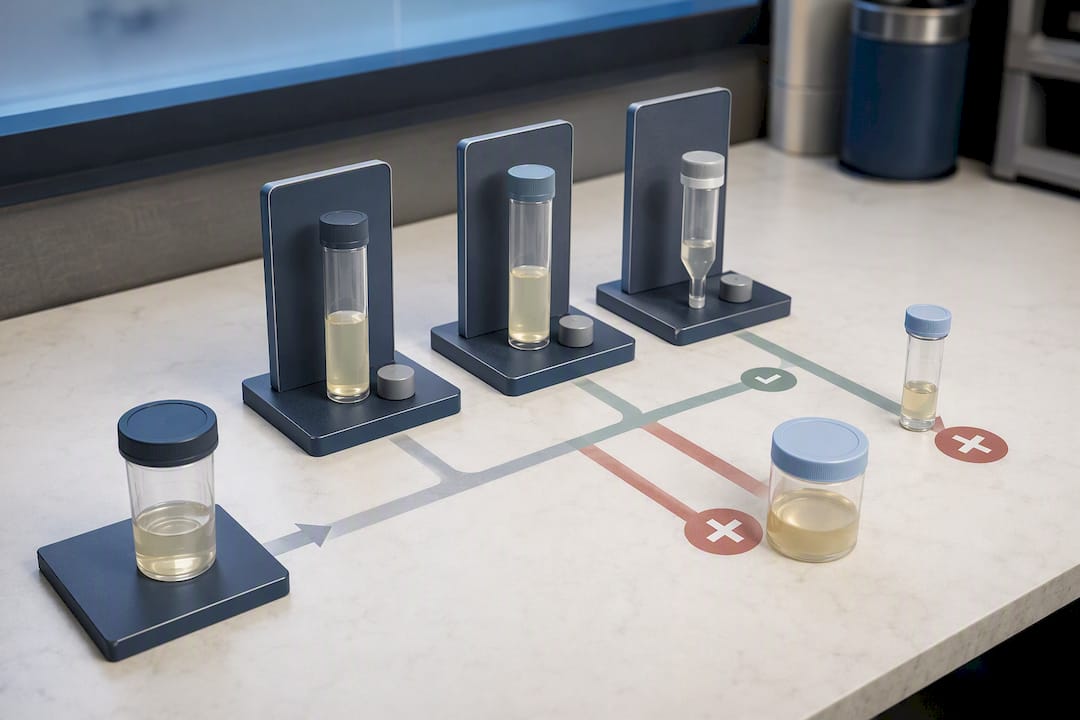
Creatinine concentration and specific gravity together flag dilute specimens, whether from excessive water intake, a diuretic, or a deliberate attempt to mask drug presence. pH outside the normal physiologic range can indicate an adulterant added directly to the sample. Labs also screen for oxidizing adulterants such as nitrites or chromates, which some patients use specifically to degrade drug metabolites before testing.
Extreme hydration or renal impairment can produce a dilute-looking specimen with no intent to deceive anyone, so a single dilute result deserves a conversation and a recollection before it gets treated as evidence of tampering. A pattern of repeated dilute specimens is a different story and one worth documenting carefully.
- Request witnessed collection when diversion or substitution is a genuine clinical concern, not as a routine default for every patient.
- Maintain chain-of-custody documentation whenever a specimen might end up relevant to a legal, disability, or custody proceeding.
- Note any medical conditions, such as kidney disease, that could independently explain an unusual validity marker before assuming intent.
Pro Tip: A single unexplained dilute specimen is a data point, not a verdict. Repeat the test under standard conditions before you change the treatment plan, and keep a record of the pattern if it recurs across multiple visits.
Legal, Billing, and Documentation Requirements
Every test you order needs a documented reason that would make sense to someone auditing the chart two years from now. “Baseline testing before opioid initiation,” “risk stratification per Opioid Risk Tool score,” and “for-cause testing following early refill request” are the kinds of specific justifications that hold up. A vague or missing rationale is the single most common reason payers deny reimbursement or flag a practice for audit.
- Record the clinical rationale for every test at the time you order it, not retroactively when a payer asks. Tie it to baseline status, a specific risk score, or a specific aberrant behavior.
- Check your state’s specific Medicaid and payer policies before assuming national norms apply. Washington State, North Carolina, and New York have each implemented distinct limits on presumptive test frequency and definitive test reimbursement criteria, and what’s allowed in one state may require prior authorization in another.
- Use the correct code for the method actually performed. Presumptive immunoassay testing generally falls under HCPCS G0480 to G0483 or CPT 80305 to 80307; definitive testing falls under the CPT 80320 to 80377 series depending on analyte. Billing a definitive code for a screen that never got confirmed is a common and avoidable audit trigger.
- Consult institutional counsel or compliance staff for anything touching mandatory reporting, particularly in states with specific controlled substance monitoring statutes that may require reporting patterns beyond your standard clinical documentation.
None of this replaces a direct check of your own state’s current regulatory language, which changes more often than most clinicians expect. Treat guideline summaries as a starting point, not a substitute for verifying current local requirements. For related coding questions, our Medicare coding guide for lab testing walks through how documentation requirements translate into billing codes in a different testing context, which illustrates the same principle: the paperwork has to match what was actually done.
Talking to Patients About Testing and Unexpected Results
How you introduce drug testing at the start of treatment shapes how patients respond to it later. Framing it as a safety measure that applies to everyone on chronic opioid therapy, not a suspicion aimed specifically at them, sets a very different tone than presenting it as a condition they’ve triggered by seeming untrustworthy.
- Explain the purpose and expected frequency at the very first visit, before the first prescription is written, so it’s never a surprise later.
- Ask directly for a complete list of prescription medications, over-the-counter drugs, and supplements, since gathering a full medication list up front meaningfully reduces interpretive confusion down the line.
- When a result comes back unexpected, have the conversation privately, present the finding factually, and offer confirmatory testing before drawing conclusions.
- Document exactly what was discussed and what the patient reported, in their own words where possible.
- Frame next steps around safety and treatment adjustment rather than punishment, which keeps the door open for honest disclosure going forward.
A patient who believes testing exists to protect them, not trap them, is more likely to disclose an occasional benzodiazepine from a family member or a missed dose honestly, and that honesty is worth more than any single test result.
EIV Diagnostics: Laboratory Support for Complex Interpretation
EIV Diagnostics operates as an independent pathology laboratory built for exactly the kind of interpretive complexity pain management testing generates. Board-certified pathologists are available to review puzzling or legally sensitive results directly with the ordering clinician, which matters most in the cases outlined above: an unexpected metabolite ratio, a benzodiazepine screen that doesn’t match the prescription record, or a specimen validity flag that needs clinical context to interpret correctly.
Clinicians can order LC-MS/MS confirmatory testing, targeted opioid panels covering fentanyl, methadone, and buprenorphine specifically, and EtG/EtS alcohol metabolite testing when abstinence monitoring is part of a treatment agreement. For patients who can’t easily get to a draw site, whether due to mobility limitations, transportation barriers, or scheduling conflicts, EIV Diagnostics offers mobile phlebotomy that brings specimen collection directly to the home or office, which keeps monitoring consistent even for patients who would otherwise miss scheduled tests.
The interpretive support matters as much as the testing itself. A result that looks alarming on paper often has a straightforward pharmacological explanation, and getting that explanation from someone who reads these reports daily beats guessing. For a genuinely complex case, that consult can be the difference between an unnecessary treatment disruption and a documented, defensible clinical decision.
What We’ve Learned Building Testing Workflows With Clinics
Most testing problems we see aren’t interpretive failures. They’re ordering failures. A clinic orders a generic opiate panel on a patient prescribed buprenorphine, gets a negative screen, and nearly concludes the patient isn’t taking their medication, when the real issue is that the panel was never going to detect buprenorphine in the first place. Fixing that takes one conversation about panel selection, not a new monitoring policy.
The clinics that get the fewest confusing results are the ones that call before they panic. A phone call to the lab when a result doesn’t match clinical expectations resolves the question in minutes far more often than it should have to. That collaboration, more than any single guideline or cutoff value, is what actually keeps patients safe and keeps clinicians confident in the decisions they’re documenting.
— EIV Diagnostics
Ordering Pain Management Drug Testing Through EIV Diagnostics
If your practice needs faster answers on confusing results, EIV Diagnostics gives you direct access to LC-MS/MS confirmation and board-certified pathology consults instead of a call center reading you a report you’ve already seen. That’s the practical difference for a clinician who’s staring at an unexpected screen result and needs an actual explanation, not another delay.
Clinicians can order targeted opioid panels, EtG/EtS alcohol metabolite testing, and definitive molecular pathology confirmation directly through EIV Diagnostics, with mobile phlebotomy available for patients who need specimen collection at home or in the office rather than a separate trip to a draw site. Digital pathology reporting keeps results and interpretive notes accessible to the ordering provider without added back-and-forth. If you’re weighing panel breadth against reimbursement limits described earlier, or you have a benzodiazepine result that doesn’t add up, reach out to schedule a test or request a pathology consult and get a specific answer for your specific patient.
Guidelines and Research Worth Bookmarking
The clinical guidance behind this article comes from a handful of sources worth keeping on hand. The Oregon evidence-based urine drug testing report compiles guideline frequency recommendations and payer policy examples in detail. The American Family Physician overview is a solid primary-care-oriented reference on ordering and interpretation basics. For interpretive nuance, the pain medicine review on urine drug testing and the case-based JALM analysis both work through real interpretive traps in detail. Confirm current limits against your own state’s Medicaid policy before finalizing a testing schedule.
Sources
- Interpretation of urine drug testing in pain patients (2012)
- Interpretation of Pain Management Testing Results Using Case Examples (JALM, 2018)
- Urine drug testing evidence report (Oregon public health evidence review)
- Urine Drug Tests: Ordering and Interpretation | American Family Physician (2019)
- Urine drug testing in pain medicine (review)
FAQ
What Kind of Drug Test Does Pain Management Give?
Most pain management practices start with a point-of-care urine immunoassay screen, then send any unexpected positive or negative result for confirmatory LC-MS/MS or GC-MS testing. Specific panels often add targeted tests for fentanyl, methadone, buprenorphine, or EtG/EtS depending on the patient’s prescriptions and treatment agreement.
What Happens if You Fail a Urine Test at Pain Management?
An unexpected result should trigger confirmatory testing before any clinical action, since screening immunoassays alone aren’t reliable enough for treatment decisions. If confirmation supports a concern, the response typically involves a documented conversation, a review of the treatment plan, and possibly a referral, rather than automatic discharge from care.
How Often Does Pain Management Drug Test You?
Frequency depends on documented risk level, with low-risk patients tested annually, moderate-risk patients tested more than once per year, and high-risk patients tested several times per year, plus random and for-cause testing anytime aberrant behavior arises. Every patient also gets a baseline test before starting opioid therapy.
What Disqualifies You From Pain Management?
There’s no universal disqualifying list, since decisions depend on the specific finding, the confirmatory result, and the clinical context, including whether a medication was missed from the disclosed list. Confirmed diversion, a specimen validity finding indicating substitution, or a pattern of aberrant behavior are the situations most likely to prompt a serious change in the treatment plan.