
By EIV Diagnostics · October 20, 2026
Kratom Drug Test: What Shows Up, What Doesn't, and How to Get Tested
Does kratom show up on a drug test? Learn which urine panels miss it, how labs confirm mitragynine, and how to order a kratom test in Fresno.
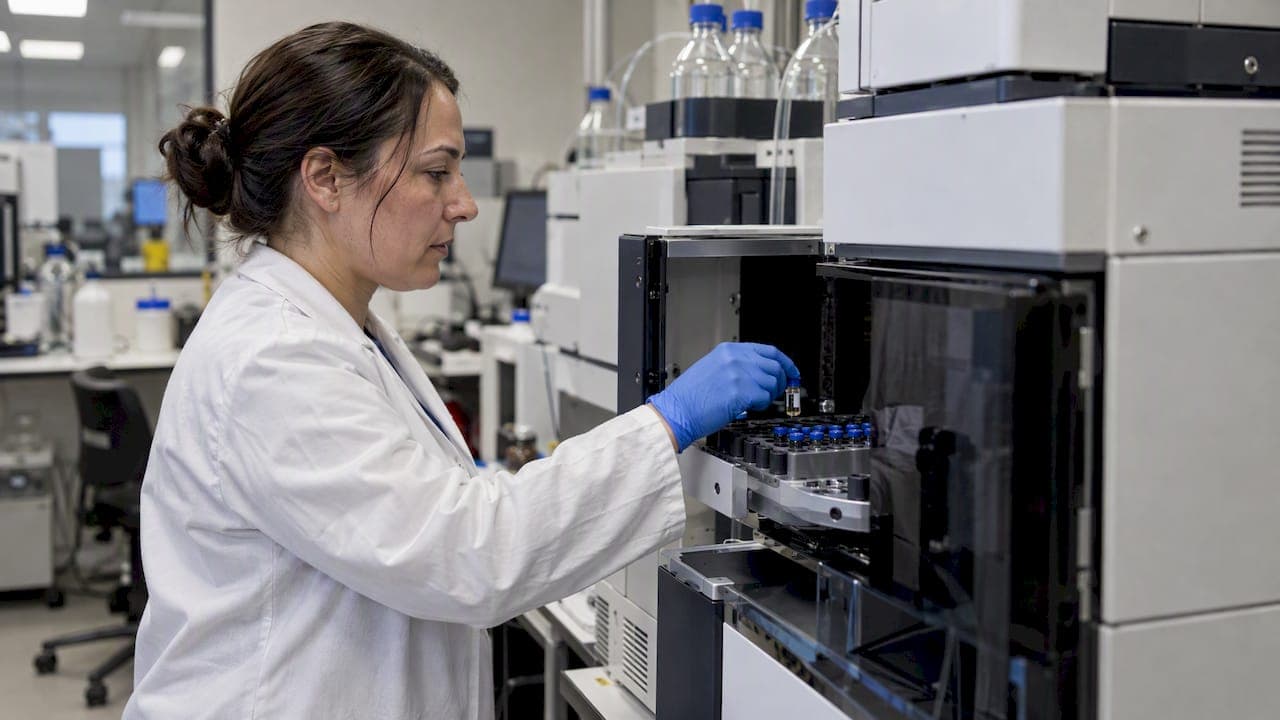
Kratom does not show up on a standard 5-, 10- or 12-panel urine drug screen. It is detected only when a laboratory runs a test aimed specifically at mitragynine, kratom’s main active alkaloid, usually by mass spectrometry. That is the short answer. The longer one depends on who is asking for the test, which method the lab uses, and what you need the result for. This guide covers all of it, plain and without judgment.
TL;DR
- Routine urine drug screens almost never detect kratom, but a lab can run a targeted test if it is ordered.
- Kratom is not on the federal workplace drug testing panels, though a private employer can still order a specific test.
- Dip cards and test strips give a preliminary result. A mass spectrometry confirmation is what makes a result reliable.
- Ask for a mitragynine (kratom) panel by name. A generic panel will not look for it.
- EIV Diagnostics in Fresno offers self-pay testing, with or without a doctor’s order, and mobile phlebotomy from $65.
Table of Contents
- Does kratom show up on a drug test?
- Kratom on the federal workplace panel
- How labs actually detect kratom
- Urine, blood, saliva: which sample?
- Can kratom cause a false positive for something else?
- Not all kratom products are the same
- Our perspective: test to guide care, not to punish
- How to get a kratom test in the Fresno area
- Testing at home or at the office
- Who this test is for
- Frequently asked questions
- Sources
Does kratom show up on a drug test?
Not on the tests most people picture. A standard urine drug screen looks for a fixed list of drug classes: typically amphetamines, cocaine, opiates, THC, and PCP, with benzodiazepines, barbiturates, methadone and others added on larger panels. Kratom is a plant (Mitragyna speciosa), and its alkaloids are not the molecules those tests were built to catch.
New York State’s clinical guidance says plainly that kratom and 7-OH are not detected on routine drug screens, though they can be ordered. The state addiction agency adds that there are no FDA-approved drug screening tests for kratom or its metabolites. Labs that test for it do so with their own validated methods.
So the honest answer has two halves:
- If your test is a routine panel, kratom will not be flagged as kratom.
- If someone orders a kratom or mitragynine test, it can be found.
The second half matters most. Employers, treatment programs, probation offices and physicians can add a kratom test on top of a standard panel. If you have been told your test is a regular 5-panel, you can reasonably expect kratom not to be on it. If you have been told it is an expanded or specialty panel, ask exactly what it includes.
Kratom on the federal workplace panel
Federal workplace programs follow a list of drugs published by the Department of Health and Human Services. The January 2025 revision of the authorized urine and oral fluid panels does not include kratom, and the March 2026 notice made no revisions to the current panels. Federal employees and workers in federally regulated, safety-sensitive jobs are therefore not routinely tested for it.
A few cautions:
- Federal panels set the floor for regulated programs only. A private employer can write its own policy and order extra tests.
- Federal rules tell you nothing about what a court, treatment program or clinic will order.
- Kratom is not a controlled substance under federal law. The DEA’s fact sheet says it is not controlled under the Controlled Substances Act, but some states have their own rules and the FDA has not approved it for any medical use. Check your own state and local rules.
If your concern is a pre-employment or random screen, it also helps to know how the process works from the employer’s side. This overview of how long employer drug screens take to come back explains the usual turnaround and why an expanded panel can take longer than a routine one.
How labs actually detect kratom
Kratom contains more than 50 chemicals, but testing focuses on one: mitragynine. Labs also look for its metabolites, including 7-hydroxymitragynine (7-OH), which forms in the body and is also found at much higher levels in some concentrated commercial products.
There are two broad ways to test.
Screening: immunoassay dip cards and strips
The kratom test strips and cups sold online are urine immunoassays. They work like a home pregnancy test: an antibody reacts to the target compound and a line appears or doesn’t. Products in this category advertise cutoffs around 300 ng/mL. They are fast and cheap, but they are presumptive. They can miss low concentrations, and antibody-based tests can react to other compounds. They are a first look, not proof.
Confirmation: LC-MS/MS
The laboratory standard is liquid chromatography with tandem mass spectrometry. It separates the molecules in a sample and identifies each one by its mass and fragmentation pattern, so it can say which compound is present and how much. A 2024 validation study in the Journal of Analytical Toxicology reported limits of detection of 1 to 5 ng/mL for screening and 1 ng/mL for confirmation for mitragynine using this approach.

The federal workplace program itself requires that a confirmatory method specifically identify and quantify the drug or metabolite. Kratom is not in that program, but the principle carries over: a screening result that matters should be confirmed by a method that identifies the compound itself.
Why confirmation matters for kratom
A review of the analytical challenges notes that mitragynine testing raises technical and medico-legal questions, from sample handling to interpretation. Clinical researchers likewise point to the value of confirmatory testing over a lone immunoassay result, to avoid false positives and cross-reactivity.
Urine, blood, saliva: which sample?
Urine is the most common specimen for a kratom test, and it is what most people mean when they search for a kratom urine test. It is easy to collect and the metabolites concentrate there. A 2012 paper in the Journal of Analytical Toxicology described methods for measuring mitragynine and its metabolites in human urine to document use.
Other specimens exist. Blood reflects recent use and suits clinical or medico-legal questions. Oral fluid is used by some employers for on-site collection. Which one fits depends on why you need the test.
How long kratom remains detectable varies with dose, frequency, body chemistry, the product, and the cutoff the lab uses. We will not give you a single number, because any fixed window would be a guess. If timing matters for your situation, ask the lab for the cutoff of the method it uses and discuss the result with a physician or a medical review officer.

Can kratom cause a false positive for something else?
You will see this claim on forums, for example that kratom can trigger a methadone result on a panel. Treat it with care. The research we reviewed supports the general point that immunoassays can cross-react and need confirmation, but we did not find a source that establishes a specific rate or mechanism for kratom, so we will not state one.
The practical advice is simple. If a screen comes back positive for something you did not take, ask for a confirmation by mass spectrometry before anyone acts on it. A confirmatory test identifies the actual compound, which settles whether it is the substance on the report.
If your result affects a job, custody case, probation or treatment, talk to the medical review officer, your physician or an attorney about your options. A lab can tell you what is in a sample. It cannot decide what your employer or the court does with that information.
Not all kratom products are the same
This is where testing gets clinically interesting. Kratom is not one drug. It shows stimulant-like effects at lower doses and opioid-like effects at higher doses, and products on the shelf vary widely. New York’s clinician guidance notes that 7-OH makes up less than 0.02% of dry weight in natural dried leaf, while concentrated commercial products often contain far more.
That gap is important for care. Clinical reviewers stress separating plain leaf use from concentrated or semi-synthetic derivatives, because 7-OH products carry higher risks of respiratory depression and dependence. Forensic toxicologists add that identification, not just detection, is the hard part: with new psychoactive substances on the market, products labeled as kratom may contain undisclosed substances. A lab that reports specific compounds, not a yes or no, gives a physician far more to work with.
Our perspective: test to guide care, not to punish
We see requests for kratom testing from three kinds of people: patients who want to know what is in their system, physicians who suspect use and need a clear result, and individuals who must document a negative result for a reason outside the clinic. The best outcomes come when the test answers a defined question.
A few principles guide how we think about it at EIV Diagnostics:
- Match the method to the question. A screen can say a sample is worth a closer look. Only a confirmatory method that names the compound should drive a decision.
- Be specific about what is ordered. Because routine panels do not look for kratom, the order has to name mitragynine or a kratom panel. Vague requests produce vague results.
- Keep the clinical picture in view. Clinical guidance recommends using testing to guide care, such as spotting dependency or contamination risks, rather than solely for punitive purposes. We agree. Patients disclose more when the conversation is non-judgmental.
- Quality is not optional. As a CAP-accredited independent pathology laboratory with board-certified pathologists, we hold ourselves to confirmatory standards, not to the fastest cheap answer.
— EIV Diagnostics
How to get a kratom test in the Fresno area
Here is the path, whether you are a patient or a provider.
- Decide why you need the test. Personal knowledge, a physician’s request, or documentation for another party each call for a different level of rigor.
- Specify the analyte. Ask for mitragynine, and 7-hydroxymitragynine if relevant, with mass spectrometry confirmation.
- Choose how you order. Providers can send orders to the lab. Patients with a prescription can bring it. If you do not have an order, self-pay testing lets you request lab work directly.
- Choose where to give the sample. You can visit a collection site or have a phlebotomist come to you.
- Review the result with a clinician. A number without context is easy to misread, especially for a plant product with variable potency.
To confirm that a kratom or mitragynine test is available for your situation, and to get its price, contact us through the self-pay page. Self-pay test prices are not published for each test, so we will quote you before you order.
Testing at home or at the office
If you would rather skip a trip to a collection site, our mobile phlebotomy service brings the draw to your home or workplace, starting from $65 per visit. It suits people with limited mobility, parents with a tight schedule, and employers arranging confidential collection for staff. We serve Fresno, Clovis, Madera, Sanger, Reedley, Visalia, Hanford and surrounding communities across Fresno, Madera, Tulare and Kings counties.
Who this test is for
Patients without a doctor’s visit. If you want a result without scheduling an appointment, direct testing is open to you. We still suggest sharing the result with your own physician, especially if you are tapering or have symptoms.
Providers. If you treat patients who use kratom or suspect they do, a confirmatory result helps separate leaf use from concentrated products and plan treatment. Our clinical pathology services support routine and specialized orders, and our pathologists can talk through interpretation.
People documenting a negative result. If an employer or program has asked you to show you are not using kratom, a confirmed negative from an accredited lab is stronger than an at-home strip. Confirm first what your requester will accept.
Frequently asked questions
Does kratom show up on a standard 10-panel drug test?
No. Standard 5-, 10- and 12-panel urine screens do not target kratom’s alkaloids, so it is not flagged as kratom. A lab can still detect it if someone orders a specific mitragynine test.
Can an employer test for kratom?
Yes, a private employer can add a kratom test to its own program, even though kratom is not on the federal workplace panels. Check your employer’s written drug policy and ask HR which substances are covered. State and local rules on testing can also apply.
Are kratom dip cards accurate?
They are a quick preliminary check, not a final answer. Immunoassay tests can miss low levels or react to other compounds, so a result that matters should be confirmed by mass spectrometry.
Is kratom an opioid?
It is not a classic opioid, and it is not classified as one single substance type. It has both stimulant-like and opioid-like effects, depending on dose and product, and it is not FDA-approved for any medical use.
Do I need a doctor’s order to get tested?
No. At EIV Diagnostics you can order through self-pay testing without a doctor’s order, or use a prescription or provider order if you have one. Talking the result over with a clinician is still a good idea.
Sources
- Kratom: What Clinicians Need to Know, New York State Department of Health
- Kratom, New York State Office of Addiction Services and Supports
- Screening and confirmation of psilocin, mitragynine, phencyclidine, ketamine and ketamine metabolites by LC-MS/MS, Journal of Analytical Toxicology
- Analysis of Mitragynine and Metabolites in Human Urine, Journal of Analytical Toxicology
- Drug testing for mitragynine and kratom: Analytical challenges and medico-legal considerations, PMC
- Controversies in Assessment, Diagnosis, and Treatment of Kratom Use Disorder, PMC
- Mandatory Guidelines for Federal Workplace Drug Testing Programs: Authorized Testing Panels, Federal Register
- Federal Register, Volume 91, Issue 49 (March 13, 2026)
- Medical Review Officer Guidance Manual for Federal Workplace Drug Testing Programs, 2024, SAMHSA
- Drugs of Abuse: A DEA Resource Guide, Kratom fact sheet