
By EIV Diagnostics · September 10, 2026
2–7 Days for Most Biopsy Results: What Patients Should Ask
Most routine biopsies return in 2–7 days; complex cases may take 2–3 weeks. Patient focused timelines, lab workflow explained, and questions to ask.
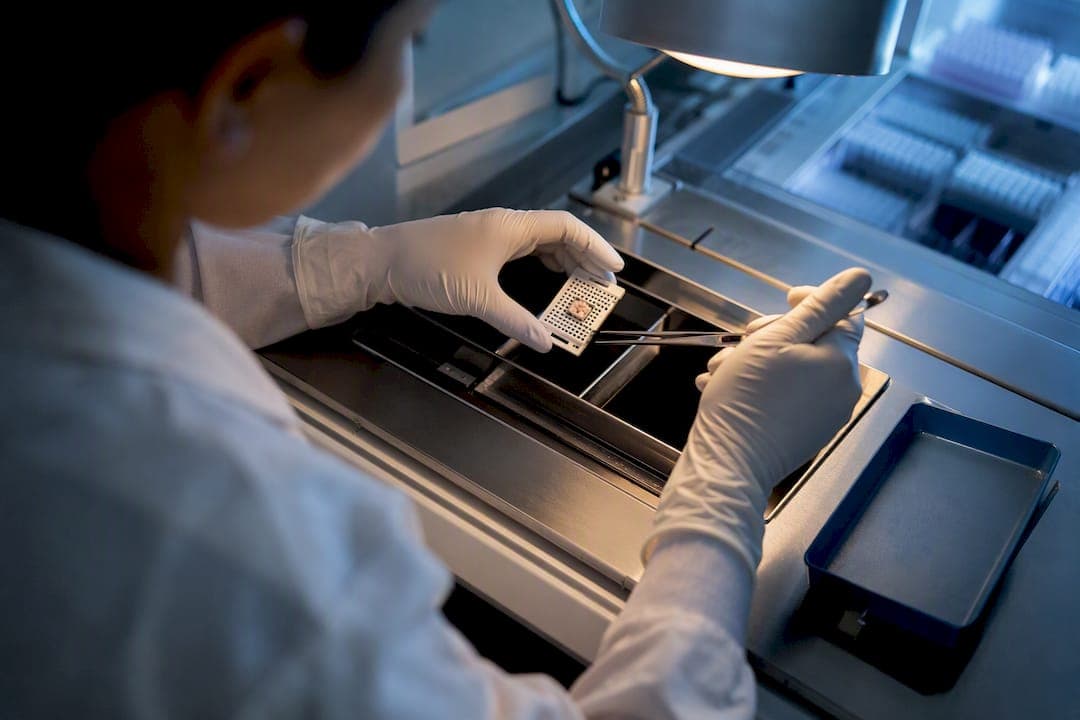
Most routine biopsies come back in 2 to 7 days, some rapid reads (like intraoperative frozen sections) return same-day, and complex cases needing special stains, immunohistochemistry, or molecular testing can take 2 to 3 weeks. The American Cancer Society and Cleveland Clinic both confirm this range, and labs like EIV Diagnostics that keep dermatopathology testing in-house often land at the faster end. Your exact wait depends on the biopsy type and whether extra tests get added.
TL;DR:
- Most routine biopsies take between 2 and 7 days for results, but complex cases involving additional tests can take up to 2-3 weeks.
- Skin, core needle, and excisional biopsies generally fall within the 2 to 7 day range, with bone marrow biopsies often requiring 7 to 10 days or longer.
- Delays often occur in the pre-analytical, analytical, or post-analytical phases, especially if ancillary testing or administrative processing is needed.
- Results are typically communicated through a patient portal, phone call, or in-person visit, with delays caused mainly by administrative hand-offs rather than diagnostics.
- For faster results, ask about in-house dermatopathology services or mobile phlebotomy options, and wait for the promised timeframe before following up.
Table of Contents
- How Long for Biopsy Results by Type: Skin, Core Needle, Bone Marrow
- Why Biopsy Results Take Long: Inside the Lab Workflow
- How You’ll Actually Receive Your Biopsy Results
- What to Do While You Wait for Biopsy Results
- The EIV Diagnostics Perspective on Turnaround Time
- Need Faster, Clearer Biopsy Results?
- Sources
- FAQ
How Long for Biopsy Results by Type: Skin, Core Needle, Bone Marrow
The clock starts the moment your tissue leaves the exam room, but where it lands next determines everything. A lab that processes dermatopathology cases daily moves faster than one that batches specimens and ships them to an outside reference lab once a week.
Here’s what to expect based on what was actually removed:
- Skin punch or shave biopsy (dermatopathology): Typically 2 to 3 days when the sample goes to a lab with a dedicated skin pathology service.
- Core needle biopsy (breast, thyroid, lung): Usually 2 to 7 days, longer if the radiologist flags a suspicious finding that needs additional markers.
- Excisional biopsy (lump or mass removal): Often 3 to 7 days, since larger tissue samples need more processing time before slides are ready.
- Bone marrow biopsy: Can take 7 to 10 days or longer, because the sample often needs decalcification and specialized staining before a pathologist can read it.
- Sentinel lymph node biopsy: Preliminary results sometimes come same-day during surgery using a frozen section, but the final, permanent read usually takes 2 to 5 more days.
Same-day or 24 to 48 hour turnaround can occur but is relatively rare. It typically happens with intraoperative frozen sections, where a surgeon needs an answer during surgery, or with rapid on-site evaluation during certain needle procedures. These fast reads sacrifice some precision for speed. The full guide to same-day lab results breaks down exactly which scenarios qualify.
Add immunohistochemistry (IHC), molecular panels, or flow cytometry, and the timeline stretches. IHC alone can add 7 to 10 days in some labs, since it requires a second round of staining and interpretation after the initial diagnosis is already in progress. Molecular testing, which looks for specific genetic mutations, frequently adds another week or two depending on whether the lab runs it in-house or sends it out.
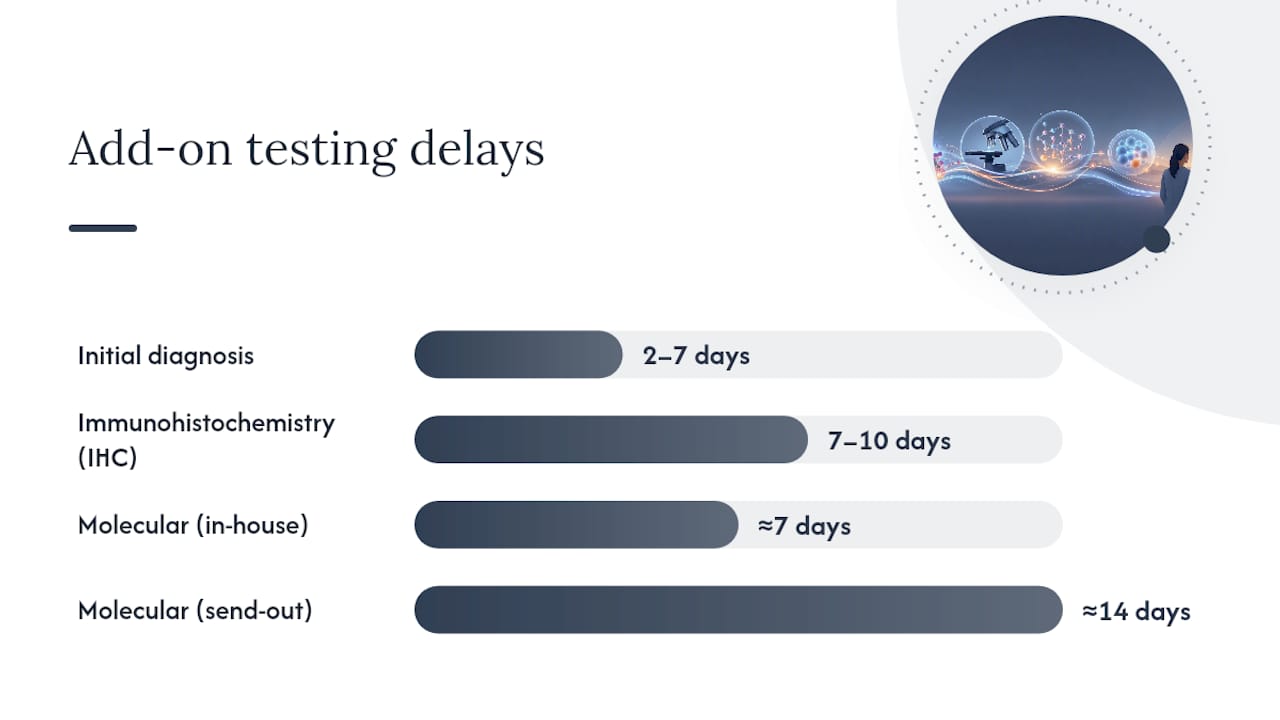
Why Biopsy Results Take Long: Inside the Lab Workflow
Your sample goes through three distinct phases before a report ever reaches your doctor, and delays can creep in at any of them.
- Pre-analytical phase. This covers everything before a pathologist looks at the tissue: fixation in formalin, transport to the lab, and labeling. A mislabeled specimen or a transport delay here can quietly add a full day before analysis even starts.
- Analytical phase. The lab sections the tissue, stains it (routine hematoxylin and eosin, or H&E, is standard), and a pathologist examines it under a microscope. If the case needs IHC or molecular testing, this phase extends significantly since each additional test is its own multi-day process, not an add-on that happens instantly.
- Post-analytical phase. Once the pathologist signs off, the report still has to get transcribed, entered into the electronic medical record, and routed to your clinician. This administrative hand-off is where a lot of the “why haven’t I heard anything” frustration comes from, even after the diagnostic work is done.
Sign-off doesn’t mean you have your results yet. A Q-Probes study from the College of American Pathologists found pathologists signed off 85.9% of biopsy diagnoses by the second working day, but hard-copy reports didn’t reach surgeons until the fourth working day on average. That two-day gap is almost entirely administrative, not diagnostic. Separately, systematic review data puts average turnaround for routine histopathology specimens at 2 to 3 days, stretching longer for surgical specimens or anything requiring ancillary testing.
Deeper technical steps, like decalcifying bone tissue or running a molecular panel, can’t be rushed without risking a wrong or incomplete diagnosis. That’s a real trade-off worth understanding rather than a bottleneck to be frustrated by.
How You’ll Actually Receive Your Biopsy Results
Reports don’t usually go straight from lab to patient. The typical order is lab to clinician to patient, though the exact channel varies by practice.
- Patient portal: Many labs and clinics post results directly, sometimes before your doctor has even reviewed them.
- Phone call: Common for both routine and urgent findings, especially from the ordering provider’s office.
- In-person visit: Standard for results tied to a treatment decision, like a cancer diagnosis requiring a discussion of next steps.
- Mailed letter: Less common now, but still used by some practices as a backup or formal record.
A pathology report itself will state the diagnosis, note the margins if a mass was removed, and flag any ancillary tests that are still pending. If your report mentions a test “in progress” or “pending,” that’s not an oversight. It means part of your full picture is still being finalized. Learning to read a pathology report yourself can help you spot what’s settled and what’s still outstanding.
Pro Tip: Before you leave your biopsy appointment, ask your clinician exactly how and when you’ll be contacted. A clear promised date cuts down on unnecessary follow-up calls and gives you a concrete point to escalate from if it passes.
What to Do While You Wait for Biopsy Results
Waiting is genuinely hard, but there’s a simple, practical plan that removes most of the guesswork.
- Wait until your promised date first. If your provider gave you a specific window, hold off calling until it passes. Most delays inside that window are routine processing, not a problem.
- Call after two weeks if no date was given. This is a reasonable default for most biopsy types. Call sooner if you have symptoms suggesting infection or something urgent.
- Watch for red flags at the biopsy site. Fever, uncontrolled bleeding, spreading redness, or severe worsening pain warrant an immediate call to your provider, not a wait for the pathology report.
- Ask specific questions when you do call. Is additional testing pending? Was the specimen adequate for diagnosis? Can you get a copy of the full report for your records?
A quick call is almost always enough to resolve a delay. Most holdups are administrative, not a sign that something went wrong with your case.
The EIV Diagnostics Perspective on Turnaround Time
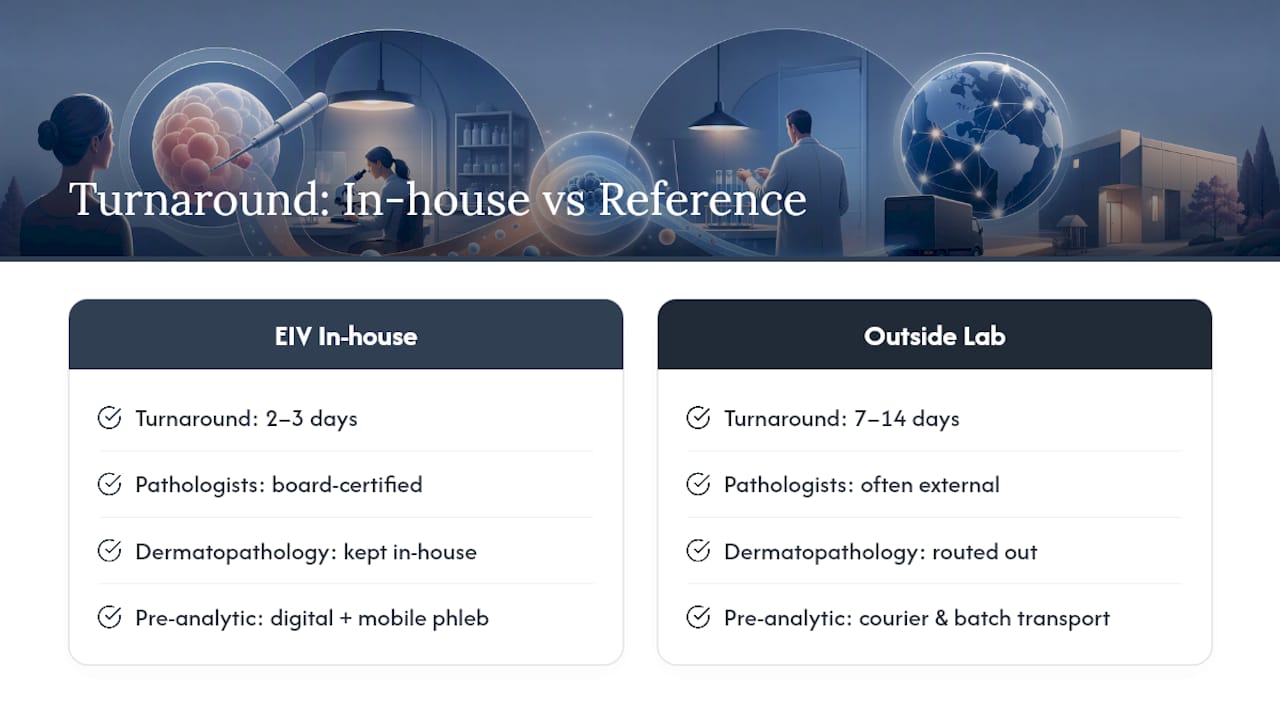
Turnaround time isn’t just about how fast a pathologist can work. It’s about how many steps stand between the microscope and your inbox. EIV Diagnostics runs on board-certified pathologists and keeps dermatopathology cases in-house, which is a major reason dermatopathology turnaround routinely lands at 2 to 3 days rather than the 7 to 14 days that can result when a specimen gets shipped to an outside reference lab.
Digital pathology workflows and mobile phlebotomy services can reduce pre-analytical delays, since specimens do not sit waiting for courier pickup or batch transport windows. If your case involves a skin lesion or a diagnosis where speed genuinely matters, it’s worth asking your clinician directly where your specimen is being routed and whether a faster workflow is clinically appropriate for your situation.
— EIV Diagnostics
Need Faster, Clearer Biopsy Results?
If you’re staring down a two week wait with no update, you have options beyond just sitting with it. EIV Diagnostics runs dermatopathology, molecular pathology, and digital pathology services designed around minimizing the exact delays covered above, plus mobile phlebotomy that brings specimen collection to your home or office instead of adding another appointment to your calendar.
If your provider hasn’t specified where your sample is headed, ask whether it can be routed to a lab with in-house dermatopathology services and board-certified pathologists on staff. If you need a mobile draw scheduled or want to learn more about mobile phlebotomy availability in your area, reach out to EIV Diagnostics directly to get a clear answer on timing before your next procedure.
This article is general information, not a substitute for advice from a qualified doctor. Consult a qualified healthcare professional about your own circumstances before acting on anything here.
Sources
- Waiting for Your Biopsy or Cytology Test Results | American Cancer Society
- What Is a Biopsy? Purpose & Results | Cleveland Clinic
- Turnaround time study (College of American Pathologists Q-Probes) | PubMed
- Turnaround time in histopathology laboratories: determinants of diagnostic efficiency | Genetics and Molecular Research
FAQ
Do biopsy results take longer if it is cancer?
Not necessarily. Some data shows malignant cases have slightly shorter average turnaround time than benign ones, likely because labs prioritize cases where clinical urgency is suspected. What extends timing is the need for additional tests like IHC or molecular panels, which can apply to either benign or malignant findings.
How quickly will a doctor call with biopsy results?
It depends on your provider’s process and the urgency of the finding, but most patients hear back within the timeframe their clinician quoted at the time of the biopsy. If no date was given, following up after two weeks is a reasonable standard for most biopsy types.
Does a biopsy tell you what stage of cancer?
A standard biopsy report confirms diagnosis, tumor type, and features like margins, but full staging usually requires additional imaging, lab work, or sometimes a second procedure to check nearby lymph nodes or other tissue.
What is the two week biopsy rule?
There’s no single universal rule, but two weeks is a commonly cited benchmark for when a patient should expect to hear back on most routine biopsies and should call their provider if they haven’t. Complex cases needing molecular testing can reasonably extend beyond that window.