
By EIV Diagnostics · August 28, 2026
Specimen Collection Errors: Causes and Prevention Strategies
Discover how to prevent specimen collection errors with simple strategies that enhance diagnostic accuracy and improve patient outcomes.

Most specimen collection errors are preventable, and the highest-impact defenses are simple: bedside identity verification, barcode-assisted collection integrated with your laboratory information system (LIS), and standardized draw technique. These errors, formally called pre-analytical non-conformities, happen before a sample ever reaches the analyzer, yet they drive the majority of diagnostic delays, redraws, and misdiagnoses tied to laboratory testing. Left unaddressed, they cost patients time, cost labs money, and occasionally cost someone the right diagnosis.
TL;DR:
- Bedside identification verification, immediate labeling, and barcode-assisted collection significantly reduce specimen mislabeling and mistaken patient samples.
- Errors are more frequent in high-pressure environments like emergency departments and mobile clinics, where time and situational factors increase risk.
- Proper staff training, equipment maintenance, and clear protocols are essential to sustain error reduction over time.
- Automation and integrated systems only deliver benefits when combined with a disciplined safety culture and adherence to fundamentals.
- Labs should track rejection reasons, such as hemolysis or underfilling, and ensure rapid, clear communication to prevent repeated mistakes.
Table of Contents
- Types and Frequency of Pre-Analytical Specimen Collection Errors
- Root Causes and Risk Factors Behind Collection Mistakes
- Evidence-Based Interventions That Reduce Identification and Collection Errors
- A Step-By-Step Checklist for Collection and Transport
- How Labs Catch and Handle Suspect Specimens
- Building a Program That Sustains Fewer Errors Over Time
- How EIV Diagnostics Applies These Safeguards
- Who Talks to Whom: Communication That Prevents Errors
- Reduce Errors, Improve Diagnostic Confidence
- The Gap Between What Barcoding Promises and What It Delivers
- Sources
- FAQ
Types and Frequency of Pre-Analytical Specimen Collection Errors
Roughly 60 to 70% of all laboratory errors occur in the pre-analytical phase, the window between ordering a test and the sample landing on the analyzer. That single figure explains why so much quality improvement energy in laboratory medicine goes toward collection and handling rather than the testing itself.
The non-conformities cluster into a handful of repeat offenders:
- Unlabeled or mislabeled specimens — the tube arrives with no label, the wrong patient name, or a label that does not match the requisition.
- Mismatched specimens — the label is legible but belongs to a different patient than the one actually drawn.
- Insufficient volume (QNS) — not enough sample to run the ordered panel, common with pediatric draws and difficult venipunctures.
- Hemolysis — red cell rupture that skews potassium, LDH, and other analytes, often from tight tourniquets, small-gauge needles, or vigorous shaking.
- Clotted specimens — inadequate anticoagulant mixing, usually from skipped or delayed tube inversions.
- Wrong container or additive — a serum tube used where an EDTA tube was required, or vice versa.
- Contamination — usually from drawing through an existing IV line without proper technique.
- Order-of-draw violations — additive carryover between tubes that biases coagulation or chemistry results.
Institutional audits give a sense of scale. One tertiary-care nonconformity study found unlabeled specimens accounted for roughly 35 to 36% of pre-analytical errors at that facility, making it the single largest category by a wide margin. Hemolysis rejection rates can be significant in some settings, and observational studies have documented underfilled or improperly mixed tubes in up to 24% of samples in certain cohorts.
Risk is not evenly distributed. Emergency departments, ICUs, and mobile or home phlebotomy settings see disproportionately higher error rates than routine outpatient draws, largely because of time pressure, unstable patients, and less controlled environments. A phlebotomist drawing a combative trauma patient at 3 a.m. faces a fundamentally different error landscape than one drawing a calm outpatient at a scheduled morning appointment.
Root Causes and Risk Factors Behind Collection Mistakes
Every mislabeled tube or hemolyzed sample traces back to a combination of human, process, equipment, or situational failure. Rarely is it just one thing.
Human factors dominate the literature. Fatigue and interruptions during a busy shift erode attention at exactly the moment precision matters most. New staff during onboarding make disproportionately more errors, and shift changes create handoff gaps where nobody feels fully responsible for a sample in transit. One of the most dangerous shortcuts is batch-labeling, pre-printing or pre-affixing labels for multiple patients before the actual draw. It saves seconds and creates exactly the kind of mismatch that leads to a transfusion error or a wrong-patient cancer diagnosis.
Process failures compound the human ones:
- Missing or outdated standard operating procedures for draw sequence and labeling timing
- Labeling delayed until after leaving the bedside, when memory and multitasking introduce risk
- Informal “exception” permissions that let staff bypass verification steps during high-volume periods
Equipment and IT failures matter more than most managers assume. A jammed label printer, an empty label cartridge, a dead wireless connection, or a flaky LIS interface can force staff back into manual workarounds that reintroduce the exact errors barcoding was meant to eliminate.
Situational risks deserve their own mention. Drawing from an existing IV line, rushing a STAT order, and the physical constraints of mobile phlebotomy (no fixed workstation, variable lighting, unfamiliar home environments) all raise the odds of a non-conforming sample.
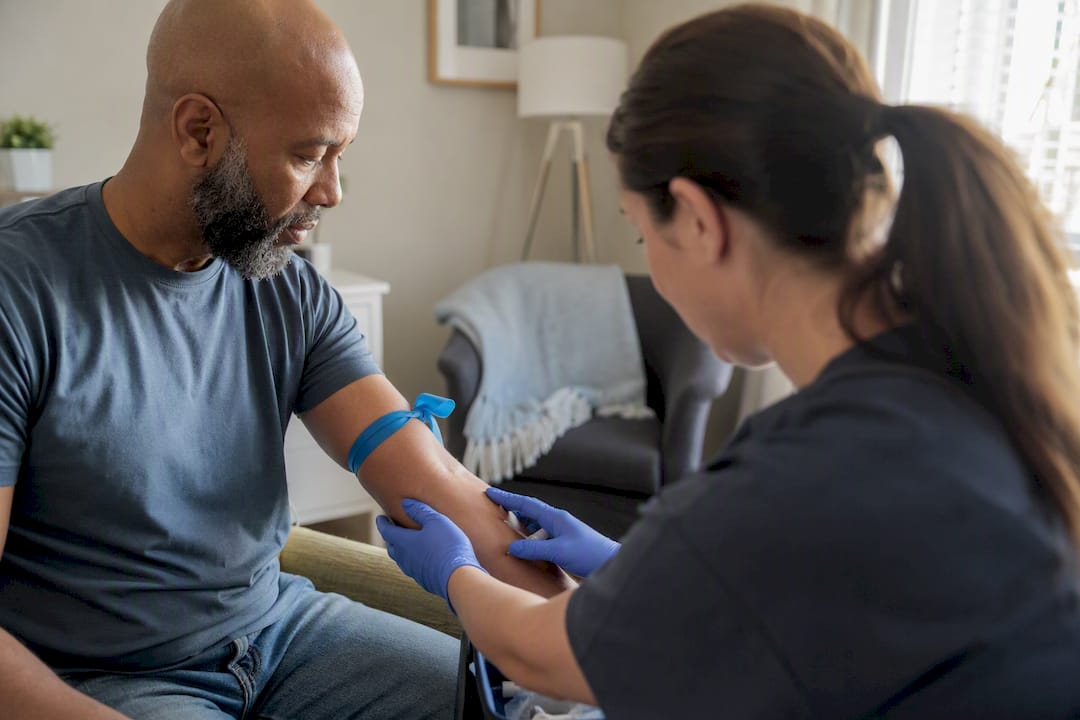
Pro Tip: If your facility allows “just this once” exceptions to identification protocol during code situations or high-volume surges, audit those exceptions separately. They are where your worst errors hide.
Evidence-Based Interventions That Reduce Identification and Collection Errors
The single best-documented intervention in this entire field is barcoding. A Laboratory Medicine Best Practices systematic review and meta-analysis found that barcode-assisted specimen collection reduces patient identification errors substantially compared to manual entry, meaning manual processes carry roughly four times the identification error risk of a properly implemented barcode workflow.
By the numbers: Barcode-assisted collection systems show an odds ratio of 4.39 (95% CI: 3.05 to 6.32) favoring barcoding over manual identification, according to the CDC’s Laboratory Medicine Best Practices review.
That statistic only holds if the system is used correctly. Barcoding without bedside verification, or barcoding layered on top of a workaround culture, does not deliver the same protection.
Bedside two-identifier verification is the foundation everything else sits on. Before any draw, staff confirm at least two identifiers, typically full name and date of birth, against the wristband and the requisition, out loud, every time. The single most important rule inside this practice: never pre-label a tube before the draw. Labels get affixed at the bedside, immediately after collection, while the patient is still in front of you. High-reliability organizations increasingly use a “200% accountability” model, where two staff members independently verify identity for high-risk draws like blood bank specimens.
Correct collection technique closes the remaining gap. That means following the CLSI-endorsed order of draw to avoid additive carryover, filling tubes to their validated volume so the blood-to-anticoagulant ratio stays correct, inverting tubes the specified number of times immediately after filling, and avoiding draws through existing IV lines whenever a peripheral draw is feasible.
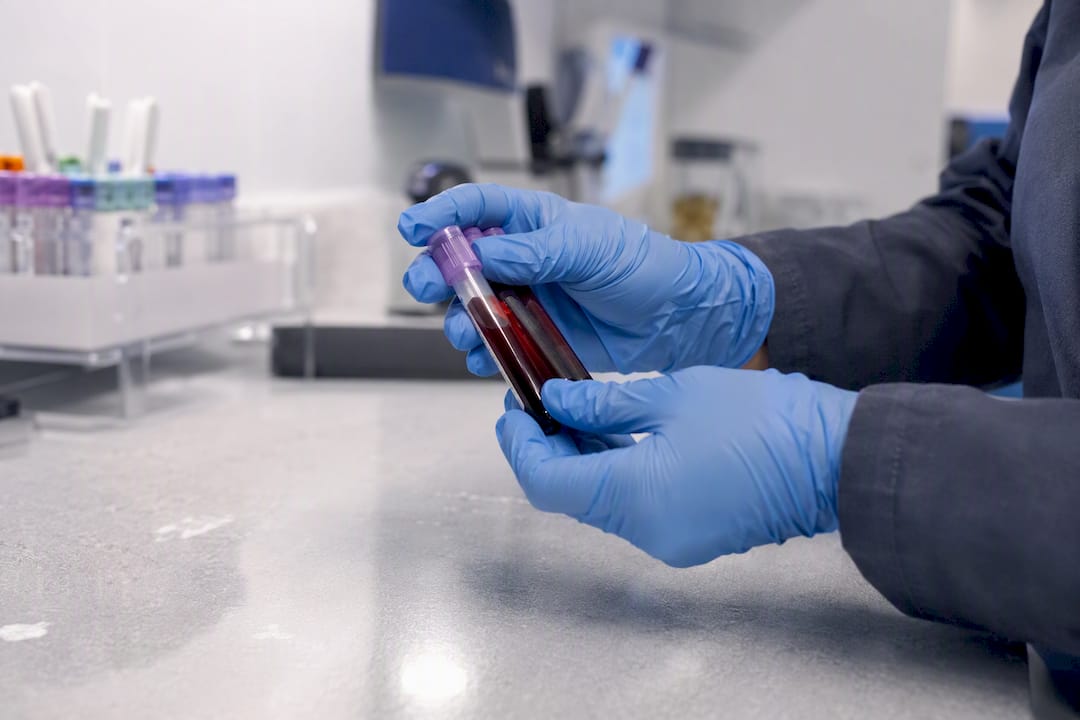
Automation adds a second layer of protection in higher-volume settings. Pre-analytical workstations and track-based systems that integrate directly with the LIS cut down on manual handling and transcription steps, though these systems only deliver value when fully implemented and properly maintained. A practical protocol guide from Herbi Labs on avoiding lab mix-ups walks through operational checklists that translate well to smaller facilities without full automation budgets.
Two implementation caveats matter more than vendors like to admit. First, staff need real training on the “why,” not just the “how,” or they will revert to shortcuts the moment volume spikes. Second, equipment maintenance is not optional: printers, label stock, and wireless infrastructure need scheduled upkeep, because a broken scanner sends staff straight back to manual workarounds within a single shift.
A Step-By-Step Checklist for Collection and Transport
Use this sequence for every draw, not just the ones that feel high risk. Consistency is what actually prevents the rare catastrophic error.
- Confirm the order before you walk in. Verify the test requisition matches the patient record and gather the correct tubes, needles, and labels for that specific order.
- Verify identity at the bedside, out loud. Check name and date of birth against the wristband and the requisition. Never skip this step for a “known” patient.
- Scan the wristband if your LIS supports it. Barcode scanning at this stage is where the odds-ratio protection cited above actually takes effect.
- Draw in the correct order. Follow standard order-of-draw to prevent additive carryover between tube types.
- Fill each tube to its validated volume and invert immediately. Underfilled or unmixed tubes are among the most common reasons for outright rejection.
- Avoid IV-line draws when a peripheral vein is accessible. If a line draw is unavoidable, follow your facility’s flush-and-discard protocol precisely.
- Label immediately after the draw, at the bedside, before moving to the next patient. This is the step most often skipped under time pressure, and the one most tied to mismatched specimens.
- Document the collector’s identity and collection time. This creates the audit trail needed if a specimen is later questioned.
- Package for transport in a container appropriate to the specimen type and required temperature. Improper transport conditions can degrade analytes before the sample ever reaches the bench.
Pro Tip: Keep a small laminated order-of-draw card attached to every phlebotomy tray. It sounds basic, but it is one of the cheapest interventions available and it works exactly when memory fails, mid-shift, under pressure.
How Labs Catch and Handle Suspect Specimens
Every accredited laboratory maintains rejection criteria, and knowing them helps collection staff understand what happens after a sample leaves their hands. Typical rejection triggers include visible hemolysis beyond the analyzer’s tolerance, clots in an anticoagulated tube, underfilled tubes that skew the blood-to-additive ratio, unlabeled or mismatched specimens, and specimens received outside their stability window.
When a specimen is flagged, the workflow should be immediate and specific:
- The lab notifies the ordering unit or collector directly, not through a generic queue.
- The reason for rejection is documented in the LIS, tied to the specific non-conformity type.
- A recollection is ordered following the same identification protocol as the original draw, no shortcuts because “it’s a repeat.”
- For STAT orders, an escalation path exists so recollection does not silently delay time-sensitive results.
Modern pre-analytic automation increasingly incorporates delta checks, comparing a new result against a patient’s historical values, and automated hemolysis or clot detection, flagging suspect specimens before a technologist ever has to eyeball them.
Labs that take quality indicators seriously typically track: specimen rejection rate by cause, mislabeling rate per 1,000 collections, hemolysis rate by collection unit, and redraw turnaround time. Setting a specific, unit-level reduction target for each metric, rather than a single facility-wide number, exposes exactly which department needs intervention.
Building a Program That Sustains Fewer Errors Over Time
Fixing specimen collection errors once is easy. Keeping the error rate down for years requires a deliberate operational program, not a one-time training session.
- Build competency checks into onboarding, not just orientation. New phlebotomists and nurses drawing blood should demonstrate correct technique under observation before working unsupervised, and refresh that competency annually.
- Run just-in-time training immediately after a near-miss or rejected specimen, while the incident is still fresh, rather than waiting for the next scheduled session.
- Set a fixed audit cadence. Monthly spot audits of labeling accuracy and quarterly deep-dive root cause analyses (RCAs) using a consistent template catch drift before it becomes a pattern.
- Make near-miss reporting non-punitive. Staff who fear discipline for reporting a caught error will simply stop reporting, and psychological safety directly correlates with better error detection in the preanalytical literature.
- Maintain an IT and equipment checklist: printer function, label stock levels, wireless coverage in draw areas, and spare battery availability for portable scanners.
- Fold quality indicators into leadership metrics. When rejection rate and mislabeling rate appear on the same dashboard nursing and lab leadership both review, cross-department accountability follows naturally.
Pro Tip: Assign one person, not a committee, to own the equipment maintenance checklist. Shared ownership of printer and label stock maintenance is how “someone will restock it” turns into a three-day outage.
Labs operating under CLIA certification standards already have a regulatory framework requiring documented procedures for exactly this kind of quality program, which makes formalizing these steps less a matter of inventing new policy and more a matter of enforcing what accreditation already demands.
How EIV Diagnostics Applies These Safeguards
EIV Diagnostics operates as an independent pathology laboratory built around molecular pathology, dermatopathology, and digital pathology, using PCR-based testing and confocal microscopy to support diagnostic accuracy. Board-certified pathologists oversee reporting, and that clinical oversight extends into how specimens get collected in the first place.
Because EIV Diagnostics runs mobile phlebotomy services, drawing patients at home or in a provider’s office, specimen-integrity practices have to travel outside the controlled environment of a fixed lab. That means bedside labeling protocols, two-identifier verification, and LIS-integrated workflows are built into every mobile draw, not treated as optional extras reserved for in-clinic collection. A sample drawn in a patient’s living room follows the same identification discipline as one drawn in a hospital lab, because the pre-analytical risks described throughout this article do not disappear just because the setting is less clinical.
Who Talks to Whom: Communication That Prevents Errors
A specimen collection error is rarely a solitary mistake. It is usually a communication gap between the person who ordered the test, the person who drew it, and the person who received it in the lab.
Clear protocols close that gap. When a phlebotomist has a question about an ambiguous order, there should be a defined, fast path to reach the ordering nurse or provider rather than guessing or delaying. When a nurse collects a specimen outside of a scheduled phlebotomy round, a standardized handoff, verbal plus documented, tells the lab exactly who collected it, when, and under what conditions. When the lab flags a rejected specimen, that information needs to reach the original collector directly, not just the unit’s general inbox, so the same person does not repeat the same mistake on the next patient.
Standing huddles between phlebotomy teams and lab staff, even brief ones, surface recurring problems (a specific unit’s printers keep failing, a particular shift consistently sends underfilled tubes) faster than any retrospective audit. The facilities with the lowest rejection rates tend to be the ones where phlebotomists feel comfortable calling the lab directly with a question, rather than routing everything through email or a ticketing system that adds hours to a problem that needed an answer in minutes.
Reduce Errors, Improve Diagnostic Confidence
Bedside verification, barcode-integrated collection, and disciplined draw technique remain the three interventions with the strongest evidence behind them. Start with three concrete steps: audit your current mislabeling rate this month, confirm your label printers and scanners have a maintenance schedule, and eliminate any standing exception that allows pre-labeling. For labs and providers looking to build these safeguards into a mobile draw program, EIV Diagnostics’s mobile phlebotomy services apply the same identification discipline in a patient’s home that a hospital lab applies at the bedside. If your practice needs deeper diagnostic support alongside collection quality, EIV Diagnostics’s molecular pathology services pair PCR-based testing with the same specimen-integrity standards described throughout this piece.
The Gap Between What Barcoding Promises and What It Delivers
The evidence on barcoding is strong enough that skepticism about the technology itself is no longer defensible. An odds ratio near 4.39 is not a marginal improvement. But the conventional advice, “install a barcode system and error rates will drop,” undersells how much the surrounding culture determines whether that number ever shows up in your own data.
We think the more honest framing is this: barcoding is a force multiplier for a safety culture that already exists, not a replacement for one that doesn’t. A hospital that lets staff pre-label tubes “just for STAT orders” will not see LMBP-level results no matter how much it spends on scanners. The technology amplifies whatever discipline is already on the floor, good or bad.
If you take one thing from this article, prioritize the boring stuff first: bedside verification, banning pre-labeling outright, and a maintenance schedule for the equipment you already own. Automation is worth the investment. It is worth it after those fundamentals are solid, not instead of them.
— EIV Diagnostics
This article is general information, not a substitute for advice from a qualified doctor. Consult a qualified healthcare professional about your own circumstances before acting on anything here.
Sources
- Preanalytical errors in clinical laboratory testing: An umbrella review | Multidisciplinary Reviews
- Pre-analytical pitfalls: Missing and mislabeled specimens (PSNet/AHRQ)
FAQ
What are the five most common errors in specimen collection?
The most frequent non-conformities are unlabeled or mislabeled specimens, insufficient sample volume, hemolysis, clotted specimens from inadequate mixing, and contamination from drawing through an IV line.
What is a common cause of labeling errors in specimen collection?
Pre-labeling tubes before the actual draw, rather than labeling immediately at the bedside after collection, is one of the most consistently documented causes of mismatched or mislabeled specimens.
What are some common errors that occur during blood sample collection?
Beyond labeling issues, common blood collection errors include violating the correct order of draw, underfilling tubes relative to their validated volume, failing to invert tubes enough times to mix anticoagulant properly, and applying a tourniquet too long, which can cause hemolysis.
Which stage of phlebotomy has the most errors?
The pre-analytical phase, everything from patient identification through transport to the lab, accounts for roughly 60 to 70% of all laboratory errors, making it by far the highest-risk stage in the entire testing process.
How much does a mislabeled specimen actually cost?
Cost analyses cited by AHRQ’s PSNet put the cost of a single mislabeled specimen at roughly $712 when accounting for recollection, delay, and staff time, a figure that scales quickly across a high-volume facility.